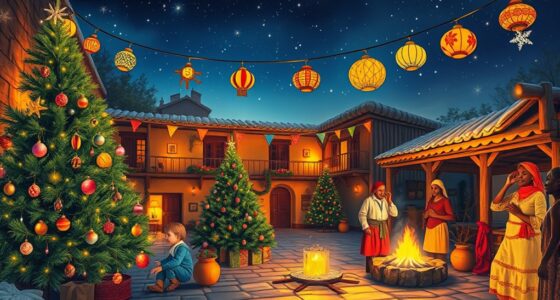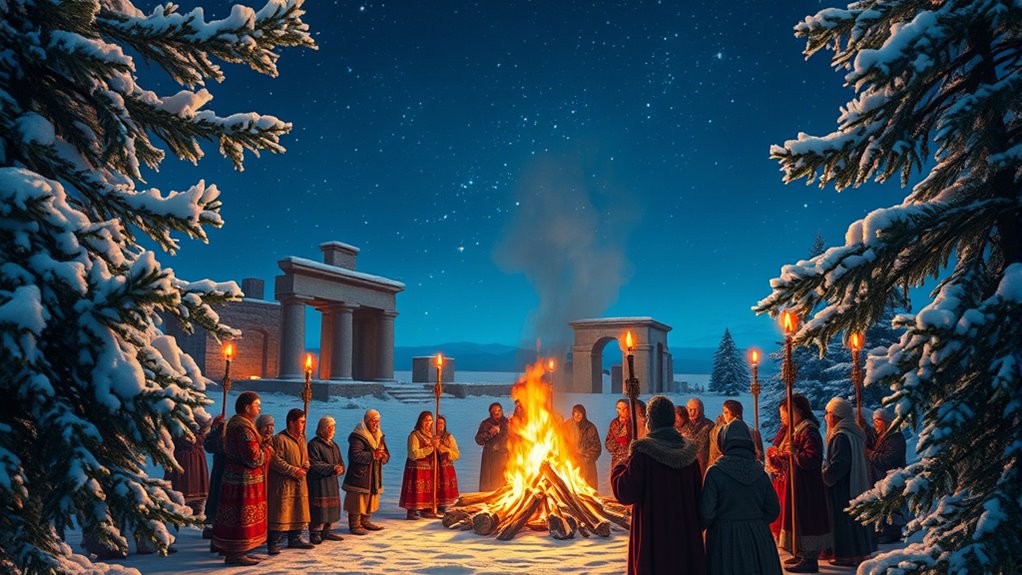

You can see how ancient winter solstice traditions still influence modern celebrations, from lighting candles and decorating with lights to gathering around bonfires to honor the sun’s return. Cultures like the Romans, Celts, and Chinese celebrated this time as a symbol of hope, renewal, and resilience during the darkest days. Today’s festivities, including Christmas lights and seasonal rituals, reflect these age-old customs. If you want to explore more about these enduring traditions, keep exploring further.
Key Takeaways
- Many modern traditions, like Christmas lights and decorations, derive from ancient solstice celebrations symbolizing hope and renewal.
- Contemporary gatherings often include bonfires or candles, echoing ancient rituals honoring the sun’s rebirth.
- Cultural festivals such as Yule and Saturnalia have influenced modern winter solstice festivities worldwide.
- Modern practices emphasize themes of resilience, transition, and new beginnings rooted in ancient spiritual beliefs.
- The enduring human connection to solar cycles reflects ongoing appreciation for light overcoming darkness across cultures.
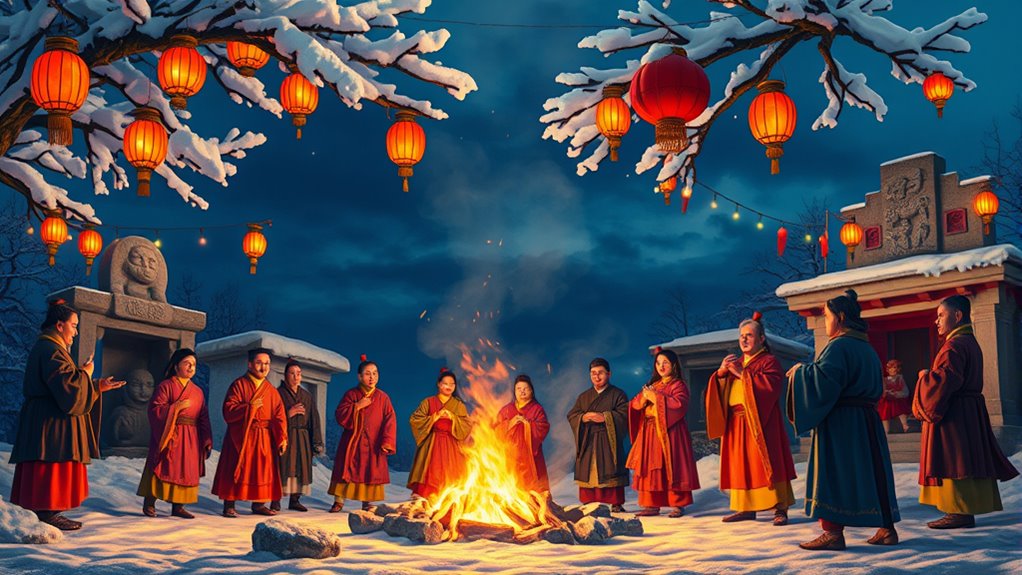
Have you ever wondered why people around the world celebrate the winter solstice? It’s because this day marks a significant turning point in the solar cycle, one that has fascinated humanity for thousands of years. The winter solstice is the shortest day and longest night of the year, symbolizing a moment when the sun reaches its lowest point in the sky. For ancient cultures, this event carried profound meaning—solar symbolism was central to their understanding of the universe, fertility, and renewal. It represented the return of longer days and the promise of spring, making it a powerful reminder that light always follows darkness. This understanding of solar patterns gave rise to numerous cultural traditions, rituals, and celebrations that emphasized the importance of the sun’s cycle in daily life.
The cultural significance of the winter solstice extends far beyond mere astronomy. Many ancient civilizations, such as the Romans, Celts, and Chinese, marked this day with festivals that celebrated the rebirth of the sun. These celebrations often involved lighting fires, candles, or torches to symbolize the sun’s return and to chase away the darkness. For example, the Roman festival of Saturnalia and the Celtic Yule both centered around honoring the sun and encouraging its return. These traditions weren’t just about acknowledging the changing seasons—they reflected deep-seated spiritual beliefs about life, death, and rebirth. The winter solstice served as a reminder of the cyclical nature of existence, emphasizing hope and resilience during the darkest days of the year.
Today, many of these ancient customs have persisted in modern times, even as they’ve been adapted into new forms. You might notice Christmas lights and decorations that echo the tradition of lighting candles and fires, symbolizing hope and renewal. Some cultures still observe solstice rituals involving bonfires or gatherings that honor the sun’s return. Even in contemporary society, the winter solstice remains a powerful symbol of transition, resilience, and new beginnings. By understanding the solar symbolism embedded in these traditions, you can appreciate how ancient peoples connected their spiritual beliefs with the natural world. It’s a reminder that no matter how much technology advances, humans continue to find meaning in the cycles of the sun and the changing seasons. Recognizing the cultural significance of these traditions can deepen our appreciation for the enduring human connection to nature’s rhythms. The winter solstice’s enduring cultural significance speaks to our collective desire for hope, light, and renewal amidst the darkness.
Frequently Asked Questions
How Do Different Cultures Interpret the Symbolism of the Solstice?
You see that different cultures interpret the solstice’s solar symbolism uniquely. Some view it as a time of rebirth and renewal, emphasizing the return of longer days. Others see it as a celebration of light overcoming darkness, which influences their cultural interpretations. These diverse views highlight how the solstice’s meaning varies across traditions, yet all recognize its significance in marking a pivotal point in the solar cycle and human connection to nature.
What Are Some Unique Modern Adaptations of Ancient Solstice Rituals?
You’ll find that modern adaptations of ancient solstice rituals often blend tradition with creativity. Around 65% of people who celebrate the solstice incorporate solar rituals like lighting candles or bonfires, symbolizing light’s return. Some host eco-friendly events, such as outdoor yoga or plantings, honoring nature’s cycles. These modern adaptations keep the spirit alive, allowing you to connect with ancient symbolism while embracing contemporary values of sustainability and mindfulness.
How Has the Timing of the Solstice Celebrations Changed Over History?
You’ll notice that the timing of solstice celebrations has shifted over history due to solar calendar shifts and cultural calendar variations. Initially, many cultures celebrated on different dates, aligning with their lunar or solar systems. As calendars evolved—like the adoption of the Gregorian calendar—these dates shifted slightly, but many traditions still aim to honor the solstice’s significance, adapting to the changing understanding of celestial cycles while maintaining cultural continuity.
Are There Any Scientific Benefits to Celebrating the Winter Solstice?
Celebrating the winter solstice can boost your health by aligning with natural cycles. For example, engaging in outdoor festivities encourages sunlight exposure, helping your body maintain circadian rhythms and promoting vitamin D synthesis. This natural reset can improve sleep, mood, and immune function. So, participating in solstice traditions isn’t just cultural—it’s scientifically beneficial, supporting your overall well-being through a deeper connection to Earth’s seasonal changes.
How Can Individuals Incorporate Ancient Traditions Into Personal Celebrations Today?
You can incorporate ancient traditions into your celebrations by practicing meditative practices that honor the change in seasons, helping you connect with nature’s rhythms. Include seasonal foods like root vegetables, winter fruits, or hearty stews to honor traditional diets. Lighting candles or fires can symbolize the return of light, and reflecting on the year’s ending fosters gratitude. These acts create meaningful, modern connections to age-old winter solstice customs.
Conclusion
So, seize the spirit of the solstice and celebrate its centuries-old charm. Embrace ancient traditions, ignite inspiring introspection, and ignite your own illuminating moments. Remember, the winter solstice symbolizes hope, renewal, and the return of light. By honoring these historic happenings, you connect with a cultural core that continues to create comfort and community today. Let the legacy of light and life inspire your own seasonal spirit, sparking joy and joyfulness in your journey forward.