
To grow your own medicine, start by selecting herbs like chamomile or peppermint that suit your health needs and climate. Choose a sunny spot with well-draining soil, and gather essential tools like trowels and pruning shears. Plant, water, and care for your herbs regularly, harvesting at peak potency. Dry and store your plants properly to preserve medicinal properties. By maintaining and using your herbs, you’ll discover natural remedies—keep exploring to learn more ideas and techniques.
Key Takeaways
- Select herbs based on personal health needs and suitable local climate conditions.
- Choose a sunny, well-drained location and prepare nutrient-rich soil for optimal growth.
- Plant herbs with proper spacing, water consistently, and monitor for pests and diseases.
- Harvest herbs at peak potency, then dry and store them in airtight, dark containers.
- Use harvested herbs to create teas, infusions, or topical remedies for natural healing.
Selecting the Right Herbs for Your Garden
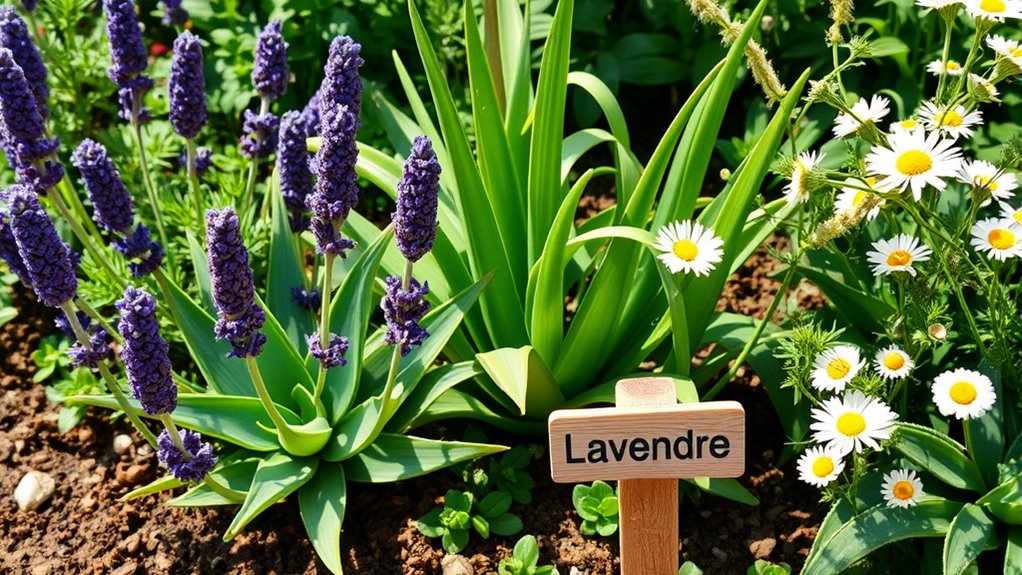
When choosing herbs for your medicinal garden, it’s important to contemplate your specific health needs and the growing conditions in your area. Think about which herbs can support your health goals, like chamomile for relaxation or peppermint for digestion. Consider your climate, sunlight, and available space—some herbs thrive in full sun, while others prefer shade. Opt for herbs that you’ll use regularly, ensuring your garden remains practical and inspiring. Research each plant’s growth habits, maintenance needs, and harvesting times to make informed choices. Selecting a variety that suits your lifestyle and environment will keep your garden manageable and effective. By focusing on your personal health priorities and local conditions, you’ll create a vibrant, useful medicinal herb garden tailored just for you.
Choosing the Perfect Location and Soil Preparation
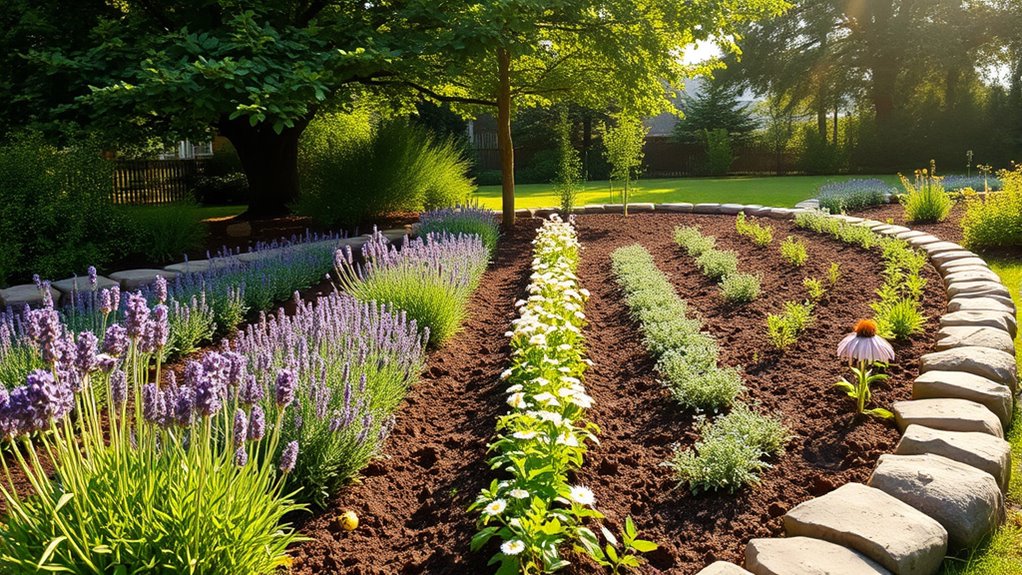
Choosing the right location is key to healthy herb growth, so look for a spot with plenty of sunlight and good airflow. You’ll also want to prepare the soil by enriching it with organic matter to guarantee your herbs get the nutrients they need. Proper site selection and soil care set the foundation for a thriving medicinal herb garden.
Optimal Garden Spot
Selecting the right spot for your medicinal herb garden is essential for healthy growth and abundant harvests. You want a location that offers sufficient sunlight, good airflow, and easy access. First, choose an area that receives at least 6 hours of direct sunlight daily to support robust plant development. Second, ensure proper drainage; avoid spots prone to waterlogging, which can cause root rot. Third, pick a site close to your home or water source to make tending your herbs convenient. Keep in mind, a sheltered spot can protect plants from harsh winds, while good airflow reduces disease risk. By selecting a prime location, you set the foundation for thriving herbs that will serve as your natural medicine cabinet.
Enriching Soil Conditions
To guarantee your medicinal herb garden thrives, start by preparing the soil properly. Begin by testing your soil’s pH and nutrient levels to identify deficiencies. Most herbs prefer well-draining soil rich in organic matter, so mix compost or aged manure into the existing soil. Loosen compacted areas with a garden fork or tiller to improve aeration and root penetration. If drainage is poor, consider creating raised beds or mounding soil to prevent waterlogging. Ensure the location receives adequate sunlight—at least 6 hours daily—and protect it from strong winds. Regularly amend the soil throughout the growing season to maintain fertility. Proper soil preparation lays a strong foundation, helping your herbs flourish and boosting their medicinal potency.
Gathering Necessary Tools and Supplies
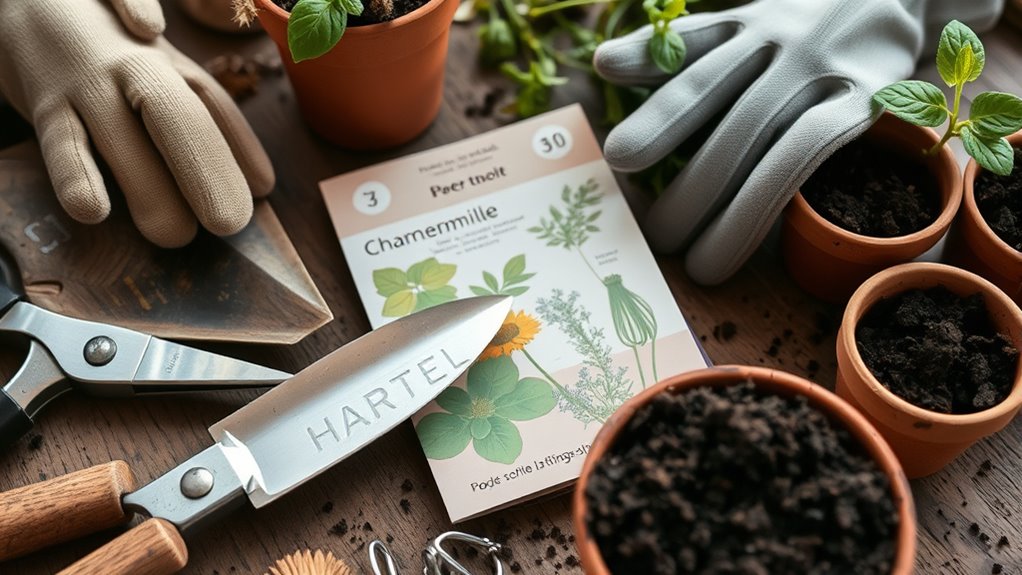
To start your medicinal herb garden, you’ll need to gather essential gardening tools like trowels, gloves, and watering cans. Make sure you have the right seed and soil supplies to suit your chosen herbs, and decide whether containers or a dedicated spot outdoors work best. Having these tools and supplies ready will set a strong foundation for your garden’s success.
Essential Gardening Tools
Gathering the right gardening tools is essential for setting up a successful medicinal herb garden. Having the right equipment makes planting, maintaining, and harvesting herbs easier and more efficient. Start with these key tools:
- Hand Trowel – Perfect for digging small holes, transplanting seedlings, and mixing soil.
- Pruning Shears – Essential for trimming herbs and removing dead or damaged foliage.
- Gardening Gloves – Protect your hands from dirt, thorns, and possible skin irritants.
With these tools, you’ll be equipped to handle your herbs with care and precision. Investing in quality tools guarantees durability and a better gardening experience. Keep them clean and well-maintained to enjoy a thriving, healthy medicinal herb garden.
Seed and Soil Supplies
Having the right seeds and soil supplies makes all the difference in establishing a thriving medicinal herb garden. Choose high-quality seeds from reputable sources to guarantee healthy growth and potent medicinal properties. Select a variety of herbs suited to your climate and needs, such as chamomile, peppermint, or echinacea. For soil, use well-draining, nutrient-rich compost or organic soil tailored for herbs. You might also need amendments like perlite or vermiculite to improve aeration and drainage. Gather clean, sterilized tools like trowels, gloves, and watering cans to handle your supplies safely. Properly prepared seeds and soil set the foundation for healthy plants. Investing in good-quality supplies now will make gardening easier and more rewarding, leading to a vibrant, medicinal herb garden you can be proud of.
Container and Location Choices
Choosing the right containers and location is essential for a successful medicinal herb garden. Your containers should provide proper drainage and enough space for roots to grow. Consider using clay pots, wooden boxes, or repurposed containers that suit your herbs’ needs. The location should offer ample sunlight—ideally 6-8 hours a day—and good airflow to prevent disease.
Here are three key considerations:
- Drainage – Ensure your containers have drainage holes to prevent waterlogging.
- Sunlight – Pick a spot that gets consistent direct sunlight.
- Accessibility – Place your herbs where you can easily tend to them regularly.
Planting and Growing Your Medicinal Herbs
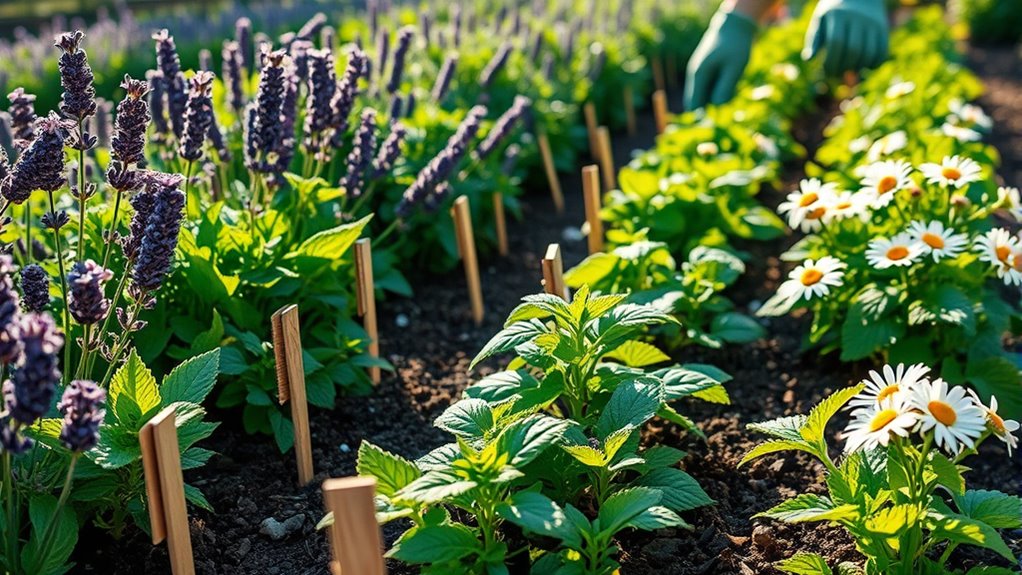
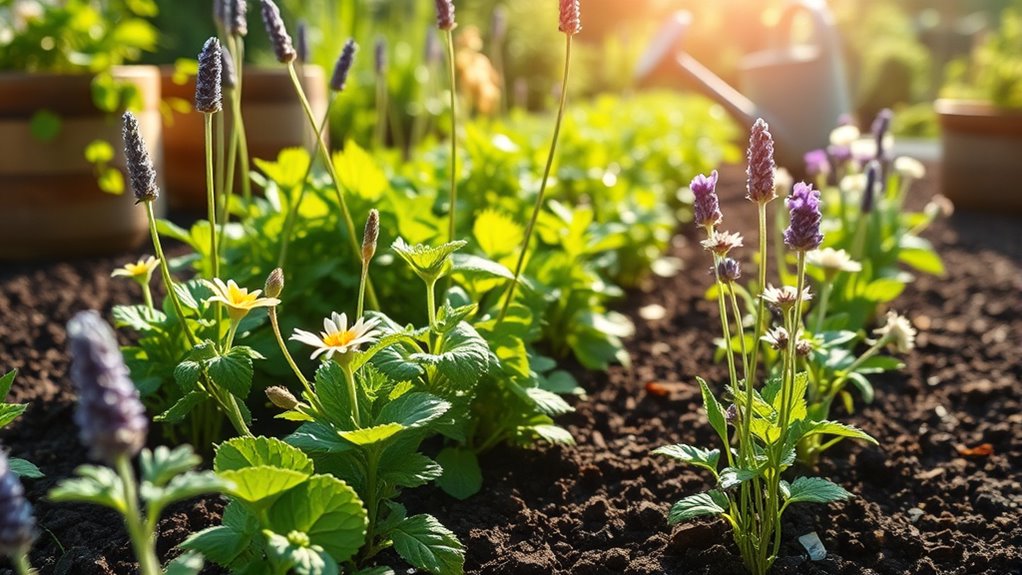
To successfully grow your medicinal herbs, start by selecting the right location with plenty of sunlight and well-draining soil. Most herbs thrive with at least six hours of direct sunlight daily, so choose a spot that isn’t shaded by trees or buildings. Prepare the soil by loosening it and mixing in organic compost to improve fertility and drainage. If planting in containers, ensure they have drainage holes to prevent waterlogging. Space your herbs appropriately, following specific plant distance guidelines to allow airflow and growth. Water your herbs consistently, keeping the soil moist but not soggy. Use gentle watering techniques to avoid disturbing roots. Regularly check for pests or diseases, and harvest herbs at their peak for the best medicinal qualities.
Maintaining and Caring for Your Herb Garden
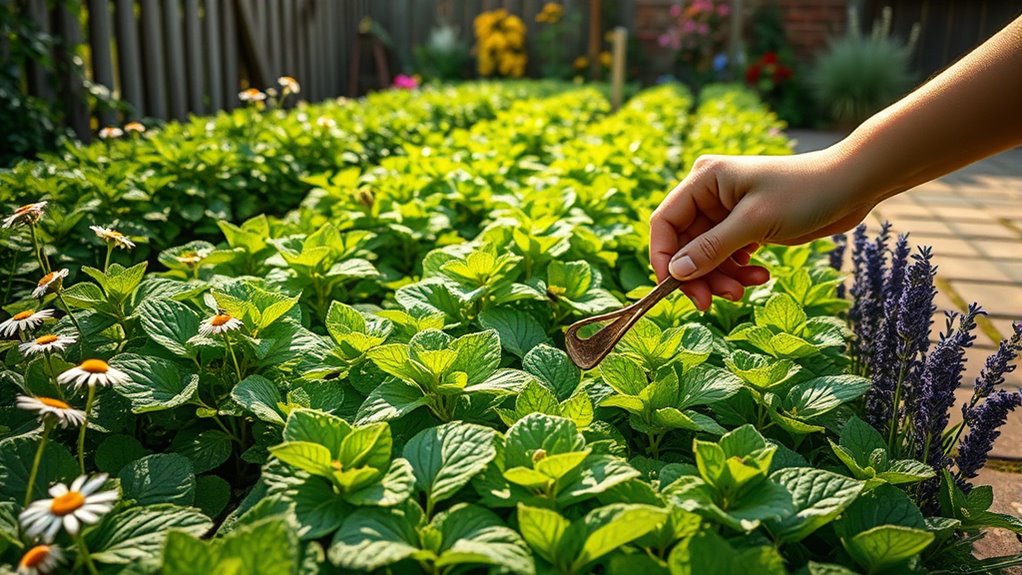
Regular maintenance is essential to keep your medicinal herb garden healthy and productive. To guarantee your plants thrive, focus on three key tasks.
- Water consistently, keeping the soil moist but not waterlogged, especially during dry spells.
- Remove weeds regularly, preventing competition for nutrients and space.
- Prune herbs as needed to encourage new growth and maintain an manageable size.
Additionally, check for pests and diseases, addressing issues early before they spread. Mulching helps retain moisture, suppress weeds, and regulate soil temperature. Fertilize sparingly with organic options to support healthy growth without overwhelming your herbs. Keep an eye on your plants’ health, and adjust your care routine based on weather and plant needs. Regular attention will reward you with a vibrant, bountiful medicinal herb garden.
Harvesting and Drying Your Medicinal Plants
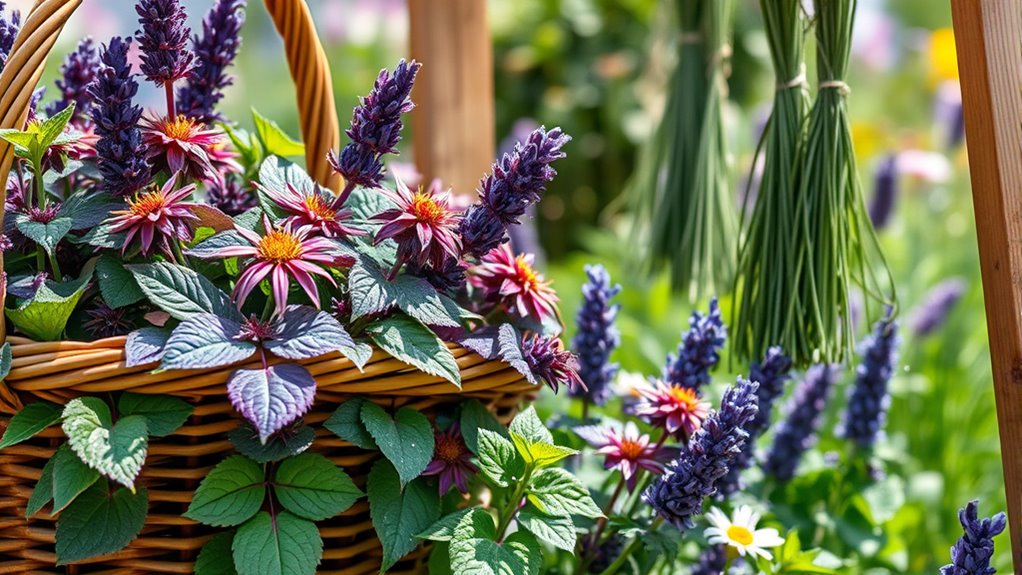
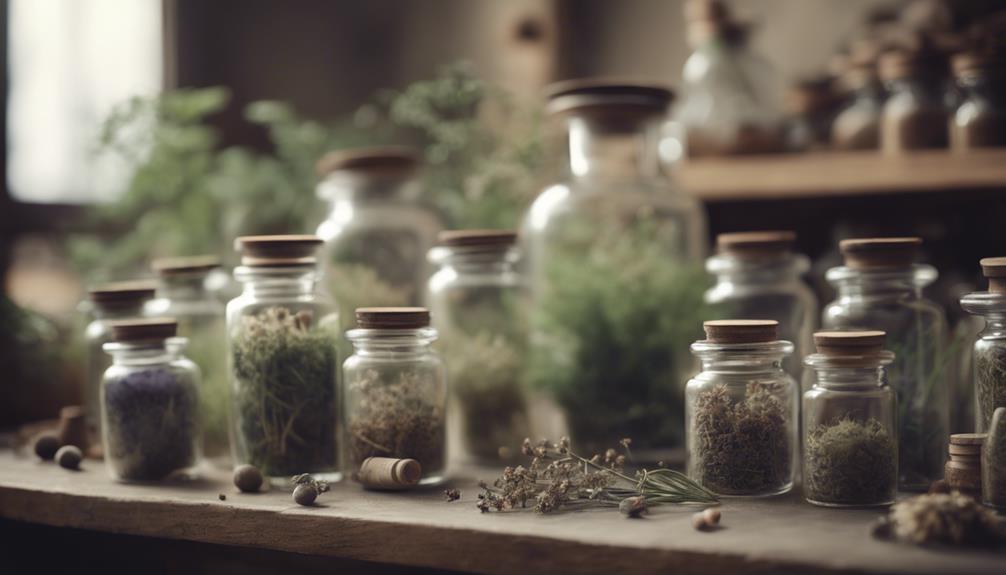
Harvesting your medicinal herbs at the right time is vital to maximize their potency and effectiveness. You’ll want to pick herbs when they’re at their peak, usually just before they flower or when leaves are lush and vibrant. Use clean, sharp scissors or pruning shears to make clean cuts, avoiding damage to the plant. After harvesting, gently rinse the herbs to remove dirt or insects, then pat them dry with a clean towel. Proper drying is essential to preserve their medicinal properties; hang herbs upside down in a warm, dark, well-ventilated area. Make sure they’re completely dry before storing to prevent mold. Once dried, crumble or cut the herbs into smaller pieces for easier use and long-term storage.
Using Your Herbs for Natural Remedies
Once your herbs are dried and ready, you can start using them to create natural remedies. Using herbs effectively involves simple preparation and proper application. Here are three ways to harness their healing power:
- Herbal Teas: Steep dried leaves or flowers in hot water for soothing drinks that target common ailments like colds or indigestion.
- Infused Oils and Tinctures: Soak herbs in oil or alcohol to extract their medicinal properties, perfect for topical use or quick remedies.
- Poultices and Salves: Crush fresh or dried herbs and apply directly to the skin to reduce inflammation, ease pain, or promote healing.
With a little preparation, your garden’s bounty can become an essential part of your natural health toolkit.
Frequently Asked Questions
How Do I Prevent Pests and Diseases in My Herb Garden?
To prevent pests and diseases in your herb garden, start with healthy plants and keep your garden clean. Use natural repellents like neem oil or insecticidal soap, and introduce beneficial insects such as ladybugs. Rotate crops each season to prevent soil-borne issues, and guarantee proper spacing for airflow. Regularly inspect your herbs, prune infected parts, and water at the base to avoid fungal problems.
What Are the Best Companion Plants for Medicinal Herbs?
You should plant basil near tomatoes to repel pests, chamomile beside cucumbers to boost growth, and marigolds around your herbs to deter insects. Companion planting enhances your garden’s health, encourages strong growth, and naturally fights pests. By choosing plants that work together, you create a balanced environment, protect your medicinal herbs, and reduce the need for chemical interventions. These pairings foster a thriving, resilient garden filled with healthy, potent herbs.
How Often Should I Water My Medicinal Herbs?
You should water your medicinal herbs whenever the top inch of soil feels dry, typically every 2-3 days. Keep the soil consistently moist but not waterlogged to prevent root rot. During hot or dry weather, you might need to water daily. Always check soil moisture before watering, and water deeply to encourage healthy root growth. Adjust your watering schedule based on your herbs’ specific needs and environmental conditions.
Can I Grow Medicinal Herbs Indoors Year-Round?
Ever wonder if you can keep medicinal herbs thriving indoors year-round? Yes, you can! With ample sunlight, such as a south-facing window, and proper watering, your herbs will flourish indoors. Use grow lights during darker months and guarantee good airflow. Want fresh herbs anytime? Indoor gardening is a perfect solution. Just remember, consistency is key—monitor your plants and adjust care as needed to keep them healthy and potent.
How Do I Store Harvested Herbs to Maximize Potency?
You should dry your herbs in a cool, dark, well-ventilated area to preserve their potency. Once fully dried, store them in airtight containers away from direct sunlight, heat, and moisture. Label each jar clearly. Avoid crushing herbs until you’re ready to use them, as this helps maintain their essential oils and medicinal properties longer. Proper storage guarantees your herbs stay potent and effective for months.
Conclusion
By starting your own medicinal herb garden, you’re taking control of your health naturally. Did you know that over 80% of people worldwide rely on herbal medicine for their healthcare needs? With the right herbs, care, and harvesting techniques, you can create a sustainable source of remedies right at home. So go ahead, plant your herbs, enjoy the process, and embrace the healing power of nature—your body will thank you.