Regulatory agencies oversee herbal supplements to ensure safety, quality, and authenticity. They set standards, evaluate manufacturing practices, and conduct inspections to prevent contamination and adulteration. Testing methods like chromatography verify ingredient purity, while transparent labeling helps you make informed choices. As consumer demand grows, industry practices evolve with more rigorous testing and technology like blockchain. To learn how these measures protect your health and what the future holds, keep exploring these essential topics.
Key Takeaways
- Regulatory agencies oversee herbal cultivation, set safety standards, and monitor manufacturing practices to ensure supplement quality.
- Standardized testing protocols verify ingredient authenticity, potency, and detect contaminants like pesticides and heavy metals.
- Challenges include plant variability, misidentification, and contamination risks that threaten consumer safety.
- Transparency in labeling and sourcing builds consumer trust and promotes responsible herbal supplement use.
- Future trends involve advanced monitoring technologies, improved testing methods, and increased industry regulation to enhance safety and quality.
The Role of Regulatory Agencies in Herbal Supplement Oversight

Have you ever wondered who guarantees that herbal supplements are safe and effective before they reach your shelves? Regulatory agencies play a vital role in overseeing herbal cultivation and guaranteeing product quality. They evaluate claims rooted in traditional medicine and monitor manufacturing practices to protect consumers. These agencies set legal standards that supplement producers must follow, helping to prevent adulteration and contamination. While they may not approve every ingredient beforehand, they conduct inspections and review safety data to ensure the products meet minimum quality criteria. This oversight helps maintain public trust in herbal supplements, especially those derived from traditional medicine practices. By enforcing these regulations, authorities aim to minimize risks and support the responsible use of herbal products in your health routine. Additionally, fostering a culture of attention and vigilance within the industry encourages continuous improvement and compliance with safety standards. Understanding regulatory oversight is essential for consumers to make informed health choices and trust the integrity of herbal supplements. Moreover, clear labeling and transparency about ingredients are crucial components of effective quality control in the herbal supplement industry. Implementing consistent testing protocols further enhances safety and consumer confidence across the industry. Ensuring proper cultivation practices can also help reduce contamination risks and improve overall product quality.
Standards and Guidelines for Herb Quality and Purity
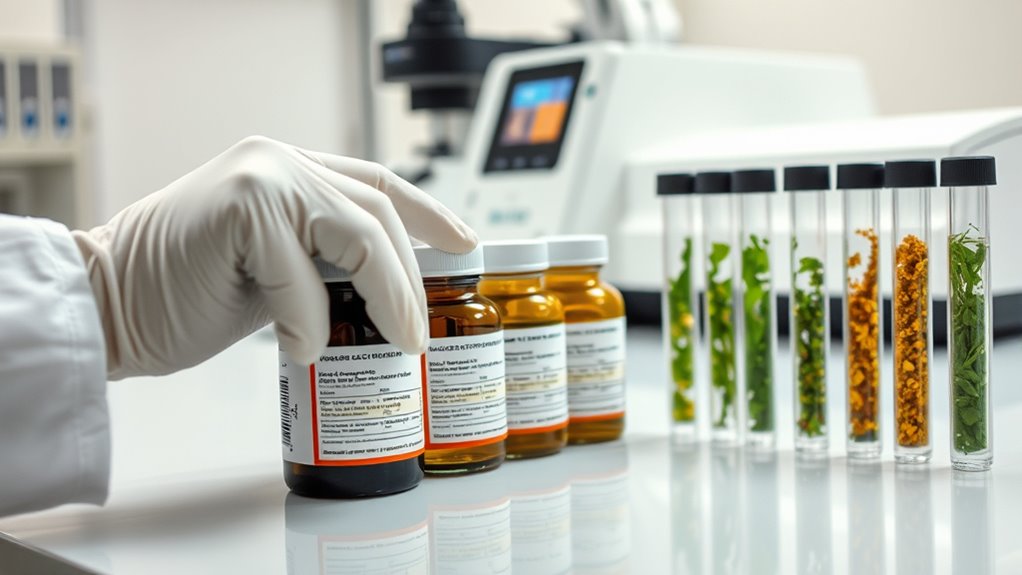
To guarantee herbal supplements are safe and effective, strict standards and guidelines for herb quality and purity are established by regulatory agencies. Herbal standardization plays a vital role in ensuring consistent potency and composition across batches. These standards help verify that herbs meet specific chemical profiles, reducing variability and enhancing quality assurance. Regulatory bodies require thorough testing for contaminants like pesticides, heavy metals, and microbes, ensuring products are safe for consumers. Adherence to these guidelines also involves proper identification and authentication of plant species to prevent adulteration. Herb standardization is essential for maintaining consistent product quality and efficacy. By following these standards, manufacturers maintain high-quality herbal products, fostering consumer trust and supporting the integrity of dietary supplements. Ultimately, rigorous quality assurance underpins safe, effective herbal supplementation. Additionally, implementing standardized testing protocols ensures that all batches meet the required safety and quality benchmarks. Furthermore, compliance with international standards helps facilitate global trade and acceptance of herbal products. Incorporating herb identification techniques can further enhance the accuracy of plant species verification, reducing risks associated with misidentification. Employing comprehensive quality control procedures also contributes to the overall reliability and standardization of herbal products in the marketplace.
Common Challenges in Ensuring Herbal Product Safety

Ensuring the safety of herbal products faces numerous challenges, despite existing standards and regulations. One major hurdle is herbal sourcing, which can be unpredictable due to environmental factors or contamination risks. Second, traditional knowledge often guides herbal use, but it may lack scientific validation, risking inconsistent results. Additionally, the variability in plant quality and potency makes standardization difficult. You might encounter issues like misidentification of plants or adulteration, which can threaten consumer safety. Furthermore, implementing standardized quality measures is essential to address these issues effectively, yet it remains a complex task due to the diverse nature of herbal ingredients. Additionally, global variations in regulations complicate efforts to establish uniform safety standards for herbal products. The application of quality control protocols can help mitigate some of these issues by ensuring consistency and safety across different batches. To effectively manage these challenges, comprehensive testing procedures are increasingly being adopted to verify herbal product authenticity and purity. These procedures may also involve advanced analytical techniques to detect contaminants and ensure ingredient integrity.
Testing Methods and Quality Assurance Processes
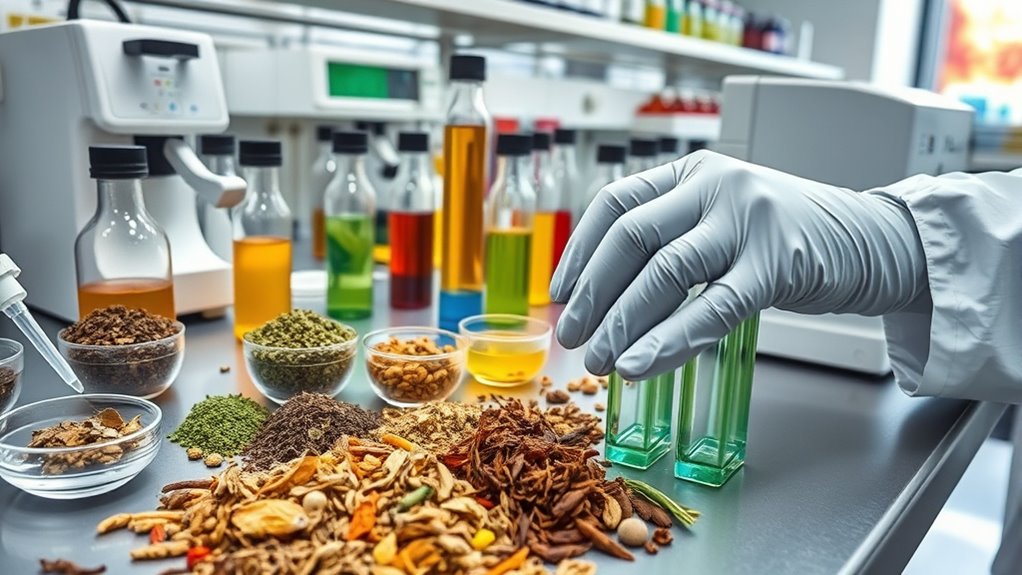
Effective testing methods and robust quality assurance processes are essential for verifying the safety, potency, and purity of herbal supplements. You should use advanced techniques like botanical extraction analysis to identify active compounds and detect contaminants. These methods help verify that herbal bioavailability—the extent to which active ingredients are absorbed—is optimized, confirming the supplement’s effectiveness. Incorporating comprehensive testing is vital for maintaining regulatory standards and ensuring product safety. Quality assurance involves rigorous sampling, testing for heavy metals, pesticides, and microbes, and verifying consistency across batches. Techniques such as chromatography and spectrometry provide precise data on herbal constituents. By implementing extensive testing and quality checks, you can confidently deliver products that meet regulatory standards and consumer expectations. This proactive approach minimizes risks and guarantees that herbal supplements are safe, effective, and of high quality. Incorporating knowledge from massage chair comparisons, such as assessing product quality and reliability, can further enhance quality control measures in supplement manufacturing. Additionally, implementing reliable testing methods ensures ongoing compliance and helps detect potential issues early in the production process. Leveraging automation in business intelligence can also streamline data analysis and improve monitoring of product quality metrics across manufacturing batches.
Labeling Accuracy and Transparency in Herbal Supplements
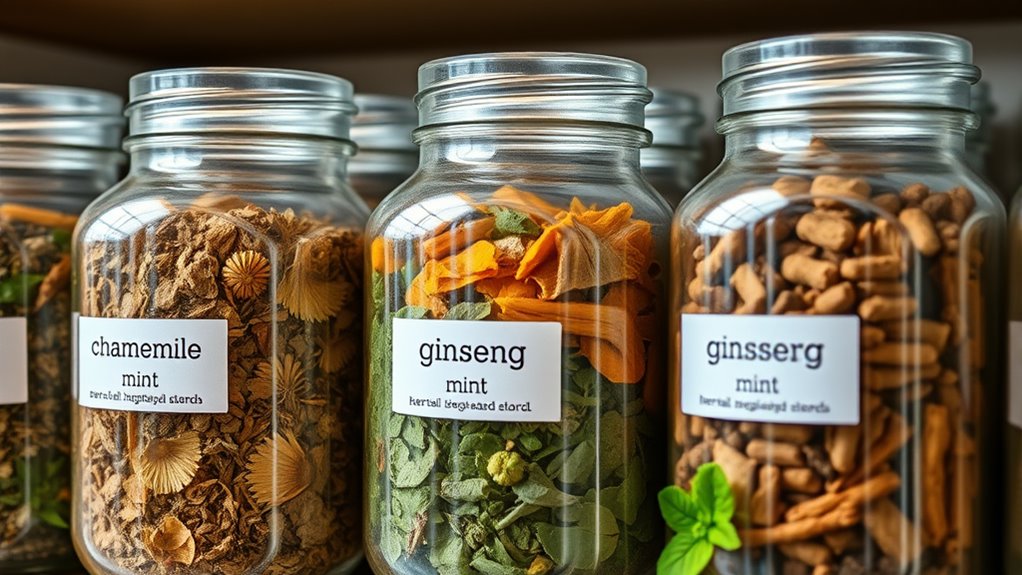
How can you make informed choices if herbal supplement labels are inaccurate or unclear? Poor labeling can hide issues like inaccurate botanical authentication or misleading dosage transparency. To protect yourself, look for labels that clearly specify the botanical sources, confirming they’re authentic and properly identified. Prioritize products that provide detailed dosage information, so you know exactly what you’re taking. Be cautious if the label omits:
- Authentic botanical authentication details
- Precise dosage transparency
- Clear ingredient lists and source information
These elements ensure you’re not misled or exposed to potential risks. Transparent labeling builds trust and helps you assess the supplement’s quality, safeguarding your health and confidence in your herbal choices. Additionally, verifying third-party testing or certification can further confirm the supplement’s quality control. Ensuring regulatory compliance can also provide extra assurance of safety and standards.
Certification and Third-Party Quality Verification
You should look for supplements with certification standards that are consistent and reliable. Independent quality testing helps guarantee the products meet safety and potency claims. Verifying these certifications can give you confidence in the supplement’s quality and integrity.
Certification Standards Consistency
Are certification standards for dietary supplements consistent across different organizations? Not always. This inconsistency can impact your confidence in herbal sourcing and botanical authentication. Consider these concerns:
- Variability in testing protocols may lead to differences in herbal quality and safety.
- Inconsistent standards could allow contaminated or adulterated botanicals to slip through.
- Lack of uniformity hampers your ability to trust third-party verification efforts.
While some organizations emphasize rigorous botanical authentication, others may overlook key quality markers. This disparity can cause confusion and risk your health. To ensure you get safe, high-quality herbal supplements, look for certifications that prioritize strict, standardized protocols. Consistent certification standards are essential for reliable herbal sourcing and peace of mind.
Independent Quality Testing
Independent quality testing plays a vital role in verifying the safety and potency of dietary supplements beyond initial certification standards. It guarantees that herbal cultivation practices meet strict quality parameters, confirming that herbs used in traditional formulations are authentic and free from contaminants. Third-party verification labs analyze samples for active ingredient levels, pesticide residues, heavy metals, and microbial contaminants. This process helps you identify any discrepancies in labeling or ingredient purity, safeguarding your health. Relying on independent testing provides an unbiased assessment that complements certification standards, giving you confidence in the supplement’s quality. By prioritizing third-party verification, you guarantee that herbal ingredients, whether from traditional formulations or modern blends, maintain their integrity throughout production and distribution.
Risks of Contamination and Adulteration
Contamination and adulteration pose significant risks to consumers of dietary supplements, often leading to serious health consequences. Botanical contaminants, such as heavy metals or microbes, can unknowingly enter products, risking toxicity. Adulteration detection becomes vital to identify harmful fillers or undisclosed pharmaceutical ingredients. You should be aware that:
- You might unknowingly consume toxic substances, risking illness or long-term health issues.
- Adulterated supplements can cause allergic reactions or adverse drug interactions.
- Failing to spot botanical contaminants could mean ingesting harmful microbes or chemicals.
These risks highlight the importance of strict regulation and testing. Ensuring supplements are free from contamination and adulteration is essential to protect your health and trust in herbal products.
The Impact of Consumer Demand on Industry Practices

Have you ever wondered how your preferences influence the supplement industry? Your consumer awareness shapes market trends, prompting companies to adapt their practices. When you prioritize natural ingredients or demand transparency, industry players respond by improving quality control and investing in better sourcing. These shifts push manufacturers to meet evolving expectations, often leading to more rigorous testing and clearer labeling. As demand for herbal and organic products grows, companies recognize the opportunity to stand out by emphasizing safety and authenticity. Your choices directly influence product development, marketing strategies, and industry standards. In this way, consumer demand acts as a powerful force, encouraging the industry to prioritize quality, transparency, and regulatory compliance to satisfy informed and conscientious buyers like you.
Navigating International Regulations and Trade
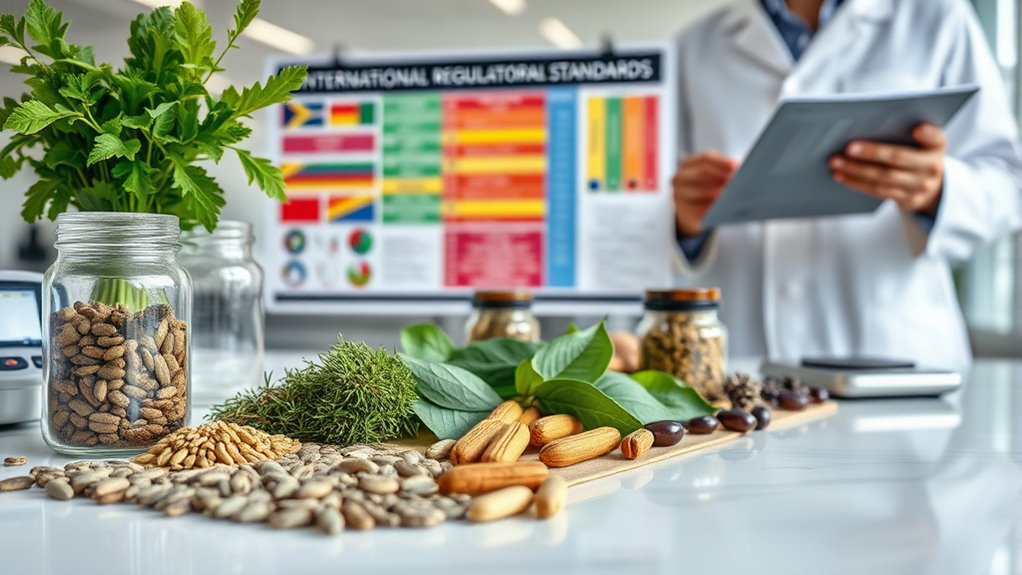
When you export dietary supplements internationally, you face a maze of different regulations that can vary widely from country to country. You need to understand these rules to avoid costly delays or rejections at borders. Compliance with trade laws becomes essential to make certain your products reach global markets smoothly.
International Regulatory Variability
Managing international regulations for dietary supplements can be complex because each country has its own set of standards and approval processes. Regional differences in legal frameworks create hurdles that can delay market entry and compromise product quality. You need to:
- Understand the varying requirements that can alter formulation or labeling.
- Navigate inconsistent safety and efficacy standards to avoid legal pitfalls.
- Adapt quickly to evolving policies that may differ dramatically from one region to another.
These variations evoke concern and urgency, especially when ensuring compliance across borders. Recognizing how regional differences influence regulatory expectations helps you stay ahead of potential issues. You must stay informed and flexible, respecting each country’s legal frameworks to protect your brand and consumers.
Trade Compliance Challenges
Managing international regulations and trade can be challenging because differing legal requirements often create barriers to market access and complicate distribution. To succeed, you need to prioritize supply chain transparency, ensuring all parties comply with varying standards. This transparency helps you identify potential regulatory issues early, reducing delays and penalties. Steering through these complexities requires understanding each country’s specific import and export rules, which directly impact your ability to gain and maintain market access. Non-compliance can lead to product rejections, fines, or even bans, hindering your growth. By staying informed about international trade policies and fostering clear communication throughout your supply chain, you can mitigate risks and streamline compliance efforts, ultimately expanding your reach in global markets.
Future Trends in Herbal Product Regulation and Monitoring

As herbal product markets continue to expand, regulatory agencies are increasingly adopting advanced monitoring technologies to guarantee safety and efficacy. Future trends focus on integrating innovative delivery methods to enhance absorption and potency, giving you more reliable options. They’re also emphasizing consumer education, empowering you to make informed choices about herbal supplements. Here are three key developments to watch:
Regulatory agencies are adopting advanced methods to ensure herbal product safety and empower informed consumer choices.
- Enhanced testing methods for purity and potency, reducing risks of contamination.
- Use of digital tracking and blockchain for transparent supply chains.
- Greater emphasis on educating consumers about safe usage and ingredient quality.
These advancements will foster trust and confidence in herbal products, ensuring you benefit from safe, effective options that meet evolving standards. Your awareness and demand drive these positive changes in regulation and monitoring.
Frequently Asked Questions
How Do Traditional Herbal Practices Influence Modern Regulatory Standards?
Traditional herbal practices greatly influence modern regulatory standards by emphasizing traditional knowledge and cultural preservation. You see, regulators often consider historical use and cultural significance when setting safety guidelines, ensuring that age-old practices are respected while maintaining quality. This blend helps preserve cultural heritage and supports the integration of traditional remedies into contemporary health systems, fostering a balanced approach that values both scientific evidence and cultural authenticity.
Are There Specific Herbs That Are More Heavily Regulated Than Others?
Certain herbs are more heavily regulated than others because their classification as high-risk or potential toxins influences enforcement priorities. You’ll find that herbs like ephedra and kava face stricter scrutiny due to safety concerns. Regulatory agencies focus on these herbs to prevent adverse effects, ensuring safe product standards. Knowing which herbs are classified as high-risk helps you make informed choices and understand why some are subject to more rigorous regulation.
How Do Regulatory Agencies Handle Unapproved Herbal Ingredients?
Imagine regulatory agencies as vigilant gatekeepers, swiftly catching illicit herbal ingredients. They handle unapproved herbs by conducting adulteration detection and thorough safety evaluations. If an ingredient seems suspicious or unapproved, authorities can seize products, issue warnings, or ban them altogether. Your safety relies on these agencies’ keen eyes, ensuring that only safe, approved herbs make it to your supplement shelf, keeping potential risks at bay.
What Role Do Consumer Advocacy Groups Play in Herbal Supplement Regulation?
You play a crucial role as consumer advocacy groups boost consumer awareness through advocacy campaigns, pressuring regulators to enforce stricter herbal supplement standards. Your efforts help inform you and others about potential risks, promote transparency, and push for better quality control. By voicing concerns and supporting evidence-based policies, you contribute to a safer supplement market, ensuring that herbal products meet safety and efficacy standards for everyone’s well-being.
How Are Herbal Supplement Recalls Managed Internationally?
You might think herbal supplement recalls are isolated events, but international cooperation plays a crucial role in managing them. When a safety issue arises, recall procedures are coordinated across borders to swiftly remove contaminated products. Regulatory agencies collaborate through global networks, sharing information and best practices to guarantee consumer safety worldwide. This interconnected approach helps prevent harm, making herbal supplement recalls more efficient and extensive across different countries.
Conclusion
To guarantee your herbal supplements are safe and effective, stay informed about regulatory standards and demand transparency. Think of these regulations as a safety net woven tightly to catch potential risks before they reach you. By understanding testing methods and quality controls, you become a savvy consumer, guiding the industry towards higher standards. Ultimately, your awareness is the key to turning the tide and fostering trust in herbal products worldwide.