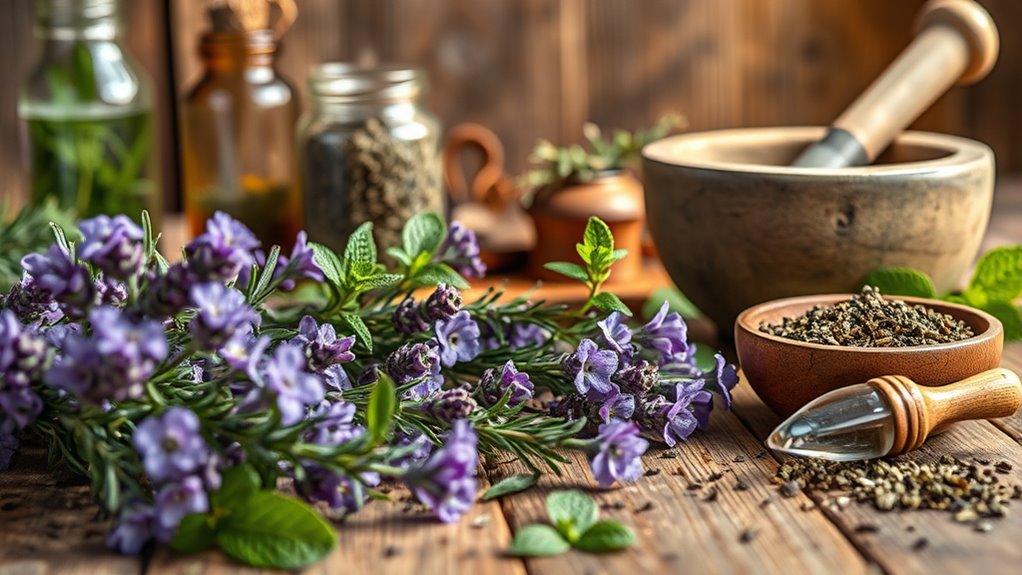
Herbalism’s roots stretch back to ancient civilizations that documented medicinal plant uses on papyrus scrolls and incorporated herbs into spiritual rituals. Cultures like Egypt, Mesopotamia, China, Africa, and the Americas developed unique techniques for preparing and preserving herbs, viewing them as sacred tools for healing and spiritual connection. Over time, these practices evolved into modern herbal medicine, blending tradition with science. Exploring further reveals how these ancient roots shape today’s herbal practices and traditions.
Key Takeaways
- Herbalism originated in ancient civilizations like Egypt, China, and Mesopotamia, where plants were used for medicine and spiritual rituals.
- Early herbal knowledge was based on observation and tradition, often intertwined with spiritual practices and cultural myths.
- Ancient cultures developed techniques for harvesting, drying, and preserving herbs to maintain their medicinal properties.
- Herbal remedies were integrated into holistic healing systems, emphasizing harmony between body, mind, and nature.
- Modern herbalism blends ancient wisdom with scientific research, emphasizing safety, dosage, and evidence-based practices.
The Dawn of Herbal Knowledge in Ancient Civilizations

Ancient civilizations laid the foundation for herbalism by observing how plants affected health and wellbeing. You can see this in the practices of the Egyptians, who documented medicinal uses of herbs on papyrus scrolls, and in Chinese medicine, which dates back thousands of years. These cultures carefully studied plants, noting their effects and experimenting with combinations to treat ailments. They recognized that certain herbs could heal wounds, soothe pain, or boost vitality. Early herbal knowledge was passed down through generations, often embedded in myths and traditions. While their understanding was based on observation rather than scientific methods, it laid essential groundwork for future herbal practices. These early insights sparked a lifelong human pursuit: harnessing nature’s remedies for health.
Early Uses of Plants in Healing Rituals

Plants have long played a central role in healing rituals, serving as sacred tools to connect the physical and spiritual worlds. You might have seen shamans and healers using herbs in ceremonies to invoke spirits or seek divine guidance. These rituals often involved specific plant preparations, chants, and symbolic acts, emphasizing their spiritual significance. Different cultures assigned plants unique powers, believing they could ward off evil or facilitate communication with ancestors. To understand this better, consider this table:
| Plant | Ritual Use | Cultural Significance |
|---|---|---|
| Sage | Cleansing and purification | Spiritual cleansing in many cultures |
| Peyote | Visionary experiences during ceremonies | Indigenous North American tribes |
| Mandrake | Protective charms and healing | European folklore and magic |
These practices highlight how early peoples viewed plants as more than medicine—they were spiritual allies.
The Role of Herbalism in Ancient Egypt and Mesopotamia
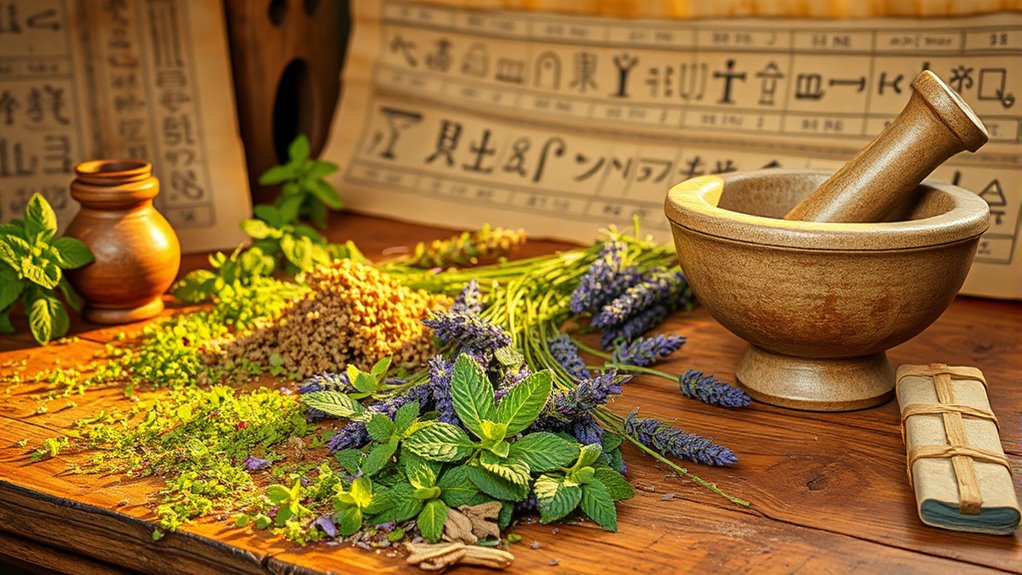
Have you ever wondered how early civilizations harnessed the healing power of nature? In ancient Egypt and Mesopotamia, herbalism played a essential role in medicine and religious practices. Egyptians used herbs like thyme, garlic, and frankincense for healing wounds, respiratory issues, and spiritual rituals. They believed plants contained divine properties, often recording their uses on papyrus scrolls. Similarly, Mesopotamians relied on herbs such as cedar, cumin, and myrrh to treat ailments and perform rituals. They developed early pharmacopoeias, combining herbs with prayers and charms, reflecting their holistic approach. These civilizations recognized the healing potential of plants long before modern medicine, blending practical herbal remedies with spiritual significance. Their herbal knowledge laid important foundations for future medicinal practices across cultures.
Herbal Practices in Traditional Chinese Medicine

You’ll find that Traditional Chinese Medicine (TCM) has deep historical roots, shaping its unique approach to healing. It relies on a variety of medicinal herbs and specific diagnostic methods to determine the right treatment. Understanding these foundational principles helps you appreciate how TCM balances body and mind through plant-based remedies.
Historical Foundations of TCM
How did traditional Chinese medicine (TCM) develop its rich herbal practices? It all began over 2,000 years ago, rooted in ancient Chinese philosophy and observation. Early practitioners studied nature, noting how plants affected health and disease. The foundational texts, like the Huangdi Neijing, compiled knowledge about herbal remedies, acupuncture, and diagnostics. These writings emphasized harmony between body and environment, guiding herbal use to restore balance. Over centuries, herbal formulations evolved through trial, error, and detailed documentation. Influenced by Daoist, Buddhist, and Confucian principles, herbal practices became integrated into daily life and medical treatment. TCM’s herbal foundation reflects a blend of empirical observation and philosophical insight, shaping a system that values holistic healing and natural remedies, many of which are still central today.
Common Medicinal Herbs
What are some of the most commonly used herbs in traditional Chinese medicine, and why do they hold such such importance? Herbs like ginseng, angelica root, and licorice are staples because they support essential energy, blood flow, and immunity. Ginseng boosts stamina and mental clarity, while angelica root helps regulate blood and menstrual health. Licorice acts as a harmonizer, enhancing the effects of other herbs and soothing the digestive system. These herbs are valued for their proven ability to restore balance within the body’s systems, aligning with the fundamental principles of TCM. Their versatility and long history of use make them essential in creating personalized herbal formulas, ensuring they remain central to herbal practices in traditional Chinese medicine.
Diagnostic and Treatment Methods
In traditional Chinese medicine, diagnosing and treating health issues involves a detailed understanding of a patient’s unique patterns of imbalance. You’ll undergo methods like pulse diagnosis, where you feel specific wrist points to assess your energy flow, and tongue inspection, observing its color, coating, and shape. These techniques help identify underlying disharmonies. Practitioners also ask detailed questions about your symptoms, emotional state, and lifestyle. Treatment then combines herbal remedies tailored to your pattern, along with acupuncture, moxibustion, or dietary advice. The goal is to restore balance within your body’s systems, promoting natural healing. You’re viewed as a whole person, not just a set of symptoms, enabling a personalized approach that addresses root causes rather than just alleviating discomfort.
Indigenous Herbal Remedies From Africa and the Americas
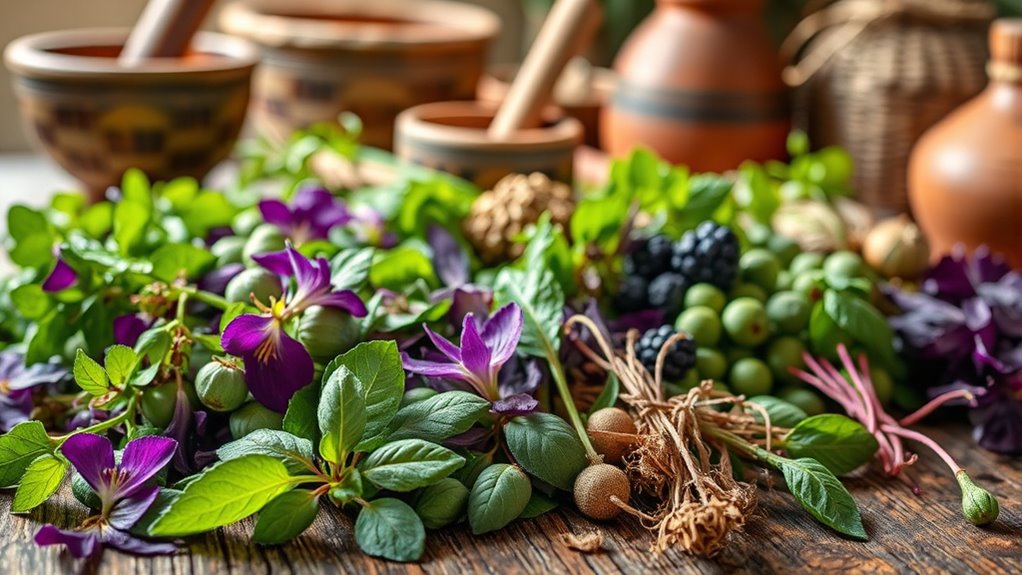
Have you ever wondered how indigenous cultures harness the healing power of local plants? In Africa and the Americas, communities have relied on native herbs for centuries, developing rich traditions of herbal remedies. In Africa, plants like moringa and rooibos serve as essential medicine, treating everything from digestive issues to infections. Likewise, indigenous peoples in the Americas use herbs such as echinacea and yarrow to boost immunity and heal wounds. These remedies are deeply embedded in cultural practices, often combined with spiritual rituals. The knowledge is passed orally through generations, emphasizing harmony with nature. These herbal traditions continue to influence modern herbalism, offering insight into effective, natural healing methods rooted in centuries of indigenous wisdom.
The Transmission of Herbal Wisdom Through the Ages
The rich herbal traditions from Africa and the Americas have been preserved and passed down through generations, shaping how indigenous communities understand and use medicinal plants. You might not realize it, but oral storytelling has been essential in transmitting this knowledge, with elders sharing remedies, rituals, and plant properties. Written manuscripts and herbal texts emerged later, safeguarding this wisdom in more formal ways. As trade routes expanded, herbal knowledge spread across regions, blending local practices with new insights. Apprenticeships allowed learners to observe and practice, ensuring skills weren’t lost. Today, this transmission continues through cultural practices, community knowledge, and even modern research. Your understanding of herbalism is rooted in centuries of shared experiences, adaptations, and stories that keep this ancient wisdom alive and evolving.
Ancient Techniques for Preparing and Preserving Herbs
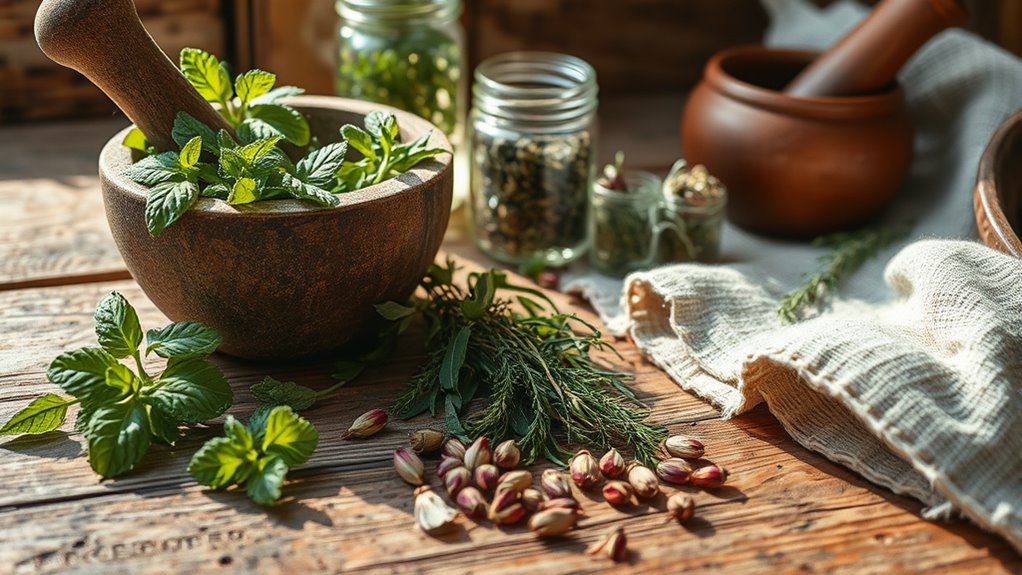
Ancient cultures developed a variety of techniques to prepare and preserve herbs, ensuring their medicinal qualities lasted beyond harvest. You might have seen herbs dried in the sun, their leaves shriveling but retaining potency. Others were stored in clay jars, sometimes layered with salt or honey to prevent spoilage. You could have encountered herbs pressed into flat bundles, then stored in cool, dark places. Smoking herbs over fires was common to both dry and flavor them. Some cultures used fermentation, creating tinctures or vinegars that preserved herbs for years. These methods not only extended shelf life but also enhanced medicinal properties.
- Herbs hung upside down, swaying in breezes
- Sun-drying on woven mats in open air
- Mixing herbs with salt or honey in jars
- Fermenting in clay vessels
- Smoke-curing over open flames
Iconic Herbs and Their Historical Significance
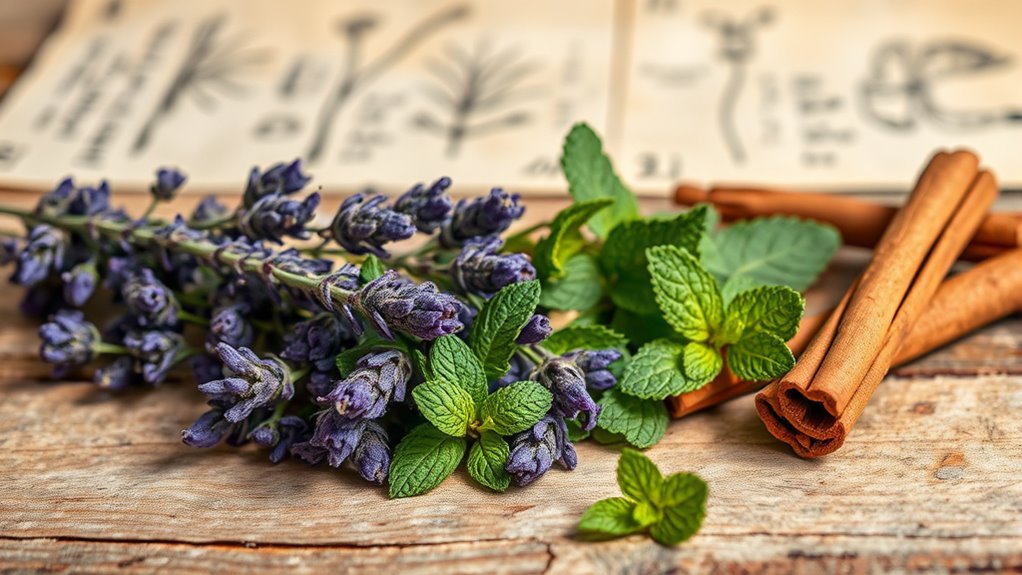
You’ve probably heard of herbs like lavender and sage, but their true importance goes beyond their scent. These plants have served medicinal purposes for centuries and hold deep cultural significance across different societies. Exploring their traditions reveals how iconic herbs shaped healing practices and cultural identities worldwide.
Ancient Medicinal Uses
Throughout history, certain herbs have been treasured for their powerful healing properties and cultural significance. These plants were used to treat ailments, boost immunity, and promote overall wellness. For example, you might imagine ancient healers grinding bright yellow turmeric roots to soothe inflammation or crushing fragrant rosemary leaves to sharpen memory. You could picture ancient Egyptians using aloe vera gel to heal burns or Chinese herbalists combining ginseng to increase vigor. In medieval Europe, herbalists brewed thyme to ward off infections, while Native Americans relied on echinacea to fight colds. These herbs weren’t just remedies—they embodied the knowledge and beliefs of their cultures, shaping medicine for centuries to come. Their historical uses laid the foundation for modern herbal practices and holistic healing.
Cultural Significance Throughout
Herbs have long held a special place in human culture, symbolizing more than just their medicinal qualities. Throughout history, certain herbs have become icons of power, spirituality, and tradition. For example, sage was revered for cleansing and spiritual protection in many ancient societies. Lavender symbolized purity and was used in rituals and healing practices. Herbs like thyme and rosemary carried significance in rituals and were believed to ward off evil spirits. These plants often appeared in religious ceremonies, folklore, and cultural stories, shaping identities and beliefs. Their symbolic meanings helped forge cultural bonds and passed down traditions through generations. By understanding these herbs’ cultural roles, you gain insight into how ancient peoples connected with their environment and imbued plants with deeper spiritual significance beyond their physical healing properties.
Iconic Herb Traditions
Many herbs have earned iconic status due to their deep-rooted historical significance and widespread use across cultures. These plants have shaped healing practices, rituals, and legends for centuries. You might imagine the bright red berries of holly, symbolizing protection during winter festivals. Or picture the fragrant lavender, used for calming and spiritual cleansing in ancient civilizations. Consider the bitter leaves of neem, revered in Asia for their medicinal properties. Think about the ancient Egyptians using aloe vera for skin healing, or the sage bundles burned in rituals for purification. These herbs are more than plants; they’re symbols of tradition, embodying centuries of knowledge and cultural identity. Their stories continue to influence modern herbal practices, connecting you to a rich, global heritage.
The Evolution of Herbal Medicine Into Modern Practices

As scientific understanding advanced, herbal medicine shifted from traditional practices to more systematic and evidence-based approaches. Researchers began studying plant compounds, uncovering active ingredients and their effects on the body. This progression led to standardized extracts, clinical trials, and integration into mainstream healthcare. Visualize this evolution:
| Traditional Practice | Modern Scientific Approach |
|---|---|
| Relied on centuries of anecdote | Backed by rigorous research |
| Used whole plants or mixtures | Isolated active compounds |
| Passed through generations | Documented in scientific journals |
| Focused on remedies | Emphasized safety and dosage standards |
| Healers relied on intuition | Practitioners use evidence-based methods |
This shift transforms herbalism from folklore into a credible, therapeutic science, blending ancient wisdom with modern precision.
Preserving and Honoring the Legacy of Ancient Herbalism
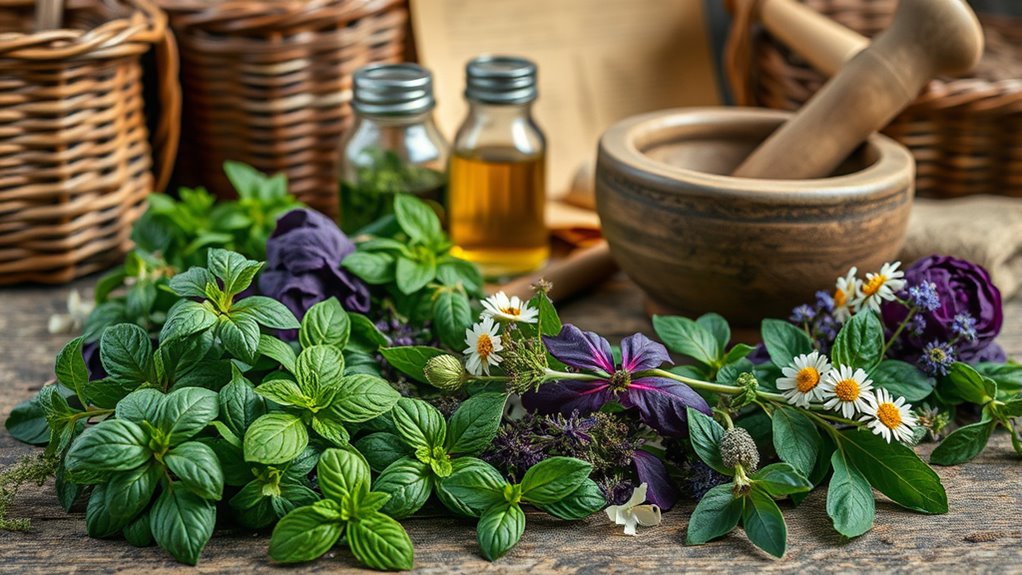
You can help keep the cultural significance of ancient herbal practices alive by learning about their history and traditions. Honoring this legacy involves blending old wisdom with modern herbal practices thoughtfully. By doing so, you guarantee that the rich heritage of herbalism continues to inspire and inform future generations.
Cultural Significance Preservation
Preserving and honoring the legacy of ancient herbalism guarantees that invaluable knowledge isn’t lost to time. You can do this by respecting traditional practices, celebrating cultural festivals, and passing stories through generations. These efforts keep alive the deep connection between communities and their herbal heritage. Picture vibrant markets filled with colorful herbs, elders sharing age-old remedies, and rituals that honor plant spirits. Imagine weaving ancient chants into modern ceremonies, or documenting stories in books and digital archives. Such actions reinforce the cultural identity tied to herbalism. By actively valuing these traditions, you help maintain the spiritual and social significance that herbs hold in various cultures. This ensures that future generations understand the roots of herbal healing and continue to cherish its cultural importance.
Modern Herbal Practices
Modern herbal practices play a vital role in honoring and maintaining the legacy of ancient herbalism while adapting to contemporary needs. You can see this in how herbalists blend traditional knowledge with modern science to guarantee safety and efficacy. Today’s practitioners emphasize sustainability, sourcing herbs responsibly to protect ecosystems. Education also plays a key role, with workshops and certifications preserving ancient techniques. To highlight this, consider the following practices:
| Practice | Approach | Goal |
|---|---|---|
| Wildcrafting | Foraging responsibly | Sustain herb populations |
| Herbal Formulation | Combining tradition with science | Create effective remedies |
| Community Education | Sharing knowledge widely | Preserve cultural roots |
| Sustainability Efforts | Organic and eco-friendly methods | Protect the environment |
Frequently Asked Questions
How Did Ancient Cultures Identify and Select Medicinal Herbs?
You observe natural signs like plant color, smell, and texture to identify medicinal herbs. Ancient cultures relied on trial and error, noticing which plants alleviated ailments. They also passed down knowledge through stories and observations, often selecting herbs based on their effects on humans and animals. By closely studying nature and sharing their findings, they developed effective herbal remedies that have influenced medicine for centuries.
Were There Any Specific Rituals Associated With Harvesting Herbs?
You might imagine ancient herbalists as skilled dancers, carefully choreographing their steps. Yes, they often performed specific rituals when harvesting herbs, like offering prayers or invoking spirits to honor the plant’s spirit. For example, some cultures believed that cutting herbs on certain moon phases or after specific ceremonies guaranteed potency. These rituals connected them spiritually to nature, emphasizing respect and harmony in the healing process.
How Did Herbal Knowledge Spread Between Civilizations Historically?
You explore how herbal knowledge spread through trade routes like the Silk Road and maritime pathways, allowing civilizations to exchange plants, remedies, and techniques. Travelers, scholars, and healers carried herbal lore across borders, adapting practices to local flora. Empires like the Greeks, Romans, and Arabs documented and shared their herbal insights, fostering a rich exchange of medicinal wisdom that shaped herbal practices across ancient societies.
What Tools Were Used to Prepare Ancient Herbal Remedies?
You used simple tools like mortars and pestles to grind herbs, making powders or pastes for remedies. Knives and scissors helped you harvest and prepare plants, while clay or metal pots and bowls held ingredients during mixing or boiling. Sometimes, you used strainers or cloths to filter liquids. These basic tools enabled you to transform raw herbs into potent medicines, passing knowledge across generations and cultures.
Are There Any Herbs From Ancient Times Still Used Today?
Yes, many herbs from ancient times are still used today. You might regularly use herbs like lavender for relaxation, peppermint for digestion, and chamomile for sleep. These plants have stood the test of time because of their proven health benefits. As you incorporate these herbs into your daily routine, you’re connecting with a rich history of herbal healing that spans centuries, continuing to support your well-being naturally.
Conclusion
As you explore the roots of herbalism, remember that these ancient traditions quietly whisper their wisdom through the leaves and roots we still cherish today. By honoring these subtle legacies, you keep their gentle guidance alive, allowing their timeless secrets to nurture your well-being. Embrace the quiet strength of nature’s ancient language, trusting that in its subtlety lies a profound connection—reminding us all of the enduring harmony between humans and the earth.