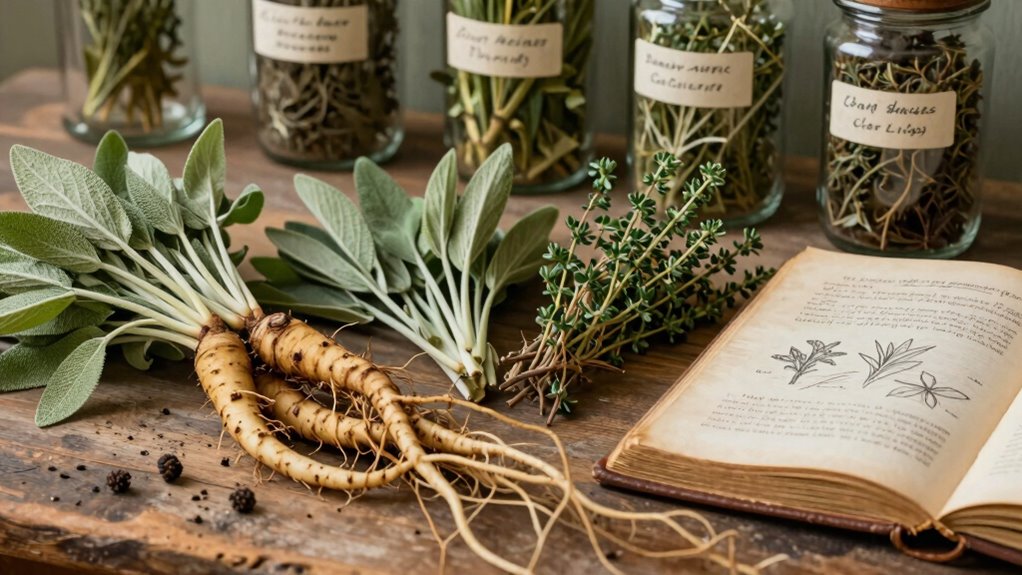

American folk herbalism draws from a rich mix of traditions influenced by indigenous knowledge, European, African, and immigrant communities. You’ll find practices rooted in respecting ecosystems, sustainable harvesting, and honoring land relationships. Indigenous techniques emphasize plants’ natural habitats and ceremonial preparation, while blending cultural practices creates a vibrant healing system. Each tradition reflects resilience and history, shaping a living heritage. If you keep exploring, you’ll uncover more about how these diverse plant practices come together in American herbalism.

Get oils, diffusers and self-care delivered free with Prime
- Fast, free delivery on millions of items
- Prime Video, Amazon Music and more included
- Member-only deals all year
Key Takeaways
- American folk herbalism is rooted in Indigenous plant knowledge emphasizing sustainable harvesting and ecological respect.
- It incorporates diverse cultural influences, including European, African, and immigrant herbal traditions.
- Traditional practices often involve ceremonial preparation, blending spiritual and medicinal elements.
- The system reflects resilience and cultural continuity, passing down stories and remedies through generations.
- Native plants like echinacea and sassafras play central roles in herbal healing practices.

American folk herbalism is built on a rich tapestry of plant traditions passed down through generations. You’re part of a lineage that’s drawn from diverse cultural influences, each adding its unique flavor to the way plants are used for healing. These traditions aren’t isolated; they weave together stories, remedies, and practices from various communities, creating a vibrant mosaic of herbal knowledge. Indigenous practices, in particular, form a cornerstone of this heritage, offering deep insights into local flora and sustainable harvesting methods. Native peoples have long understood the medicinal properties of native plants, and their wisdom shapes how many herbs are prepared and applied today. You’ll find that many remedies originate from Indigenous knowledge—like using echinacea for immune support or sassafras for colds—and these practices are often integrated into broader folk traditions.
American folk herbalism weaves Indigenous knowledge with diverse cultural traditions to create a vibrant, living healing mosaic.
The influence of Indigenous practices is evident not just in the herbs themselves but also in the way you approach herbal healing. You learn to identify plants in their natural habitat, respecting their ecosystems and understanding their roles within those environments. This respect for nature is a core aspect of Indigenous herbal knowledge, emphasizing a reciprocal relationship with the land. When you harvest herbs, you’re encouraged to do so sustainably, mindful of the plant’s life cycle and the community’s traditions. Indigenous practices also teach you the importance of ceremony and intention when preparing herbal remedies, imbuing every step with cultural significance. Recognizing the role of cultural transmission helps you appreciate how herbal knowledge has been preserved and adapted over time across different communities. Additionally, understanding the importance of biodiversity reinforces the need to protect native plants and their habitats for future generations. Incorporating traditional ecological knowledge into your practice helps deepen your connection to the land and supports conservation efforts. Cultivating awareness of local ecosystems helps ensure that harvesting remains sustainable and respectful of indigenous land stewardship practices.
Cultural influences from European settlers, Africans, and other immigrant groups further enrich American folk herbalism. You may encounter European herbal traditions that emphasize decoctions and tinctures, or African practices that incorporate spiritual elements alongside herbal use. These diverse influences blend seamlessly, creating a dynamic and adaptable system of healing. Each community brings its own plants and methods, which over time, merge into a shared cultural knowledge base. This blending isn’t superficial; it’s a living tradition that evolves as you learn from elders, community healers, and your own experiences.
In your journey through plant traditions in American folk herbalism, you recognize that this rich heritage is more than just a collection of recipes. It’s a reflection of history, resilience, and cultural survival. You carry forward this knowledge with respect, understanding that each plant and practice holds stories of Indigenous practices and cultural influences that have shaped the way healing is approached across the country. Through this, you become part of a continuous tradition that honors the past while adapting to the present.
Echinacea herbal supplement for immune support
As an affiliate, we earn on qualifying purchases.
As an affiliate, we earn on qualifying purchases.
Frequently Asked Questions
How Have Indigenous Practices Influenced American Herbal Traditions?
You see how indigenous practices have shaped American herbal traditions through cultural exchange and traditional knowledge. Indigenous communities shared their plant uses, healing methods, and spiritual practices, enriching local herbalism. By incorporating these insights, you recognize a deep respect for traditional knowledge that has been passed down through generations. This blending creates a diverse, resilient herbal tradition rooted in authentic indigenous wisdom, which continues to influence herbal practices today.
What Symbols Are Commonly Associated With Herbal Healing in American Folklore?
You might picture a small charm, like an herbal amulet, hanging around your neck or tucked into your pocket, symbolizing protection and healing. Common symbols include the four-leaf clover for luck, the crescent moon for intuition, and the star for guidance. Symbolic plant markings, such as particular leaf shapes or patterns, serve as signs of herbal power, connecting you to nature’s ancient wisdom and protective energies.
Are There Specific Herbs Linked to Regional Cultural Practices?
Yes, specific herbs are linked to regional cultural practices. For example, echinacea is popular in the Midwest for immune support, while sassafras is traditionally used in Southern herbal foraging for its aromatic roots. These herbs often serve as traditional remedies passed down through generations, reflecting local flora and cultural beliefs. You can explore these regional herbs to deepen your understanding of American folk herbalism and its diverse plant traditions.
How Did African Herbal Traditions Integrate Into American Folk Medicine?
African herbal traditions integrated into American folk medicine through cultural exchange, blending indigenous plants with African herbal symbolism. You’ll find that enslaved Africans brought medicinal knowledge, which merged with Native and European practices, enriching regional herbal remedies. This fusion created unique healing traditions, where herbs like hibiscus or ginger gained new meanings and uses, reflecting a diverse cultural heritage. These practices highlight how herbal symbolism preserves African roots within American folk healing.
What Role Do Storytelling and Rituals Play in Herbal Healing Practices?
You find that storytelling and rituals play a vital role in herbal healing, acting as tools for medicinal storytelling and ritualized healing. Through stories, you pass down herbal knowledge and connect emotionally, strengthening community bonds. Rituals create a sacred space, enhancing the healing process. These practices embed cultural values, deepen trust in remedies, guarantee that herbal traditions endure across generations, making healing both a spiritual and communal experience.
As an affiliate, we earn on qualifying purchases.
Conclusion
By exploring these plant traditions, you gain a deeper connection to the rich tapestry of American folk herbalism. Each herb carries stories and remedies passed down through generations, inviting you to honor and preserve this ancient knowledge. Isn’t it amazing how nature’s gifts can still heal and inspire today? Embracing these traditions, you’re part of a living heritage that sustains both body and spirit—reminding us all of the timeless bond between humans and the plants around us.
As an affiliate, we earn on qualifying purchases.
Herbal tincture kit for traditional remedies
As an affiliate, we earn on qualifying purchases.
As an affiliate, we earn on qualifying purchases.
Fall Picks
fall essentials
As an affiliate, we earn on qualifying purchases.