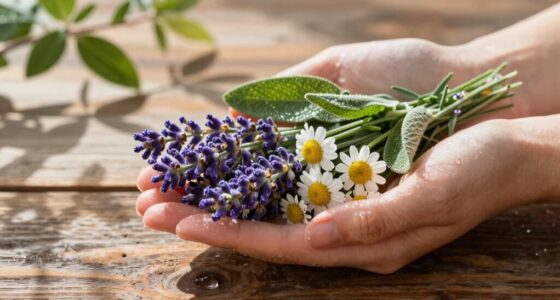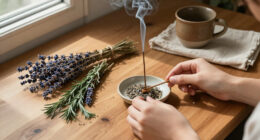
Throughout the year, you’ll see herbs like basil, cilantro, and parsley sprout in spring, perfect for fresh flavor. Summer brings lush growth of mint, oregano, and medicinal herbs like echinacea, ideal for drying or remedies. In autumn, herbs like sage and rosemary become more concentrated, great for storage. Winter offers dried herbs and some hardy varieties like thyme. Understanding these seasonal patterns helps you harvest at their peak—continue exploring to discover even more plant secrets.

Get oils, diffusers and self-care delivered free with Prime
- Fast, free delivery on millions of items
- Prime Video, Amazon Music and more included
- Member-only deals all year
Key Takeaways
- Spring herbs like basil, cilantro, and parsley emerge early for fresh culinary and medicinal use.
- Summer sees peak growth of herbs such as mint, oregano, and medicinal plants like echinacea.
- Autumn concentrates herbs like sage and rosemary, ideal for drying and long-term storage.
- Winter herbs include hardy perennials like thyme, with dried herbs maintaining potency through dormancy.
- Recognizing seasonal growth patterns optimizes harvest timing for maximum flavor and medicinal benefits.

Have you ever wondered how herbs change throughout the year? The seasons don’t just bring weather shifts—they influence the growth, potency, and availability of your favorite plants. As spring emerges, you’ll notice a burst of fresh green growth, especially among culinary herbs like basil, cilantro, and parsley. These herbs are eager to sprout, and their tender leaves are perfect for adding flavor to your dishes. During this time, many herbs are also gathering strength for the months ahead, and some, like chamomile and lemon balm, are starting to develop their medicinal properties. Spring is a prime season for gathering these herbs for medicinal remedies, as they often contain the highest concentration of active compounds during their early stages of growth. Recognizing these growth patterns can help you determine the best harvesting times for maximum benefits.
As summer rolls in, your herbs reach their peak. The warm sun and longer days encourage lush foliage and robust flavors. This is when culinary herbs truly shine, offering vibrant, aromatic leaves perfect for fresh salads, sauces, or garnishes. Basil, mint, and oregano flourish in this season, filling the air with their fragrant scent. It’s also a time when many medicinal herbs, such as echinacea and calendula, are in full bloom, their flowers packed with beneficial compounds. Summer harvesting allows you to create potent tinctures, teas, and salves to prepare for the colder months. The abundance of herbs during this period makes it easier to dry, preserve, or make infusions, ensuring you have access to their healing properties year-round. Additionally, understanding the seasonal growth patterns of herbs can help you optimize your harvesting schedule for maximum potency, especially as environmental factors influence their development. Being aware of these growth cycles can also help you avoid harvesting herbs too early or too late, ensuring maximum efficacy.
Come autumn, many herbs begin to slow down, but that doesn’t mean their usefulness diminishes. You’ll find that some herbs, like sage and rosemary, become more concentrated, making their leaves excellent for drying and storing. These herbs serve dual purposes—culinary herbs that add depth to hearty autumn dishes and medicinal remedies that support your immune system as cold weather approaches. Autumn is also a good time to harvest roots and seeds for long-lasting preparations. As the plants prepare to go dormant, their medicinal qualities often intensify, giving you the perfect opportunity to gather ingredients for teas, tinctures, and salves meant to boost resilience during winter. Understanding the plant life cycles can help you plan your harvests more effectively to maximize their benefits. Furthermore, learning about plant growth stages can enhance your ability to pick herbs at their peak potency for both culinary and medicinal use.
In winter, most herbs retreat into dormancy, but that doesn’t mean your herbal work has to stop. Many dried herbs from previous seasons remain potent, and some hardy perennial herbs, like thyme and winter savory, survive the cold and can be harvested as needed. You might focus on preserving your summer bounty through drying or making herbal oils and salves. This seasonal ebb and flow of herb growth and potency reminds you that herbalism is a year-round practice—one that adapts with nature’s rhythms. By understanding how herbs evolve through each season, you can better harness their power, whether for culinary delights or medicinal remedies.
Products Worth Considering

Levoit Core 600S-P Smart Air Purifier for Large Rooms

Hyperice Hypervolt 3 Percussion Massage Gun with Heated Head and Premium Carry Case

Philips Sonicare DiamondClean 9000 Electric Toothbrush Bundle, HX9912/72
As an affiliate, we earn on qualifying purchases.
Frequently Asked Questions
How Do Climate Zones Affect Seasonal Herb Growth?
Climate zones greatly influence your seasonal herb growth by dictating climatic adaptation. In warmer zones, herbs like basil thrive year-round, while cooler zones limit their growth to summer. Microclimate influence also matters—you might find sheltered spots allowing herbs to grow beyond typical seasons. Understanding these factors helps you select the right herbs for your climate zone, ensuring healthy growth and a continuous harvest throughout the year.
Can Indoor Herbs Follow Seasonal Growth Patterns?
Can indoor herbs follow seasonal growth patterns? Absolutely, you can encourage this by mimicking natural conditions. As you manage your indoor garden, coordinate your herb harvest and seasonal planting to reflect outdoor rhythms. Use grow lights, adjust watering routines, and rotate herbs to simulate changing seasons. Doesn’t this approach bring a sense of harmony and freshness to your space? With mindful care, your herbs can thrive year-round, mirroring nature’s cycles indoors.
What Are the Best Conservation Practices for Seasonal Herbs?
You should practice herbal harvesting at the right time to guarantee plant health and potency, and always use clean, sharp tools. To conserve seasonal herbs, focus on seed preservation by collecting seeds when mature, storing them properly in cool, dry conditions. This way, you maintain plant diversity and ensure future growth. Proper harvesting and seed preservation help sustain your herb garden year-round, even through seasonal changes.
How Do Seasonal Changes Impact Herbal Medicinal Properties?
Seasonal changes greatly influence herbal medicinal properties by affecting their potency and active compounds. When you practice herbal harvesting, you need to take into account the season to guarantee maximum efficacy. For seasonal preservation, timing your harvest is essential; harvesting at peak potency preserves medicinal qualities. As seasons shift, adapt your methods to maintain herb strength, making sure you get the most benefit from your herbs year-round.
Are There Herbs That Grow Year-Round Regardless of Season?
Yes, some herbs grow year-round regardless of season, especially in milder climates or indoors. You can preserve these herbs through methods like drying or freezing for herbal remedies or culinary uses. Common culinary herb varieties like rosemary, thyme, and oregano often thrive year-round. By practicing herb preservation, you guarantee a steady supply for your herbal medicine and cooking needs, no matter the season.
Conclusion
As you explore herbology through the seasons, you’ll notice how different plants flourish at various times, offering fresh remedies year-round. Did you know that herbs like thyme and rosemary can thrive in both winter and summer, providing consistent benefits? Embracing seasonal planting means you’ll always have access to nature’s healing gifts. So, get planting and enjoy the bounty of herbs that rise with each changing season—your garden’s resilience and versatility will surprise you!