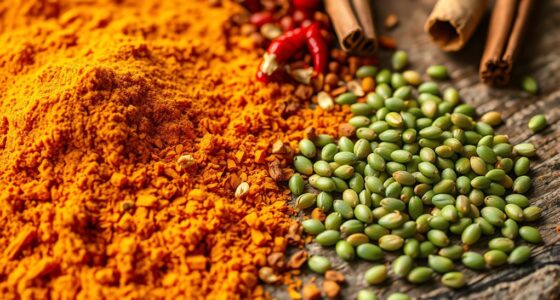
Spices like cloves, rosemary, and garlic are powerful natural allies against inflammation. Cloves contain eugenol, which fights inflammation at the cellular level, while rosemary offers antioxidants and reduces swelling through its compounds like rosmarinic acid. Garlic helps boost your immune system and reduce inflammation with allicin. Incorporating these spices into your meals or using essential oils can support your health. Keep exploring to discover more ways these spices can enhance your well-being.
Key Takeaways
- Cloves contain eugenol, which has potent anti-inflammatory properties that help reduce cellular inflammation.
- Rosemary offers antioxidants like rosmarinic acid, lowering inflammatory markers and promoting relaxation.
- Garlic contains allicin, a compound with strong anti-inflammatory and immune-boosting effects.
- Incorporating these spices into meals or using rosemary in aromatherapy can support natural inflammation reduction.
- Regular use of cloves, rosemary, and garlic may enhance overall health by fighting inflammation and supporting immune function.
The Anti-Inflammatory Powers of Cloves

Cloves are a potent spice known for their powerful anti-inflammatory properties. When it comes to spice preparation, you’ll find that cloves are versatile; they can be used whole or ground into a powder. Their intense flavor enhances both sweet and savory dishes, making them popular in culinary uses worldwide. Incorporating cloves into your meals can boost their health benefits, thanks to compounds like eugenol, which fight inflammation at a cellular level. You might add whole cloves to stews, rice, or baked goods, or sprinkle ground cloves over desserts and drinks. Their aromatic profile not only elevates flavor but also delivers anti-inflammatory effects. Using cloves regularly in your cooking can be a simple, tasty way to support your body’s fight against inflammation.
Rosemary’s Role in Combating Inflammation

After exploring how cloves can reduce inflammation, it’s worth noting that rosemary also offers notable anti-inflammatory benefits. You can enjoy these benefits through herbal tea, which helps soothe your body and reduce swelling. Rosemary’s antioxidants, like rosmarinic acid, help lower inflammatory markers and combat oxidative stress. Using aromatherapy techniques, such as diffusing rosemary essential oil, can further support your body’s fight against inflammation by promoting relaxation and reducing stress that may worsen inflammation. Incorporating rosemary into your routine—whether through teas or aromatherapy—can enhance your natural defenses. Its anti-inflammatory properties make rosemary a versatile spice and remedy, helping you manage inflammation more effectively while enjoying its aromatic and therapeutic benefits. Anti-inflammatory properties
Garlic as a Natural Inflammation Fighter

Garlic has long been celebrated for its powerful anti-inflammatory properties, making it a valuable addition to your health regimen. Its garlic’s immune boosting properties help your body fight off inflammation and infections more effectively. Consuming garlic regularly can also support your cardiovascular health by reducing blood pressure, lowering cholesterol levels, and preventing blood clots. These benefits stem from compounds like allicin, which have demonstrated anti-inflammatory and antioxidant effects. Incorporating garlic into your diet can be simple—add it to salads, soups, or stir-fries. Not only does garlic enhance flavor, but it also actively works to decrease inflammation and promote overall heart health. Proper planning can help you maximize these health benefits and avoid potential side effects. Additionally, understanding the safe usage guidelines ensures you incorporate garlic effectively without adverse reactions. Consuming garlic alongside other anti-inflammatory foods can further enhance its benefits. By including garlic in your daily routine, you strengthen your body’s defenses and support long-term wellness.
Frequently Asked Questions
Can These Spices Replace Conventional Anti-Inflammatory Medications?
These spices can’t fully replace conventional anti-inflammatory medications, but they can be effective natural remedies when used as part of a plant-based medicine approach. You might find that incorporating cloves, rosemary, and garlic helps reduce inflammation, but it’s important to consult your healthcare provider before making any changes. Relying solely on these spices isn’t advisable for serious conditions, and they should complement, not replace, prescribed treatments.
Are There Any Side Effects From Consuming These Spices Regularly?
You might notice some side effects from regularly consuming these spices, like spice toxicity or allergic reactions. For example, too much garlic can cause stomach upset or blood thinning, while cloves may lead to allergic skin reactions. Rosemary, in excess, could cause kidney issues. Keep in mind, moderation is key. If you experience any adverse effects, it’s best to consult with a healthcare professional to avoid potential risks.
How Much of Each Spice Is Safe for Daily Intake?
You should stick to recommended spice dosage for each. For cloves, about 1-2 teaspoons daily is safe; rosemary can be used in moderation, around 1-2 tablespoons, and garlic generally up to 1-2 cloves per day. Keep within these daily limits to avoid side effects like stomach upset or allergic reactions. Always consult your healthcare provider if you’re unsure about the right spice dosage for your needs.
Can These Spices Help With Chronic Inflammatory Conditions?
Think of these spices as tiny warriors in your kitchen arsenal. Cloves, rosemary, and garlic are natural anti-inflammatory allies, and their spice potency can help combat chronic inflammation when used consistently. While they won’t eliminate the problem alone, they support your body’s defenses and may reduce symptoms over time. Incorporate them into your meals daily, and you’ll be turning your food into a flavorful fight against inflammation.
Do Cooking Methods Affect the Anti-Inflammatory Properties of These Spices?
Cooking techniques can impact the spice potency of cloves, rosemary, and garlic, affecting their anti-inflammatory properties. You’ll want to avoid high heat or prolonged cooking, as this can degrade beneficial compounds. To preserve their potency, add these spices toward the end of cooking or use them raw in salads and dressings. By doing so, you maximize their anti-inflammatory benefits and enjoy their full health potential.
Conclusion
Incorporating cloves, rosemary, and garlic into your diet can markedly reduce inflammation naturally. Did you know that studies show consuming these spices regularly may lower chronic inflammation markers by up to 30%? By adding these powerful herbs to your meals, you’re not only enhancing flavor but also supporting your overall health. Start experimenting with them today—you might just find your body’s inflammation levels improving faster than you expected.