Herbal bath rituals have roots in ancient cultures and continue to be popular today, blending tradition with modern self-care. Scientific studies suggest that herbs like lavender, chamomile, and lemon balm can help you relax by reducing anxiety and improving sleep, though individual results vary. Psychological factors and your environment also play a big role in how effective these baths feel. If you explore further, you’ll discover practical tips to enjoy herbal baths safely and effectively.
Key Takeaways
- Scientific studies link herbs like lavender and chamomile to reduced anxiety and improved sleep, supporting some relaxation benefits.
- Psychological factors, such as ambiance and belief in herbal remedies, significantly enhance perceived stress relief.
- Herbs contain compounds that may influence mood, but individual effects vary and more research is needed.
- Rituals and self-care practices amplify the calming effects beyond the herbs’ pharmacological properties.
- Proper usage, high-quality herbs, and safety precautions are essential; herbal baths can be effective when combined with psychological and environmental factors.
The Origins and Popularity of Herbal Bath Practices
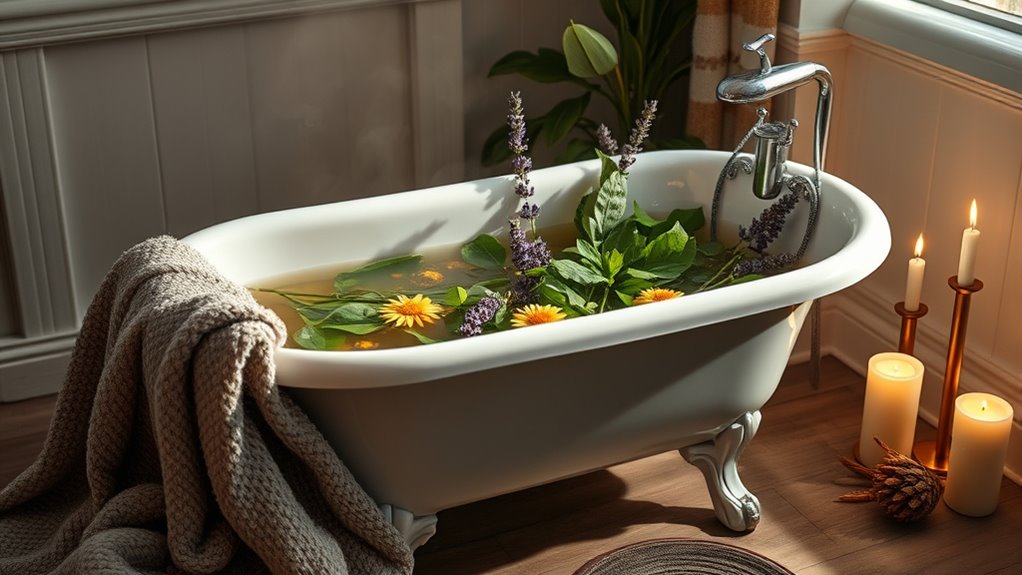
Herbal bath practices have a rich history rooted in ancient cultures that valued natural remedies for health and relaxation. Egyptians, Greeks, and Romans used herbs in baths to promote healing and soothe the mind. These civilizations believed that bathing with botanicals could improve physical health and spiritual well-being. Over time, herbal baths became a part of traditional medicine and wellness rituals across Asia, Europe, and the Middle East. The popularity of these practices spread through trade, cultural exchange, and the desire for natural healing methods. Today, herbal baths continue to attract interest, blending ancient wisdom with modern self-care routines. Their enduring appeal lies in the simple idea that nature’s herbs can foster relaxation and restore balance, making them a timeless spa ritual.
Key Herbs and Their Claimed Relaxation Benefits
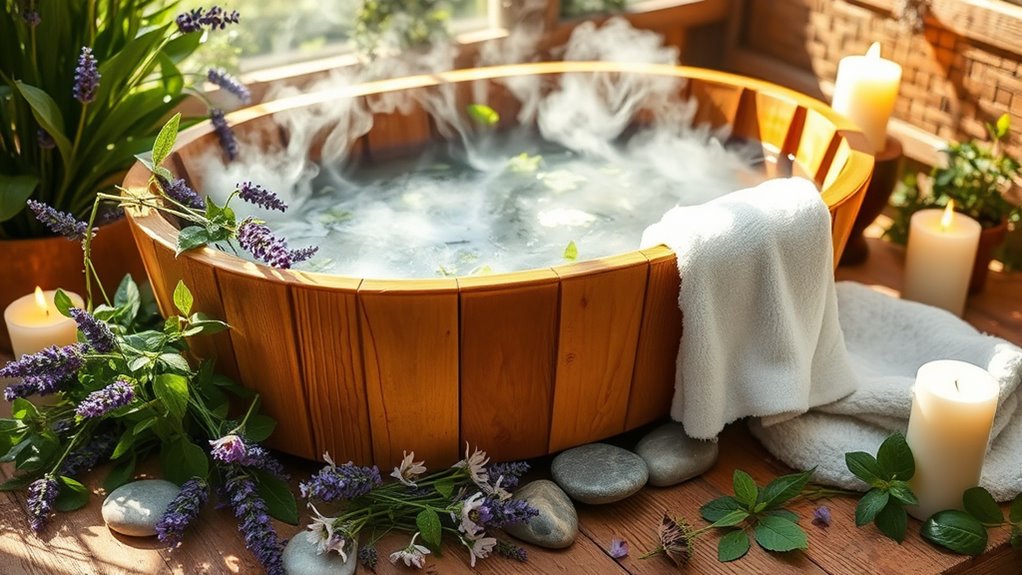
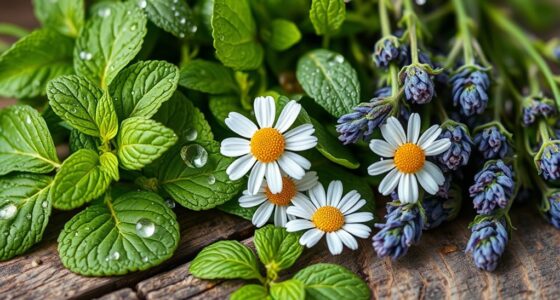
Many herbs have long been prized for their calming effects when added to bathwater. Lavender is renowned for its soothing scent, which may help reduce anxiety and promote restful sleep. Chamomile offers gentle relaxation, often used to ease tension and calm the mind. Eucalyptus not only invigorates but is also believed to clear the senses and alleviate stress. These herbs contain compounds that may influence your mood and relaxation levels.
Herbs like lavender, chamomile, and eucalyptus soothe nerves and ease tension when added to bathwater.
- Lavender’s aroma may lower cortisol, the stress hormone.
- Chamomile’s flavonoids could soothe nerves and promote sleep.
- Eucalyptus’s cineole might help relax muscles and improve breathing.
While popular, it’s essential to remember that individual responses vary, and the true benefits depend on personal factors and herbal quality.
Scientific Evidence Supporting Herbal Bath Efficacy

Although scientific research on herbal bath rituals is still developing, some studies suggest that certain herbs can produce measurable relaxation benefits. For example, lavender, chamomile, and lemon balm have been linked to decreased cortisol levels and improved mood. These herbs contain compounds that may influence your nervous system, promoting calmness. To better understand their effects, researchers often compare herbal baths with controls. Here’s a quick overview:
| Herb | Study Focus | Results |
|---|---|---|
| Lavender | Stress reduction | Significant decrease in anxiety levels |
| Chamomile | Relaxation and sleep quality | Improved sleep and lowered tension |
| Lemon Balm | Mood enhancement | Increased feelings of calm |
| Efficacy | Overall relaxation benefits | Some measurable effects confirmed |
While promising, more research is needed to confirm these benefits definitively.
Potential Placebo Effects and Psychological Factors

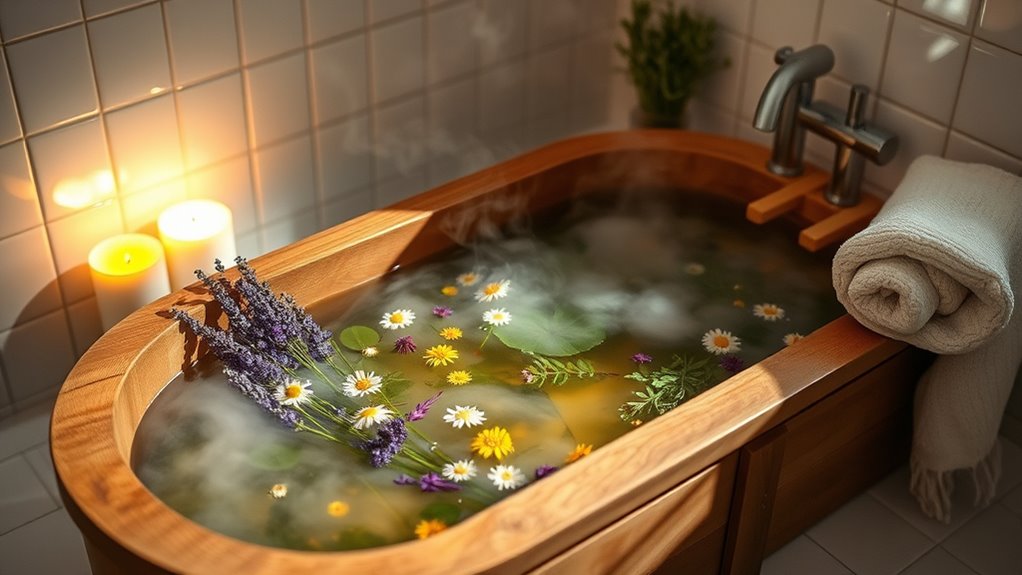
While scientific studies highlight the potential benefits of herbal bath rituals, psychological factors like the placebo effect often play a significant role in perceived relaxation. Your expectations, beliefs, and environment can influence how effective you feel the ritual is, regardless of the herbs used. If you believe a bath will soothe your stress, you’re more likely to experience genuine calming effects. Factors that amplify this include:
Belief and ambiance significantly enhance herbal bath relaxation effects.
- The calming ambiance of your bathroom
- Your personal beliefs in herbal remedies
- The ritualistic aspect of setting aside time for self-care
These elements can enhance relaxation, making the experience feel more potent than the herbs alone. Recognizing these psychological influences helps you understand the complex interplay between mind and body during herbal baths.
Practical Tips for Incorporating Herbal Baths Safely
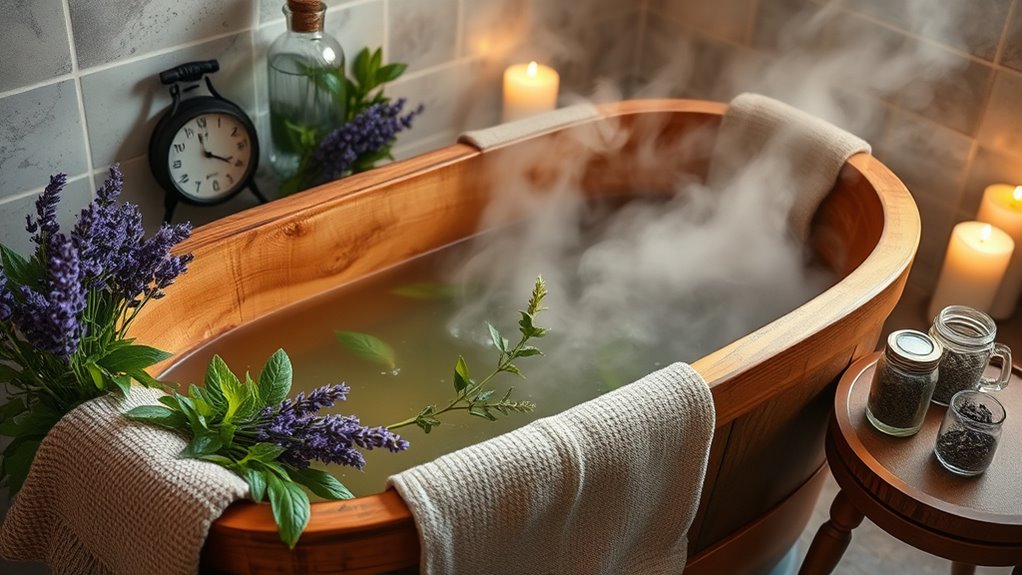
To safely incorporate herbal baths into your self-care routine, it’s essential to start with high-quality, known-safe herbs and follow proper preparation methods. Always purchase herbs from reputable sources to verify purity and avoid contaminants. Before using herbs, research their safety and possible allergies. When preparing your bath, use a small amount of dried or fresh herbs, and avoid applying concentrated extracts directly to your skin. Steep herbs in a muslin bag or infuse them in hot water before adding to your bath, which helps prevent residues. Limit your bath time to 15-20 minutes, and never leave herbs in the water for extended periods. If you’re pregnant, nursing, or have health concerns, consult a healthcare professional before use.
Frequently Asked Questions
Can Herbal Baths Replace Traditional Medical Treatments for Stress?
Herbal baths can’t replace traditional medical treatments for stress, but they can complement them. You might find soaking in herbal-infused water soothing and helpful for relaxation, yet it is crucial to consult a healthcare professional for persistent stress. Use herbal baths as part of a holistic approach, including therapy and medication if needed. They offer comfort and relief, but shouldn’t be relied on as sole treatment.
Are There Any Risks Associated With Long-Term Herbal Bath Use?
Long-term herbal bath use can pose risks if you’re sensitive or allergic to certain herbs, with studies showing up to 10% of people experiencing skin irritation. You might also disrupt your skin’s natural oils or cause infections if you don’t maintain proper hygiene. To stay safe, test new herbs on a small skin area first, and consult a healthcare professional if you have existing allergies or skin conditions.
How Do Different Cultures Vary in Their Herbal Bath Rituals?
You’ll notice that different cultures have unique herbal bath rituals reflecting their traditions. For example, Japanese onsen baths focus on mineral-rich waters, while Middle Eastern hammams incorporate aromatic herbs like rose and eucalyptus. In India, Ayurvedic practices emphasize herbal blends for balancing body and mind. These rituals often involve specific herbs, techniques, and settings, highlighting cultural values around relaxation, healing, and social connection.
What Are the Environmental Impacts of Harvesting Medicinal Herbs?
You might think harvesting medicinal herbs is harmless, but it can damage ecosystems if not managed sustainably. Overharvesting depletes wild populations, destroys habitats, and reduces biodiversity. Conversely, responsible harvesting and cultivation help preserve plant species and the environment. By choosing sustainably sourced herbs, you support ecological health and ensure future availability, balancing your wellness practices with environmental conservation.
Can Herbal Baths Be Customized for Individual Health Conditions?
Yes, you can customize herbal baths for your specific health conditions. By selecting herbs known for their targeted benefits—like chamomile for relaxation or eucalyptus for congestion—you tailor the experience to your needs. You might also adjust the strength and duration. Just make sure to research proper dosages and consult a healthcare professional if you have allergies or specific health concerns, ensuring a safe and effective bath.
Conclusion
While herbal baths can feel like a soothing retreat, their true stress-relieving power is a blend of science and tradition—like a well-balanced recipe. You might find genuine relaxation or simply enjoy the calming ritual. Either way, taking time for yourself in this way can offer a much-needed break from daily stress. So, embrace herbal baths as a gentle hug for your senses, and let their calming touch help you unwind and recharge.