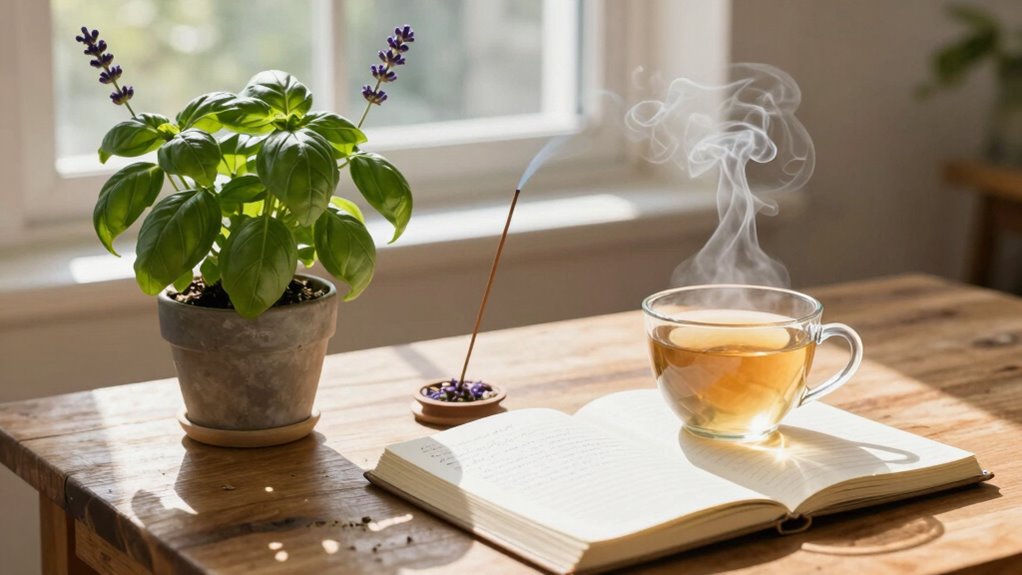

Incorporate herbal teas like chamomile, lavender, or lemon balm into your daily routine to promote calmness and reduce anxiety naturally. Pair these with mindful practices such as deep breathing or meditation to enhance relaxation effects. Creating a soothing environment with calming scents and maintaining consistency helps your mind build resilience against stress. If you keep exploring, you’ll discover more ways to integrate herbs into your mental wellness habits for a balanced, peaceful life.
Key Takeaways
- Pair herbal teas like chamomile or lemon balm with deep breathing exercises for enhanced relaxation.
- Incorporate herbal tinctures into morning routines to promote calmness throughout the day.
- Use lavender essential oils during meditation or mindfulness practices to deepen stress relief.
- Create a calming environment with herbal-scented candles or diffusers to reinforce relaxation habits.
- Maintain consistent herbal and mindfulness practices daily to build lasting mental resilience and emotional balance.
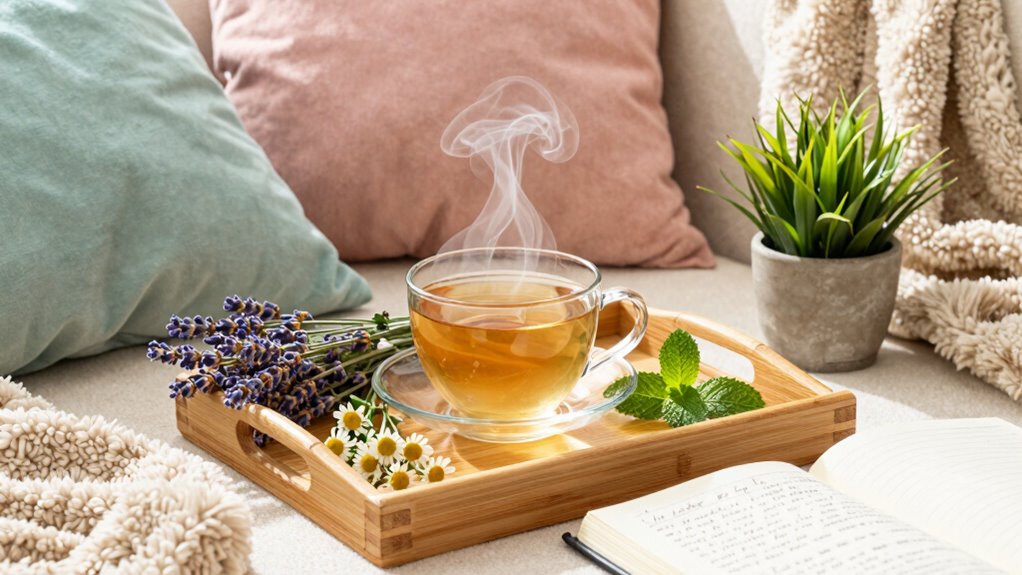
Maintaining mental wellness isn’t just about avoiding stress; it’s about actively cultivating habits that support your emotional and psychological health daily. One effective way to do this is by integrating herbal relaxation into your routine. Herbs like chamomile, lavender, and lemon balm have been used for centuries to promote calmness and reduce anxiety. When you incorporate herbal teas or tinctures into your day, you give your mind a gentle nudge toward tranquility. These natural remedies can help ease your tension, making it easier to face daily challenges with a clear mind. Herbal relaxation isn’t a magic fix, but it complements other stress relief techniques by providing a soothing foundation that supports your overall mental health.
Alongside herbal relaxation, practicing stress relief techniques is essential. You might find that deep breathing exercises or mindfulness meditation work wonders when combined with herbal remedies. For example, taking a few minutes each morning to breathe deeply, focusing on your breath, can profoundly lower your cortisol levels and promote a sense of calm. When you pair this with drinking a cup of herbal tea, you enhance the relaxation effect. The act of sipping a warm herbal beverage becomes a ritual that signals your brain to slow down and unwind. Consistently practicing these techniques helps build resilience against stress, making it easier to handle unexpected pressures. Incorporating holistic health practices can further enhance your mental wellness routine by addressing multiple aspects of your well-being. Developing a mind-body connection through these habits is a powerful way to deepen your mental resilience. Additionally, understanding the benefits of herbal remedies can motivate you to stay consistent and intentional with your routine.
Another habit that works well with herbs is creating a calming environment. You can use lavender-scented candles or essential oils during your relaxation time, reinforcing the soothing properties of the herbs you consume. When your surroundings are peaceful, your mind naturally gravitates toward a state of calm. Combining sensory elements like aroma and taste makes your stress relief routine more immersive and effective. Over time, these habits can help develop a mental buffer that prevents stress from overwhelming you. Incorporating biodiversity into your environment, such as by choosing natural diffusers or plants, can further enhance this calming space.
It’s also important to remember that consistency is key. Incorporate herbal relaxation and stress relief techniques into your daily schedule — perhaps in the morning to set a peaceful tone, or in the evening to unwind. The more you practice, the more these habits become second nature, creating a sustainable approach to mental wellness. Herbs are gentle allies in this journey, supporting your efforts with their natural calming properties. When you combine herbal relaxation with mindful techniques, you’re actively nurturing your mental health, helping you stay resilient, balanced, and more equipped to face life’s ups and downs.
As an affiliate, we earn on qualifying purchases.
Frequently Asked Questions
Can Herbs Replace Traditional Mental Health Treatments?
Herbs can’t fully replace traditional mental health treatments, but they can complement them. The herbal efficacy varies from person to person, and some benefits may result from placebo effects. While herbs like chamomile or lavender may help reduce anxiety, it is crucial to consult a healthcare professional for serious conditions. Using herbs as part of a broader approach can enhance your mental wellness, but they shouldn’t be the sole treatment.
Are Herbal Remedies Safe for Long-Term Use?
You might be surprised to learn that only 30% of herbal remedies have well-established safety profiles for long-term use. Herbal remedies can be safe if you follow proper herbal dosage guidelines, but risks exist if taken improperly or over long periods. Be aware of placebo effects, which can influence perceived benefits. Always consult a healthcare professional before using herbs long-term to guarantee safety and avoid adverse interactions.
Which Herbs Are Best for Anxiety Relief?
You should try herbs like chamomile, lavender, and passionflower for anxiety relief. Herbal tea benefits include calming your mind and reducing stress, making them a great natural option. However, be aware of common herbal side effects such as allergic reactions or drowsiness. Always start with small doses and consult a healthcare professional if you’re pregnant, breastfeeding, or on medication, to guarantee safe and effective use.
How Quickly Do Herbal Mental Wellness Habits Show Results?
Herbal mental wellness habits can show results within a few days to a few weeks, depending on the herb and your herbal dosage. Some, like adaptogens, may take longer to build up in your system. Remember, individual responses vary, and placebo effects can influence early results. Stay consistent with your herbal routine, and give your body time to adjust before evaluating their full benefits.
Can Herbs Interact Negatively With Medications?
Herbs can interact negatively with medications through herb-drug interactions, so you should be cautious. Some herbs may enhance or diminish your medication’s effectiveness, or cause side effects. Always check herbal supplement safety and consult your healthcare provider before adding herbs to your routine. Being aware of potential interactions helps you avoid adverse effects and guarantees your mental wellness habits support your overall health safely.
lavender essential oil for meditation
As an affiliate, we earn on qualifying purchases.
As an affiliate, we earn on qualifying purchases.
Conclusion
Incorporating herbs into your mental wellness routine can truly make a difference. For instance, imagine someone feeling overwhelmed by stress, turning to calming herbs like chamomile or lavender. Over time, they notice improved mood and relaxation. This simple addition shows that small, natural habits can support your mental health. By experimenting with herbs, you’re taking proactive steps toward feeling more balanced and resilient every day.
herbal tinctures for stress relief
As an affiliate, we earn on qualifying purchases.
As an affiliate, we earn on qualifying purchases.
aromatherapy candles for relaxation
As an affiliate, we earn on qualifying purchases.
As an affiliate, we earn on qualifying purchases.