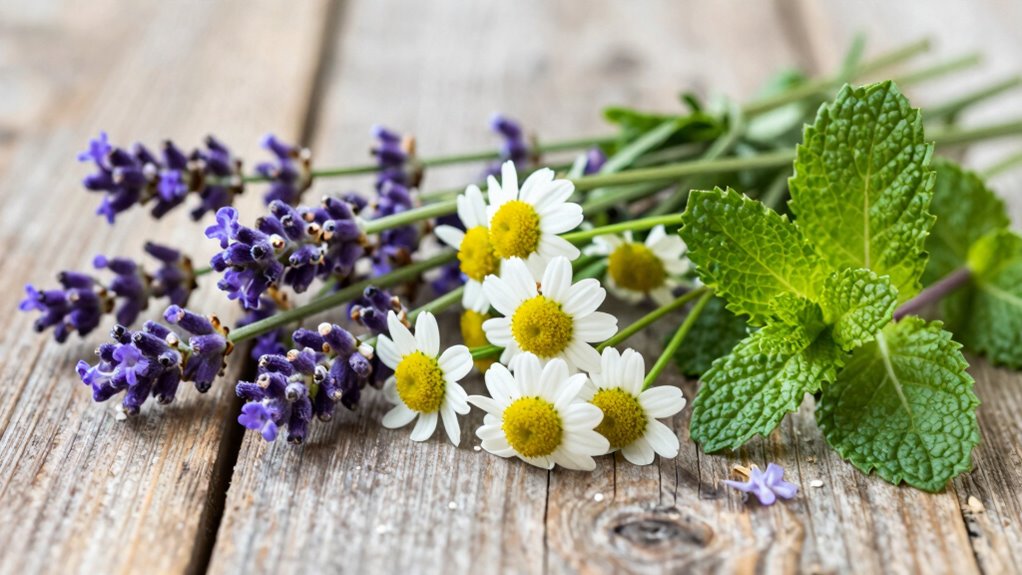
When stress shows up in your body, herbs like lavender and chamomile can help calm your nervous system and reduce tension. Lavender essential oil lowers anxiety and cortisol levels, while chamomile tea promotes relaxation and better sleep. Adaptogens like ashwagandha and Rhodiola support your resilience and help your body adapt to stress over time. Incorporating these herbs alongside relaxation practices can make a noticeable difference—exploring these options further can give you even more effective strategies.
Key Takeaways
- Herbs like lavender and chamomile naturally reduce anxiety and promote relaxation.
- Adaptogenic herbs such as ashwagandha support the body’s stress response over time.
- Dried lavender in baths or essential oil can soothe physical tension and calm the mind.
- Incorporating herbal teas or supplements helps manage stress-related symptoms effectively.
- Combining relaxation techniques with herbal support enhances overall stress relief and resilience.

Stress often manifests physically, signaling that your body is overwhelmed. When you notice tension in your muscles, headaches, or a racing heart, it’s your body’s way of alerting you that it needs some relief. Recognizing these signs is the first step toward managing stress effectively. Incorporating relaxation techniques and stress management strategies can help you regain control and restore balance. Herbs can be a natural complement to these practices, offering calming effects that ease your body’s response to stress.
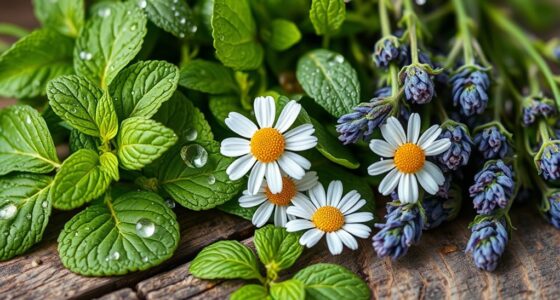
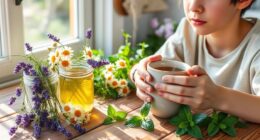
Lavender is one herb renowned for its soothing properties. You can use lavender essential oil in diffusers or add dried lavender to your bath to create a calming environment. Its aroma has been shown to reduce anxiety and lower cortisol levels, helping you unwind after a hectic day. Similarly, chamomile is another herb that promotes relaxation. Drinking chamomile tea can calm your nervous system and improve your sleep quality, which is often disrupted during stressful times. Its gentle, sedative effects make it a popular choice for soothing tension and promoting a sense of peace.
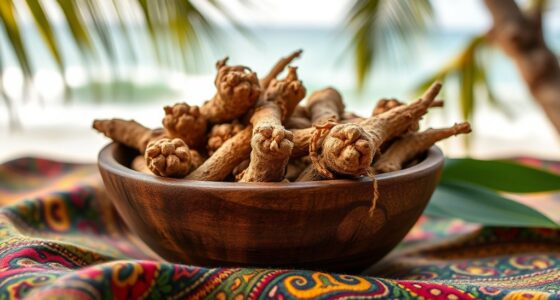
Ashwagandha, an adaptogenic herb, is particularly effective at helping your body adapt to stress. You might consider taking ashwagandha supplements or incorporating it into smoothies. It works by balancing cortisol levels, so your body doesn’t overreact to pressure. Rhodiola rosea is another adaptogen that can enhance your resilience to stress, boosting your energy and reducing fatigue. These herbs aren’t quick fixes, but when used consistently, they support your body’s ability to handle stress more effectively. Additionally, understanding the importance of biodiversity can help you develop a holistic approach to health, recognizing that a balanced environment contributes to overall well-being.
In addition to herbal remedies, focusing on simple relaxation techniques can deepen your stress management strategies. Deep breathing exercises, progressive muscle relaxation, and mindfulness meditation can all calm your nervous system. Incorporating herbal support into these practices can enhance their calming effects and provide a natural way to soothe your mind and body. When you combine these techniques with herbal support, you create a comprehensive approach that addresses both the physical and mental aspects of stress. Remember, consistency is key. Regularly practicing relaxation methods and using herbs as part of your routine can lead to significant improvements over time.

Majestic Pure Essential Oil with Glass Dropper – 100% Pure and Natural – Essential Oils for Diffuser, Aromatherapy, Soap and Candle Making, Lavender Essential Oil, Lavender Oil, 4 Fl Oz
100% PURE & NATURAL LAVENDER OIL – Majestic Pure Blends oils are exactly that! Many oils being sold…
As an affiliate, we earn on qualifying purchases.
As an affiliate, we earn on qualifying purchases.
Frequently Asked Questions
Can Herbs Completely Replace Medical Treatment for Stress?
Herbs can support your stress management, but they shouldn’t substitute medical treatment entirely. You need to focus on proper herbal dosage and plant identification to guarantee safety and effectiveness. While herbs like lavender or chamomile may help relax you, severe stress or mental health issues require professional care. Always consult your healthcare provider before making changes to your treatment plan, especially if you’re considering herbs as a supplement.
Are Herbal Remedies Safe for Long-Term Use?
Herbal remedies can be safe for long-term use if you follow traditional use guidelines and proper herbal dosage. Think of it like walking a tightrope—you need balance and knowledge to avoid falling into trouble. While many herbs have been used for centuries, it is crucial to consult with a healthcare professional to confirm they’re right for you. Regular monitoring helps prevent potential side effects and ensures safe, effective use over time.
How Quickly Do Herbal Stress-Relief Effects Typically Appear?
Herbal stress-relief effects can vary depending on herbal potency and your stress duration. Usually, you might notice calming effects within a few days to a week of regular use, especially with potent herbs like valerian or passionflower. For ongoing stress, consistent use over several weeks often yields better results. Keep in mind, individual responses differ, so patience and consistency are key to experiencing the full benefits.
Can Herbs Interfere With Prescription Medications?
You should be cautious because herbs can interfere with prescription medications, impacting their effectiveness. For example, a woman taking blood thinners found her herbal supplement increased her bleeding risk. Herb interactions can alter how your medication works, so always check prescription compatibility before adding herbs to your routine. Consult your healthcare provider to guarantee safety, especially if you’re on medications for chronic conditions, as some herbs might cause adverse effects.
Are There Specific Herbs for Sudden Stress Attacks?
Yes, certain herbs can help with sudden stress attacks. You might try herbal teas like chamomile or lemon balm, known for their calming effects. For stress symptom management, follow recommended herbal dosages to avoid side effects. Keep these herbs handy during stressful moments, and incorporate them into your routine for better resilience. Always consult a healthcare professional before starting new herbal remedies, especially if you’re on medication.

Traditional Medicinals Organic, Chamomile Tea – Supports Stress Relief and Relaxation – Kosher, Non-GMO, Caffeine-Free, Compostable – 16 Tea Bags
Herbal stress relief tea: Organic Chamomile tea calms your nerves and supports healthy digestion to help you relax*
As an affiliate, we earn on qualifying purchases.
As an affiliate, we earn on qualifying purchases.
Conclusion
Think of your body as a garden, and stress as weeds trying to take over. Herbs are your gentle gardeners, tending to each plant and clearing the chaos. With their soothing touch, they help your garden flourish, restoring balance and calm. By embracing these herbal allies, you’re nurturing a peaceful landscape within. Remember, with patience and care, you can turn your stress-filled garden into a vibrant oasis of tranquility.

NaturaLife Labs Organic Ashwagandha 2100 mg per Serving – Herbal Supplement Root Powder & Extract – 100 Capsules – Vegan, Non-GMO, Gluten-Free
✔️ Made with organic ashwagandha root powder and root extract for a full-spectrum supplement
As an affiliate, we earn on qualifying purchases.
As an affiliate, we earn on qualifying purchases.

Bronson Rhodiola Rosea Vegetarian Capsules – Adaptogenic Herb – Brain, Stress & Mood Support – Non-GMO, 60 Count
Herbal Support: Bronson Rhodiola Rosea helps to support a healthy stress response, mood and brain health.*
As an affiliate, we earn on qualifying purchases.
As an affiliate, we earn on qualifying purchases.