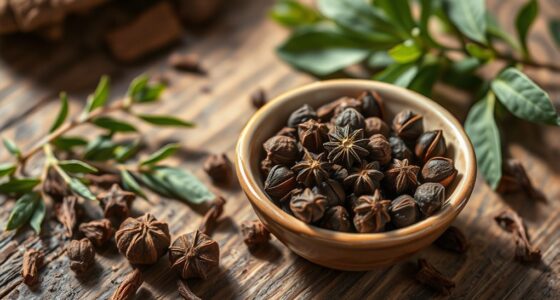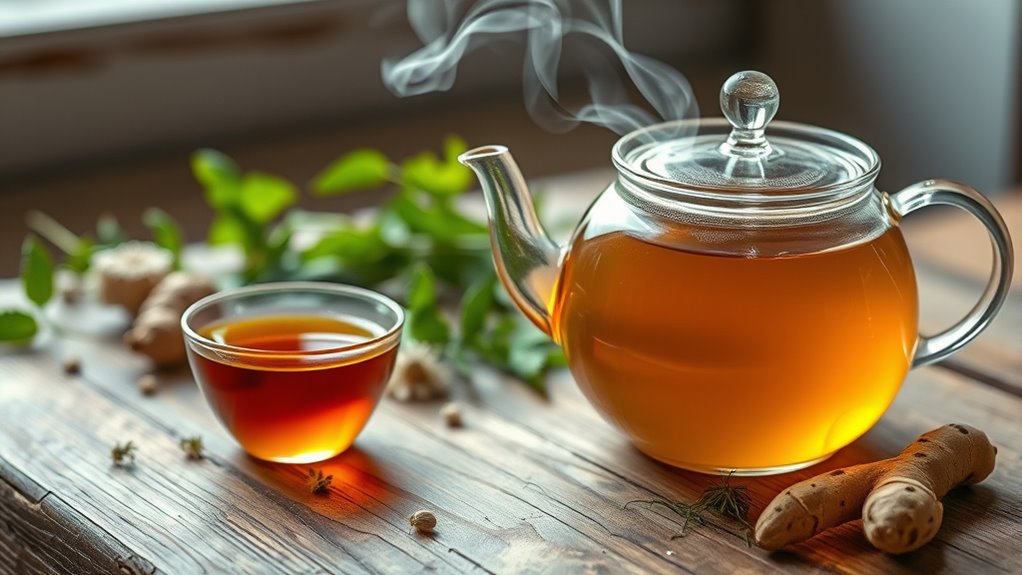

To brew your own natural headache painkiller, start with calming herbs like chamomile and lavender by steeping 1-2 teaspoons of dried flowers in hot water for about 10 minutes. Add soothing herbs like ginger or peppermint for extra relief. Use fresh ingredients, cover while steeping, and sip slowly. Combining these herbs creates a gentle, effective remedy. Keep exploring to discover tips for perfect brewing and other natural headache solutions.
Key Takeaways
- Use calming herbs like chamomile, lavender, or feverfew to brew soothing teas that alleviate headache tension.
- Incorporate anti-inflammatory herbs such as ginger or peppermint for pain relief and muscle relaxation.
- Steep herbs in hot water for 5-10 minutes, then strain or remove the tea bag before drinking slowly.
- Enhance tea benefits with honey or lemon, and practice deep breathing to maximize relaxation effects.
- Combine herbal teas with relaxation techniques and lifestyle adjustments for a holistic headache relief approach.
Top picks for "headache teas brew"
Open Amazon search results for this keyword.
As an affiliate, we earn on qualifying purchases.
Benefits of Herbal Teas for Headache Relief
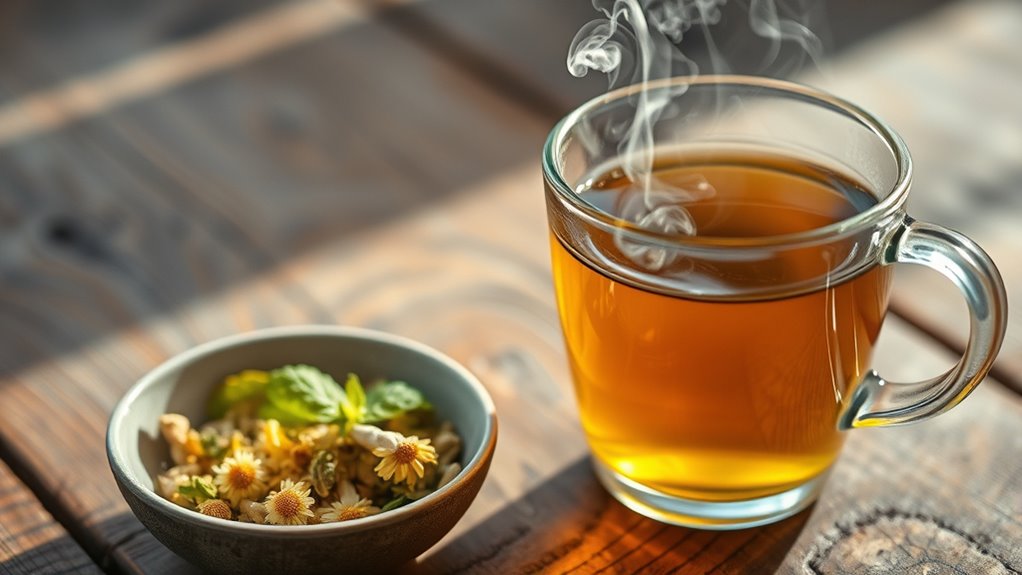
Herbal teas are popular natural remedies for headache relief because they contain compounds that can soothe tension and reduce inflammation. When you sip on these teas, you’re providing your body with antioxidants and calming agents that help ease headache symptoms. Many herbs have natural sedative properties, helping to relax tight muscles and calm your nerves. Plus, warm tea can improve blood flow and hydrate you, which is essential if dehydration is contributing to your headache. Unlike pharmaceutical options, herbal teas offer a gentle approach without harsh chemicals or side effects. Regularly drinking herbal teas can become part of your routine to prevent headaches or reduce their severity. Overall, they’re accessible, soothing, and supportive tools for managing pain naturally.
Key Herbs for Soothing Headaches
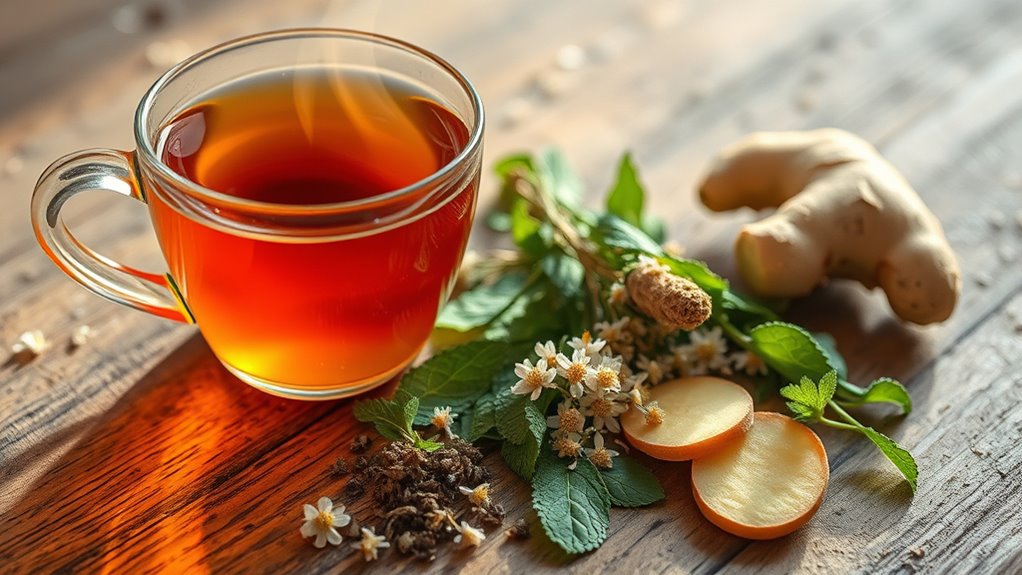
Several herbs have been recognized for their ability to soothe headaches, making them popular choices in herbal teas. These herbs contain natural compounds that reduce inflammation, relax muscles, and ease pain. For example, ginger is known for its anti-inflammatory properties, helping to reduce headache intensity. Peppermint offers a cooling effect that can relax tense muscles and improve blood flow. Here’s a quick overview:
| Herb | Benefits |
|---|---|
| Ginger | Anti-inflammatory, reduces pain |
| Peppermint | Muscle relaxation, headache relief |
| Lavender | Calms nerves, alleviates tension |
| Feverfew | Prevents migraines, eases pain |
Incorporating these herbs into your tea can provide gentle, natural relief from headache discomfort.
How to Prepare Chamomile Tea for Tension Headaches
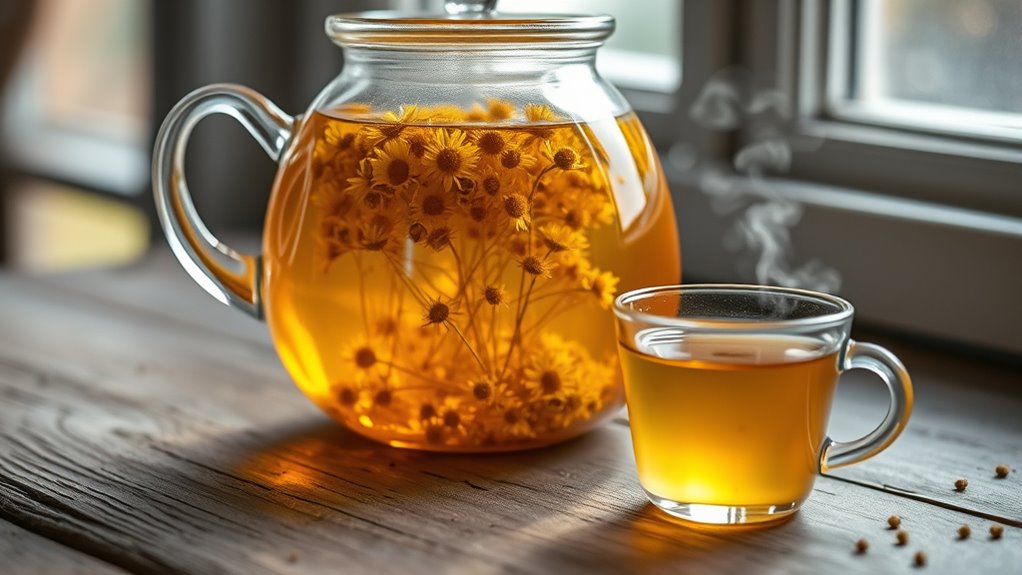
When you’re experiencing tension headaches, preparing chamomile tea can be a simple and effective way to find relief. To make it, start by boiling fresh water. While it heats, place 1-2 teaspoons of dried chamomile flowers or a chamomile tea bag into your cup. Once the water reaches a gentle boil, pour it over the herbs or tea bag. Cover the cup and steep for 5-10 minutes to maximize the calming properties. After steeping, remove the tea bag or strain out the flowers. You can add honey or lemon for flavor if desired. Sip slowly, focusing on your breathing. This soothing ritual can help relax your muscles and ease tension, providing quick comfort during a headache.
Ginger’s Role in Reducing Headache Pain

Ginger has long been valued for its natural ability to combat pain, and recent studies support its effectiveness in reducing headache discomfort. Its active compounds, gingerol and shogaol, have anti-inflammatory properties that help ease headache symptoms. When you consume ginger, it works to block pain signals and reduce muscle tension, providing relief without medication. To maximize its benefits, you can brew fresh ginger root into a tea or add it to hot water with lemon. Here’s a quick comparison:
| Method | Benefits |
|---|---|
| Fresh ginger tea | Fast relief, soothing warmth |
| Dried ginger | Easy to store, concentrated flavor |
| Ginger powder | Convenient, easy to prepare |
| Ginger capsules | Precise dosage, portable |
| Ginger slices | Cooling effect, easy to customize |
Incorporating ginger into your routine can naturally help diminish headache pain.
Peppermint Tea: A Cooling Remedy for Migraines
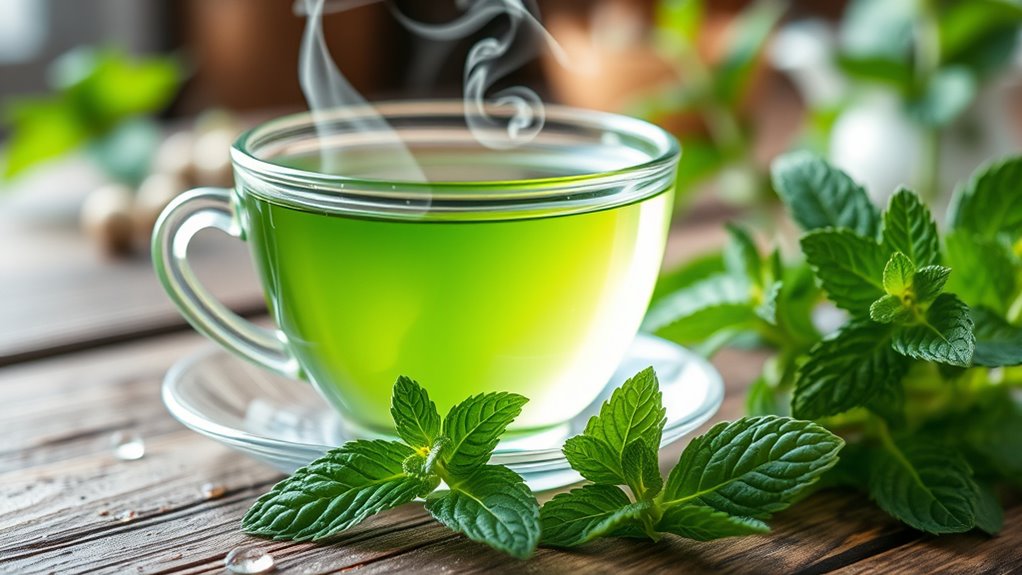
When you sip peppermint tea, you’ll notice a cooling sensation that can help soothe your migraine. The menthol in the tea relaxes your muscles and clears your mind, providing quick relief. This invigorating remedy offers both a calming and cooling effect, making it worth a try when headaches strike.
Cooling Sensation Benefits
Peppermint tea offers a natural cooling sensation that can help alleviate migraine discomfort. The invigorating coolness provides immediate relief by soothing tense muscles and calming nerve endings. When you sip this tea, the sensation not only cools your palate but also helps reduce the intensity of headache pain.
Here are three benefits of this cooling effect:
- Instant relief – The cooling sensation helps distract your brain from pain signals.
- Muscle relaxation – It eases tension in your head and neck muscles, easing pressure.
- Enhanced comfort – The invigorating feeling can make you feel more relaxed and less overwhelmed.
This cooling sensation acts as a gentle, natural remedy that can make your migraine more manageable without harsh chemicals.
Menthol’s Relaxing Effects
Menthol, a natural compound found in peppermint, has powerful relaxing effects that can help ease migraine tension. When you sip peppermint tea, menthol interacts with your sensory receptors, producing a cooling sensation that soothes your muscles and calms your nervous system. This cooling effect not only provides relief from headache pain but also reduces stress and promotes relaxation. Menthol acts as a natural muscle relaxant, helping to loosen tight muscles around your head and neck, which often contribute to migraines. Drinking peppermint tea regularly may help prevent migraine episodes by calming your mind and easing physical tension. Its invigorating aroma and taste also enhance your overall sense of well-being, making peppermint tea a simple yet effective way to relax and combat migraine discomfort.
Combining Herbs for a Custom Headache Brew

Creating a custom headache brew involves thoughtfully combining herbs that work together to alleviate pain and promote relaxation. To do this effectively, consider how different herbs complement each other’s effects. Start with a base herb like chamomile for calming nerves. Add a pain-relieving herb such as feverfew or ginger. Finally, include a herb that boosts circulation, like peppermint or lavender, to help ease tension.
Here are some options to experiment with:
- Chamomile, ginger, and peppermint for soothing relief
- Feverfew, lavender, and lemon balm for calming and anti-inflammatory effects
- Peppermint, willow bark, and basil for a revitalizing, pain-fighting blend
Mix and match based on your headache type and preferences for a personalized brew.
Tips for Perfectly Brewing Your Headache Tea
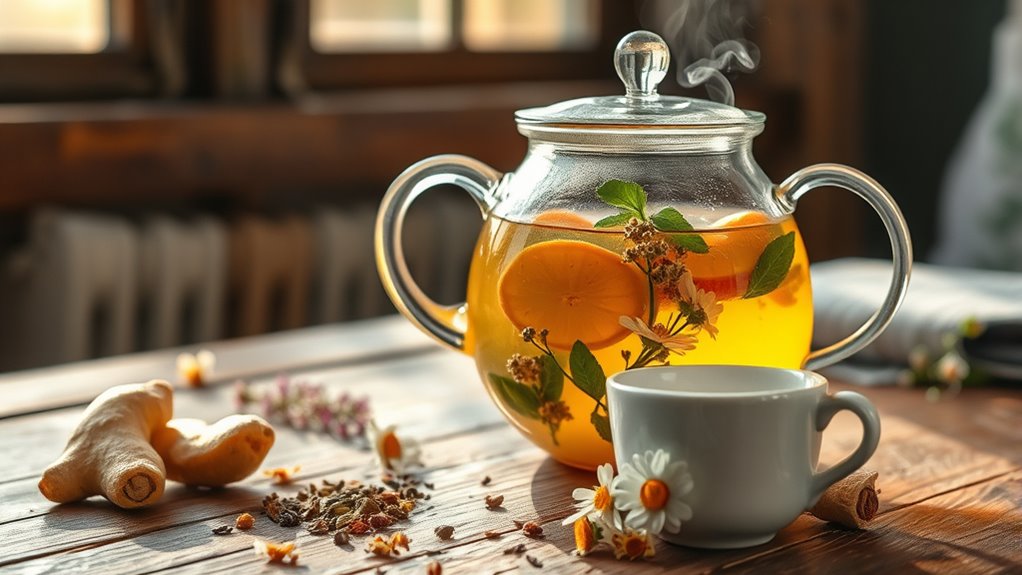
Once you’ve selected your herbal blend, brewing it to perfection guarantees you get the full benefits. Start with fresh, filtered water and bring it to a gentle boil. For most herbs, like chamomile or peppermint, pour the hot water over your tea bag or loose herbs in a teapot. Cover the cup or pot to trap the steam, which helps extract more medicinal properties. Steep your herbs for the recommended time—usually 5 to 10 minutes—then remove the herbs or tea bag. Avoid over-steeping, as it can cause bitterness. Use a strainer if necessary to catch loose herbs. Finally, enjoy your tea while it’s warm to maximize relief. Proper brewing assures you receive the full natural benefits of your headache remedy.
Additional Natural Remedies to Complement Your Tea

You can boost your headache relief by trying herbal supplements like magnesium or feverfew. Incorporating relaxation techniques, such as deep breathing or meditation, helps lower stress that triggers headaches. Making simple dietary adjustments, like staying hydrated and avoiding known triggers, also supports headache prevention.
Herbal Supplements for Relief
Herbal supplements can provide targeted relief from headaches when used alongside your favorite teas. Incorporating these natural remedies into your routine can enhance your pain relief efforts. Here are three effective options:
- Magnesium – Known to relax blood vessels and reduce headache frequency, magnesium supplements can be especially helpful if you experience migraines.
- Feverfew – This herb has been used for centuries to prevent migraines and lessen their severity.
- Peppermint Oil – Applying diluted peppermint oil topically on your temples can quickly soothe tension and ease headache pain.
Always consult with a healthcare professional before adding new supplements to your routine. Combining these supplements with your teas can create a powerful natural toolkit for headache relief.
Relaxation Techniques to Reduce Stress
To effectively reduce stress and alleviate headache symptoms, incorporating relaxation techniques into your routine can be highly beneficial. Deep breathing exercises, like diaphragmatic breathing, help calm your nervous system and lower tension. Progressive muscle relaxation involves tensing and relaxing muscle groups, releasing built-up stress. Mindfulness meditation encourages you to focus on the present moment, reducing anxiety and mental clutter. Even taking a few minutes for gentle stretching or yoga can ease muscle tightness that contributes to headaches. Regularly practicing these techniques can make stress less overwhelming and prevent headache triggers. Combine them with your herbal teas for a calming, holistic approach. With consistency, you’ll notice a decrease in stress levels and a reduction in headache frequency and intensity.
Dietary Adjustments for Headache Prevention
Incorporating dietary adjustments alongside relaxation techniques can substantially enhance your headache prevention strategy. Being mindful of what you eat helps reduce triggers and supports overall well-being. Start by staying hydrated—drink plenty of water throughout the day, as dehydration often causes headaches. Next, limit processed foods high in additives like MSG and artificial sweeteners, which can provoke migraines. Finally, include magnesium-rich foods such as nuts, seeds, and leafy greens; magnesium helps relax blood vessels and reduce headache frequency. Avoid skipping meals, as low blood sugar can trigger pain. By making these simple changes, you’ll create a more balanced diet that supports your head health and complements your natural remedies. Combining these tips with herbal teas boosts your chances of headache relief.
Safety and Precautions When Using Herbal Teas
While herbal teas can offer relief and health benefits, it’s vital to be aware of potential safety concerns. Not all herbs are suitable for everyone, especially pregnant women, nursing mothers, or those with underlying health conditions. Some herbs may interact with medications, reducing their effectiveness or causing adverse effects. Always verify the quality and source of your herbs to avoid contamination or mislabeling. Start with small doses to see how your body reacts, and avoid overconsumption, which can lead to side effects like nausea or dizziness. If you experience any allergic reactions or unusual symptoms, discontinue use immediately and consult a healthcare professional. Remember, herbal teas are natural but not risk-free, so approach their use with caution and informed awareness.
Frequently Asked Questions
Can Herbal Teas Replace Prescribed Headache Medications Safely?
Herbal teas can complement your headache relief routine but shouldn’t replace prescribed medications without your doctor’s approval. While they offer natural soothing effects, they may not be strong enough for severe or chronic headaches. Always consult your healthcare provider before making changes to your treatment plan. Relying solely on herbal teas could delay proper treatment, so use them as an adjunct rather than a substitute for professional medical advice and prescribed medications.
Are There Any Herbs That Should Be Avoided During Pregnancy?
During pregnancy, you should avoid herbs like parsley, sage, and basil in large amounts, as they may cause complications. Wormwood, mugwort, and rosemary are also risky and should be avoided. Always check with your healthcare provider before using any herbal remedies, especially during pregnancy. Stick to safe options like ginger or peppermint, and confirm any herbs you consume are verified as pregnancy-safe to protect both your health and your baby’s.
How Long Should I Steep Herbal Teas for Maximum Relief?
You should steep herbal teas for about 5 to 10 minutes to get maximum relief. Don’t rush—steeping too briefly might weaken the herbs’ potency, and too long can make the tea bitter. Use hot, but not boiling water, to preserve delicate properties. Remember, consistency matters, so enjoy your tea regularly for best results. Adjust steeping time based on your taste and the specific herb’s instructions.
Can Herbal Teas Cause Allergic Reactions or Interactions?
Yes, herbal teas can cause allergic reactions or interactions, especially if you’re sensitive to certain plants or taking medications. You might experience symptoms like itching, swelling, or breathing difficulties. To stay safe, check the ingredients and consult your healthcare provider before trying new herbs, especially if you have allergies or are on medication. Always start with small amounts to see how your body reacts.
How Often Can I Safely Drink Headache-Relief Teas Daily?
You can usually enjoy headache-relief teas up to three times a day without worry. Think of it like a gentle hug for your head—just don’t overdo it or you might turn into a tea-bowered zombie. Always listen to your body, and if you notice side effects, cut back. If headaches persist, chat with a healthcare pro—because even natural remedies need boundaries!
Conclusion
Imagine wrapping your hands around a warm mug, the gentle aroma soothing your senses as you sip your homemade herbal tea. With each calming mouthful, feel your headache’s grip loosen, replaced by a sense of relief and comfort. These natural remedies invite you to create a peaceful moment, turning everyday tea into your personal, comforting remedy. Embrace the warmth, breathe deeply, and let your homemade brew bring gentle relief to your day.