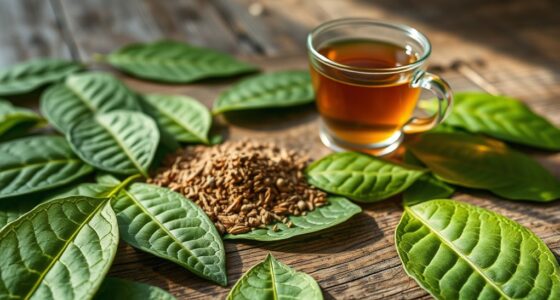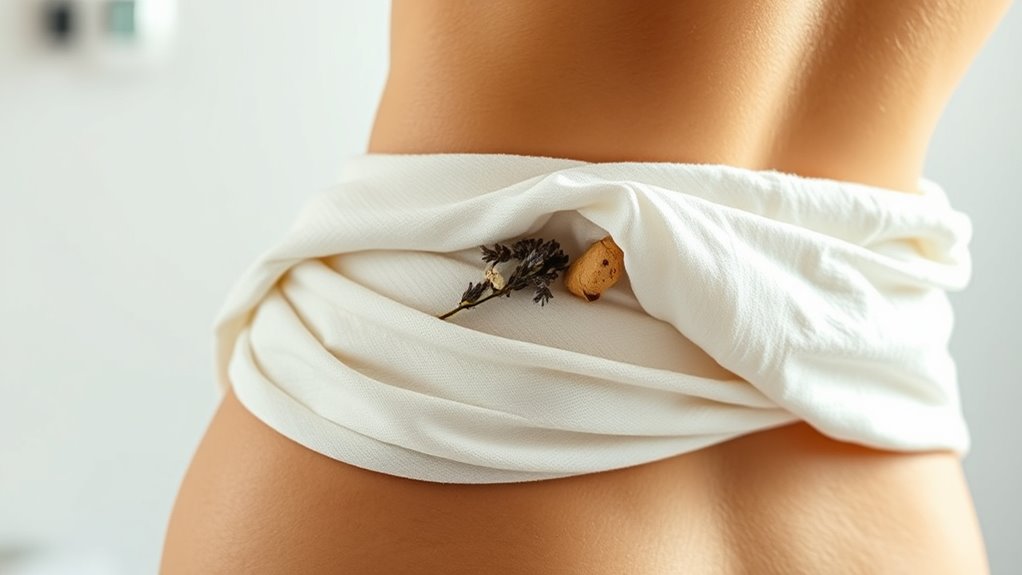
Herbal compresses and poultices can effectively ease back pain by targeting inflammation, relaxing muscles, and promoting healing naturally. Using herbs like arnica, turmeric, ginger, or devil’s claw, combined with gentle heat, helps improve blood flow and reduce stiffness.Applying a warm herbal pack offers targeted relief, and with proper preparation and safety precautions, you can experience relief at home. Keep exploring for detailed steps and tips to make the most of these herbal remedies.
Key Takeaways
- Herbal compresses deliver targeted relief by promoting blood flow, relaxing muscles, and reducing inflammation with natural anti-inflammatory herbs.
- Common herbs like arnica, turmeric, and ginger effectively decrease swelling, soothe muscles, and alleviate back pain.
- Proper preparation involves creating warm herbal poultices that penetrate skin and relax tense muscles for immediate comfort.
- Applying compresses correctly—warm, gentle, and for 15-20 minutes—maximizes healing and reduces stiffness.
- Combining herbal treatments with stretching, heat therapy, and ergonomic adjustments enhances overall back pain relief.
Understanding the Benefits of Herbal Compresses and Poultices
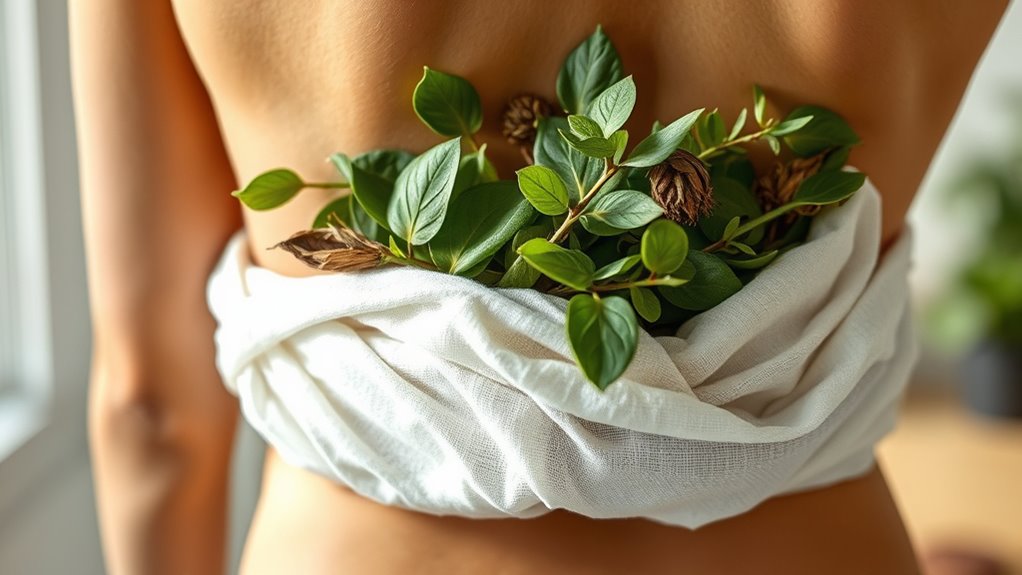
Herbal compresses and poultices have gained popularity for their natural approach to relieving back pain. You’ll find that applying these warm herbal packs delivers targeted relief by promoting blood flow and easing muscle tension. The heat helps relax tight muscles, reducing stiffness and discomfort. Plus, the herbs inside the compress can have anti-inflammatory properties, which may help decrease swelling and pain. Using these remedies is straightforward—you simply place the warm pack on your back for a set period. Unlike medications, herbal compresses offer a gentle, non-invasive alternative that supports your body’s healing process. They can be used regularly without side effects, making them a safe addition to your pain management routine. Overall, herbal compresses harness nature’s power to soothe and heal your aching back.
Popular Herbs Used in Back Pain Remedies
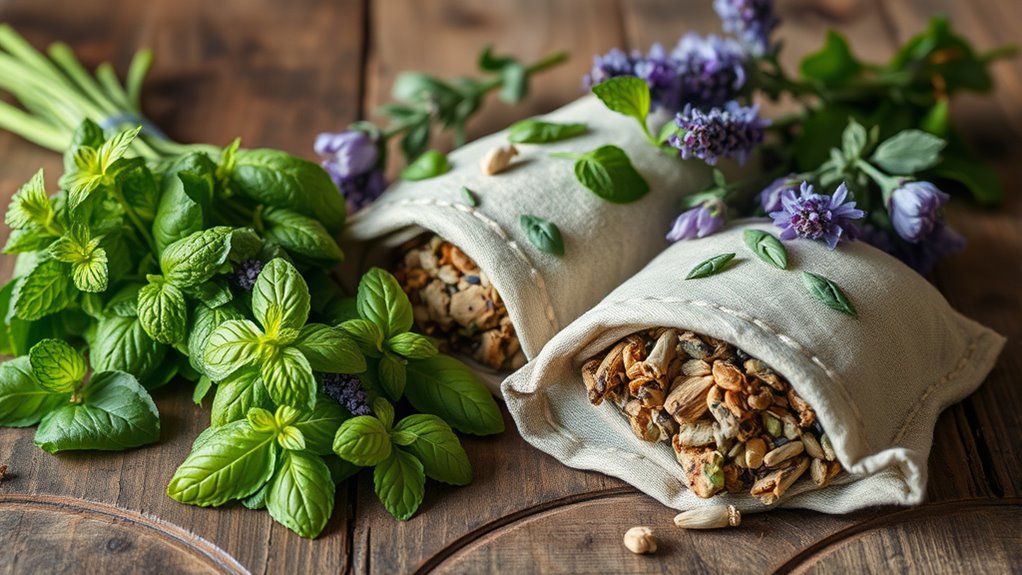
Many herbs have been traditionally used to ease back pain because of their powerful anti-inflammatory and muscle-relaxing properties. You’ll find herbs like arnica, turmeric, ginger, and devil’s claw commonly used in remedies. These herbs can reduce swelling, improve circulation, and relax tense muscles when applied as compresses or poultices. Here’s a quick overview of popular herbs:
| Herb | Key Benefit |
|---|---|
| Arnica | Reduces swelling and bruising |
| Turmeric | Anti-inflammatory, relieves pain |
| Ginger | Boosts circulation, soothes muscles |
| Devil’s Claw | Eases joint and muscle pain |
Using these herbs in herbal compresses can provide targeted relief and support your back recovery.
How Herbal Compresses Alleviate Muscle Tension and Inflammation

When you apply herbal compresses to your back, the active compounds in herbs like arnica, turmeric, and ginger penetrate your skin, targeting underlying muscle tension and inflammation directly. These herbs contain natural anti-inflammatory and analgesic properties that help reduce swelling and soothe sore muscles. The heat from the compress enhances blood flow, bringing oxygen and nutrients to your tissues while flushing out toxins. This combined effect loosens tight muscles and alleviates stiffness, providing immediate relief. Regular use can prevent future tension buildup and promote faster healing. By calming inflammation and relaxing muscles, herbal compresses help you move more comfortably and lessen pain without relying on medications. It’s a simple, natural way to support your back health and ease discomfort effectively.
Preparing Your Own Herbal Poultice at Home
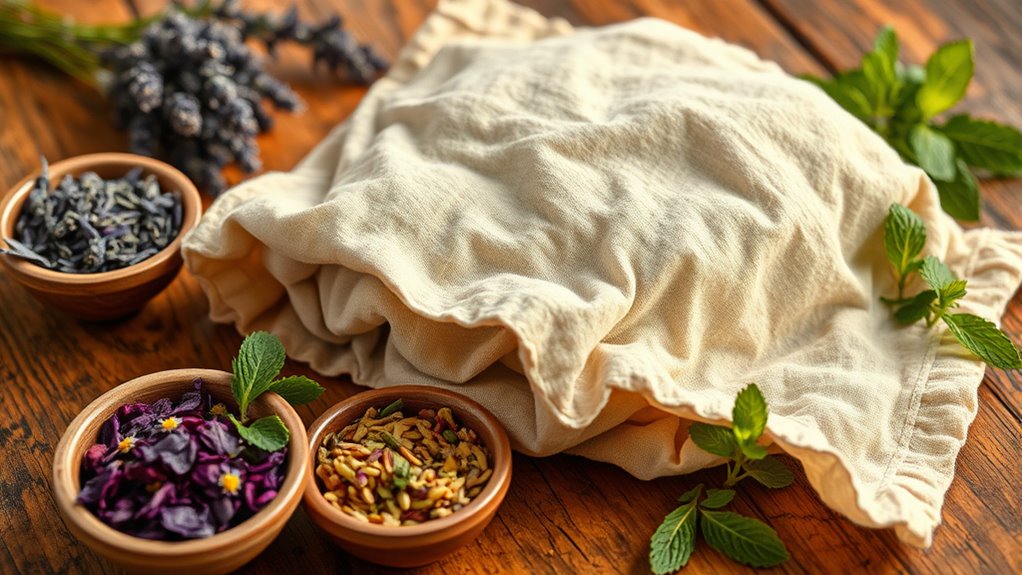
Creating your own herbal poultice at home is simple and cost-effective, allowing you to customize the ingredients based on your specific needs. Begin by selecting herbs known for their healing properties, like comfrey, ginger, or turmeric. Grind or crush the herbs into a paste using a mortar and pestle or a food processor. Mix the herbs with a small amount of warm water or a carrier like honey or oil until you get a thick, spreadable consistency. Place the mixture onto a clean cloth or muslin, then fold it into a poultice. Confirm the herbs are evenly distributed. Adjust the mixture as needed to avoid spillages or mess. Preparing your own poultice enables you to target your pain precisely and use fresh ingredients for suitable results.
Applying Herbal Compresses for Maximum Effectiveness

To guarantee your herbal compresses deliver maximum relief, it’s important to apply them correctly. First, ensure the compress is warm but not too hot to avoid burns. Place it gently on the affected area, pressing lightly to encourage absorption. Keep the compress in place for 15-20 minutes, allowing the herbs’ properties to penetrate deeply. For best results, cover it with a cloth or plastic wrap to trap heat and moisture. Be mindful of your comfort—if you feel discomfort, remove the compress. Reheat as needed, maintaining the right temperature. Focus on steady, gentle pressure and consistent application to optimize benefits.
Apply herbal compresses gently, keep warm for 15-20 minutes, and cover for optimal relief and deep absorption.
- Use a clean cloth for the compress.
- Keep the compress warm but not hot.
- Cover the area with a cloth or plastic wrap.
- Apply gentle pressure without pressing too hard.
- Limit application to 15-20 minutes.
Safety Tips and Precautions When Using Herbal Remedies

Herbal remedies can offer effective relief, but it’s essential to prioritize safety to avoid adverse reactions. Always test a small skin patch first to check for allergies. Follow recommended dosages strictly, and don’t use herbs past their expiration date. When preparing herbal compresses, confirm ingredients are clean to prevent infections. Keep herbs out of reach of children and pets. Use the table below as a visual reminder of safety steps:
| Step | Action | Reminder |
|---|---|---|
| 1 | Patch test | Check for allergies |
| 2 | Follow dosage | Avoid overdose |
| 3 | Clean equipment | Prevent infections |
| 4 | Store safely | Keep away from kids |
Combining Herbal Treatments With Other Pain Management Strategies

Combining herbal treatments with other pain management strategies can enhance relief and address different underlying causes of back pain. By integrating approaches, you target both symptoms and root issues more effectively. For example, pairing herbal compresses with gentle stretching helps improve flexibility and reduces tension. You might also incorporate heat therapy or massage to boost circulation and relax muscles. Using ergonomic adjustments, like proper chairs or mattresses, complements herbal remedies by preventing strain. Additionally, maintaining a healthy weight reduces pressure on your spine. Here’s what this combined approach can look like:
- Regular stretching routines
- Application of heat or cold therapy
- Ergonomic workspace setup
- Gentle physical activity
- Mindfulness and relaxation techniques
This multi-faceted approach increases your chances of lasting relief.
Success Stories and Personal Experiences With Herbal Back Pain Relief
Have you heard how many people have found relief from back pain through herbal remedies? Personal stories show that herbal compresses and poultices can markedly reduce discomfort. Many users report improved mobility and less reliance on pain medications after consistent use. For example, some share how applying a warming herbal compress eased muscle tension and decreased inflammation. Others highlight how herbal poultices provided quick, soothing relief during flare-ups. These experiences often emphasize the natural, safe aspect of herbal treatments, making them a preferred choice for long-term management. While results vary, countless individuals find these remedies effective, boosting their confidence to manage back pain more holistically. Your own success story could be just a herbal compress away from greater comfort and renewed mobility.
Frequently Asked Questions
How Often Should I Use Herbal Compresses for Back Pain Relief?
You should use herbal compresses for back pain relief 2 to 3 times a week. Apply them for about 15-20 minutes each session, ensuring you’re in a comfortable position. If your pain improves, you can gradually reduce frequency. Always listen to your body, and if you experience increased discomfort or skin irritation, stop using the compresses and consult a healthcare professional.
Can Herbal Compresses Be Used Alongside Conventional Medications?
A stitch in time saves nine, and yes, you can use herbal compresses alongside conventional medications. Just make certain you consult your healthcare provider first to avoid any interactions or side effects. Combining treatments can enhance your relief, but professional guidance ensures safety. Always follow your doctor’s advice and monitor how your body responds. Remember, two heads are better than one when managing health, so keep communication open with your medical team.
Are There Any Herbal Compresses Suitable for Pregnant Women?
Yes, some herbal compresses are suitable for pregnant women, but you should always consult your healthcare provider first. Look for gentle, soothing herbs like chamomile or lavender, which are known for their calming effects. Avoid strong or hot compresses, and steer clear of herbs that might cause contractions or allergies. Always prioritize safety and get personalized advice to guarantee the compresses won’t affect you or your baby negatively.
How Long Does It Typically Take to See Results From Herbal Poultices?
It usually doesn’t take long to see results from herbal poultices—sometimes as quickly as a few applications, but it varies depending on your condition. You might feel relief within a day or two, or it could take a week of consistent use. Keep in mind, patience is a virtue here; herbs work gradually, so stick with it, and you’ll likely notice improvements as your body responds.
What Are Common Signs of Allergic Reactions to Herbal Ingredients?
You might notice redness, itching, swelling, or hives on your skin, which are common signs of allergic reactions to herbal ingredients. If you experience difficulty breathing, dizziness, or swelling of the face or throat, seek emergency help immediately. Always do a patch test before applying a new herbal compress, and discontinue use if you notice any adverse reactions. Being cautious helps prevent serious health issues.
Conclusion
Imagine finally finding relief from stubborn back pain, but just as you’re about to celebrate, a new challenge arises. Herbal compresses and poultices hold powerful potential, yet their true secret lies in how you use them. Are you ready to access this natural remedy’s full promise? Your journey to lasting relief might be closer than you think—if you take that next step. The next move could change everything. Are you prepared?