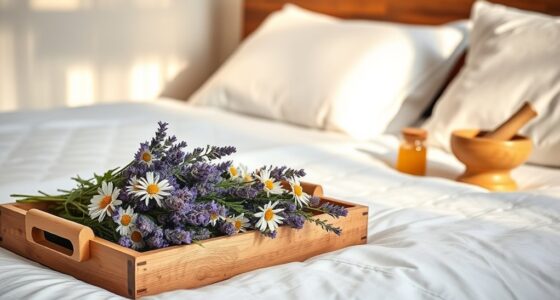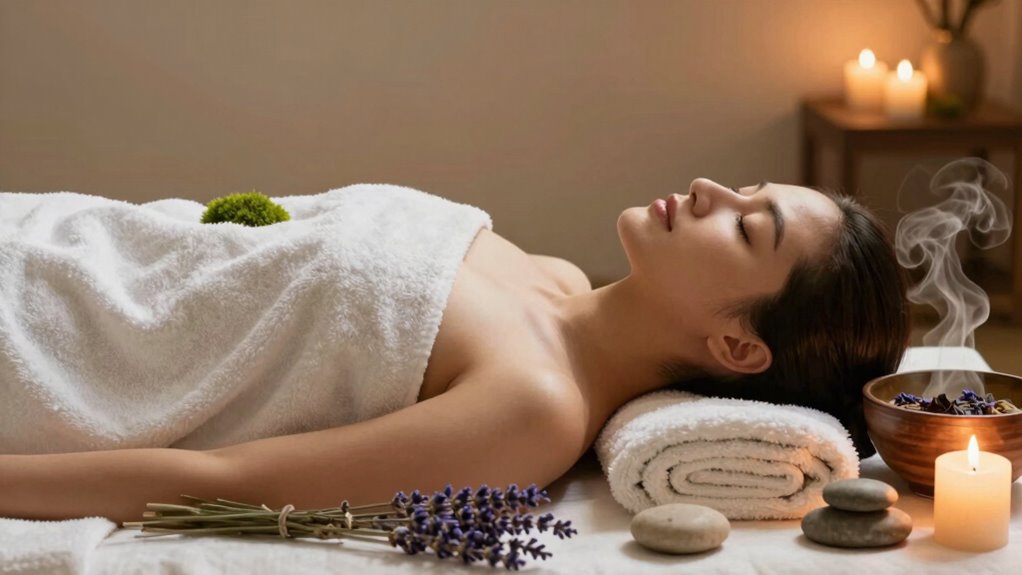

Starting with restorative rituals can set a strong foundation for pain relief by creating consistent, calming routines. You can dedicate time each day to mindfulness practices like breath awareness or enjoy herbal teas to soothe your body and mind. These rituals help foster a sense of safety, control, and resilience, making pain easier to manage over time. Keep exploring, and you’ll discover how integrating natural elements and mindful habits can enhance your comfort even further.

Get oils, diffusers and self-care delivered free with Prime
- Fast, free delivery on millions of items
- Prime Video, Amazon Music and more included
- Member-only deals all year
Key Takeaways
- Establish daily mindfulness and herbal tea rituals to promote relaxation and signal the body to ease pain.
- Dedicate specific times for calming activities, creating a predictable routine that fosters comfort.
- Incorporate natural elements like plants or outdoor time into rituals to enhance mental and physical resilience.
- Use mindful breathing during rituals to activate the body’s relaxation response and reduce stress-related pain.
- Maintain consistency in restorative practices to build long-term pain management habits and emotional stability.

Are you tired of living with constant pain? You don’t have to accept it as your norm. Restorative rituals can be powerful tools to support your pain relief journey. Starting with mindfulness techniques, you learn to pay close attention to your body and your breath, helping you stay grounded amid discomfort. By practicing mindful breathing, you can activate your body’s relaxation response, reducing stress hormones that often amplify pain sensations. This simple act of focusing on your breath allows you to step back from the pain, creating a space where you can observe it without judgment. Over time, mindfulness can help you develop a more peaceful relationship with your discomfort, making it feel less overwhelming. Incorporating biodiversity into your environment and routine can also enhance your overall well-being and resilience against pain. Including natural elements like plants or outdoor exposure can further support your holistic health, complementing your mindfulness practices.
Herbal remedies also play a vital role in these rituals. Incorporating herbs like turmeric, ginger, or willow bark into your routine can provide natural anti-inflammatory effects. You might brew a soothing tea or take supplements to help ease joint stiffness or muscle soreness. These remedies work gradually, complementing your mindful practices by calming your nervous system and reducing pain-related inflammation. The key is consistency—making these herbal remedies part of your daily routine helps build a foundation for ongoing relief.
Creating a restorative ritual involves more than just incorporating mindfulness and herbal remedies; it’s about establishing a routine that nurtures your body and mind. Dedicate a specific time each day for these practices—perhaps in the morning to start your day calmly or in the evening to unwind. During this time, you can sit quietly, focus on your breathing, and sip herbal tea, turning the activity into a calming ritual that signals your body to relax. Over time, these rituals become a familiar sanctuary, providing comfort and a sense of control over your pain.
Products Worth Considering

Therabody Theragun Relief Massage Gun, 3-Speed, Black

Oura Ring 5 Smart Ring, Silver, Size 10

Garmin Forerunner 165 GPS Running Smartwatch, 43 mm, Black
As an affiliate, we earn on qualifying purchases.
Frequently Asked Questions
How Long Should Restorative Rituals Be Performed for Optimal Pain Relief?
You should perform restorative rituals, including mindfulness techniques and gentle stretches, for about 15 to 30 minutes daily for ideal pain relief. Consistency matters, so dedicate this time regularly to help your body relax and reduce tension. Focus on deep breathing and gentle movements, which enhance relaxation. Over time, these rituals can considerably decrease pain, improve flexibility, and promote overall well-being, making your routine both effective and sustainable.
Are There Specific Restorative Rituals for Different Types of Pain?
Yes, there are specific restorative rituals for different types of pain. For muscle tension, gentle stretching combined with mindful breathing can soothe tight muscles. For stress-related pain, practices like meditation and deep breathing help calm your mind and reduce discomfort. If you’re dealing with joint pain, gentle joint-specific movements and mindful awareness can improve flexibility and ease. Tailoring your rituals to your pain type maximizes relief and promotes overall well-being.
Can Restorative Rituals Replace Medication for Chronic Pain Management?
Restorative rituals can be a valuable part of holistic healing, but they aren’t a one-size-fits-all substitute for medication in chronic pain management. Think of natural remedies as a gentle stream that complements your treatment, rather than replacing it entirely. Incorporating these rituals can reduce reliance on medication, promote relaxation, and support your overall well-being. Always consult with your healthcare provider before making significant changes to your pain management plan.
How Do Restorative Rituals Impact Mental Health Alongside Physical Pain?
Restorative rituals like mindfulness meditation and breathing exercises considerably boost your mental health alongside easing physical pain. These practices help you stay present, reduce stress, and calm your mind, which can lower anxiety and depression linked to chronic pain. By integrating these rituals into your routine, you create a positive feedback loop that improves your overall well-being, making pain more manageable and fostering mental resilience over time.
Are Restorative Rituals Suitable for All Age Groups and Conditions?
Restorative rituals are generally suitable for most age groups and conditions, but their effectiveness varies based on age adaptability and condition suitability. Younger individuals may benefit from gentle practices, while older adults or those with specific health issues should choose adaptations suitable for their needs. Always consult a healthcare professional to confirm the rituals align with your health status, guaranteeing safe and effective pain relief and mental wellness.
Conclusion
By embracing restorative rituals, you plant the seeds of healing in your daily life, turning pain into a gentle tide that gradually recedes. These rituals act as guiding stars, leading you toward comfort and balance amid life’s storms. Remember, your journey to relief is like tending a delicate garden—nurture it with patience and care, and you’ll watch resilience blossom from the roots of mindful self-care. Your path to comfort starts with small, intentional steps.