TL;DR

Get oils, diffusers and self-care delivered free with Prime
- Fast, free delivery on millions of items
- Prime Video, Amazon Music and more included
- Member-only deals all year
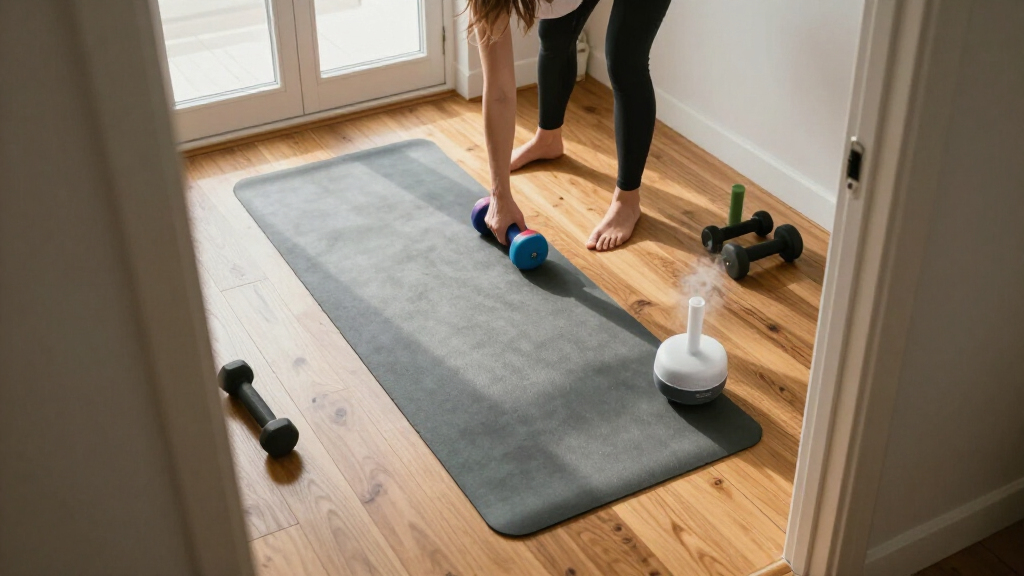
A Fit&Well writer carried two 10kg dumbbells between rooms whenever moving around the home for two weeks. They reported feeling less stiff, noticing a stronger grip and adding 15 seconds to a side-plank test, but the personal experiment cannot show that the carries caused those changes.
A Fit&Well writer says carrying two 10kg (22lb) dumbbells between rooms whenever they moved around their home for two weeks coincided with less neck stiffness, a stronger-feeling grip and a longer side-plank hold. The writer described the results as personal observations, not proof that the short carries caused the changes.
The writer adapted an idea shared on Instagram by personal trainer Kate Rowe-Ham, who suggested leaving weights near the stairs and carrying them on trips upstairs and back down. Rowe-Ham credited nutrition consultant Laurel Seabrook with a similar approach using a 25lb kettlebell. Because the writer rarely used the stairs while working, they instead carried two dumbbells between a kitchen desk and the living room.
For two weeks, the writer moved the weights whenever a task took them from one room to the other. They said the repeated trips gave them brief breaks from sitting and prompted them to walk upright and pay more attention to posture. By the end, they reported feeling less neck stiffness and more aware of how they sat at their desk, while explicitly saying they could not attribute those effects to the carries alone.
The writer also said the dumbbells felt easier to hold by the end of the first week and that grip-demanding exercises and carrying grocery bags seemed easier. In a side-plank test, their hold increased from 1 minute 33 seconds on the first day to 1 minute 48 seconds after two weeks. That is a 15-second difference between the writer’s two tests; the report does not establish what caused it.
Small Movement Breaks at Home
The account offers a practical example of adding brief movement to a workday without scheduling a separate workout. For people who spend long stretches sitting, turning an existing trip between rooms into a short walk and carry may make it easier to break up desk time. The writer’s experience also suggests that repeated everyday tasks can be a way to notice how grip and posture feel over time.
But this is a single-person experiment, not a controlled study. The report does not show that carrying weights will reduce neck stiffness, improve grip or extend a side plank for other people. The side-plank comparison is based on one test at the start and one at the end, and factors such as practice, other exercise or day-to-day variation could have affected the result.
As an affiliate, we earn on qualifying purchases.
How the Carrying Idea Began
The starting suggestion came from a social-media tip attributed to personal trainer Kate Rowe-Ham: keep weights by the stairs and carry them on trips between floors. Rowe-Ham, according to the report, credited nutrition consultant Laurel Seabrook with using a 25lb kettlebell in a similar routine. The Fit&Well writer adapted the idea to a home where their workday did not involve regular stair trips.
Rather than set a fixed number of repetitions or a dedicated training session, the writer linked the carries to ordinary movement between two rooms. The report gives the dumbbell weight and the experiment’s two-week duration, but it does not provide a count of trips or total carrying time. The results therefore describe this person’s routine rather than a standard exercise plan.
““I can’t say the carries alone were responsible” for the reduced neck stiffness.”
— Fit&Well writer
As an affiliate, we earn on qualifying purchases.
Limits of a Personal Test
The report does not establish whether the dumbbell carries caused any of the changes the writer noticed. It gives no comparison group, repeated measurements across the two weeks, total number of carries or detailed record of other exercise and work habits. The writer’s side-plank results come from two measurements, which cannot isolate the effect of the routine.
It is also unclear how the experience would translate to other people, or whether the same weight and frequency would be suitable for them. The report describes the writer’s own routine and observations; it does not present a clinical assessment or a general exercise recommendation.
As an affiliate, we earn on qualifying purchases.
The Writer Plans to Continue
The writer said they intended to keep carrying the weights between rooms and might add single-arm carries to track progress. The report does not specify a schedule for further testing or say whether later results will be published. Any future comparison would remain a personal account unless it included a more structured way to measure changes.
Readers considering a similar routine should choose a load they can carry safely, keep a clear path and stop if they feel pain or unsteadiness. People with existing health or mobility concerns should seek advice from a qualified professional before adding loaded carries to their day.
As an affiliate, we earn on qualifying purchases.
Key Questions
What did the Fit&Well writer do?
For two weeks, the writer carried two 10kg dumbbells between a kitchen desk and the living room whenever a task took them between the rooms.
What changes did the writer report?
The writer said their neck felt less stiff, carrying objects seemed easier, and their side-plank hold rose from 1 minute 33 seconds to 1 minute 48 seconds. These were personal observations, not confirmed effects of the routine.
Does the experiment prove that carrying weights improves posture or grip?
No. It was a single-person account without a comparison group, and the writer said they could not determine whether the carries caused the changes.
Is this routine suitable for everyone?
The report does not establish that. Anyone trying loaded carries should use a manageable weight and clear route; people with health or mobility concerns should ask a qualified professional for guidance.
Source: rss
Halloween Picks
halloween
As an affiliate, we earn on qualifying purchases.