TL;DR

Get oils, diffusers and self-care delivered free — and shop member deals
- Fast, free delivery on millions of items
- Access to Prime Big Deal Days deals on October 6–7
- Prime Video, Amazon Music and more included
Essential oil diffusers disperse aromatic compounds into the air, and a scent or quiet routine may help some people feel more at ease. The effect is personal, and a diffuser is not a treatment for anxiety, insomnia, or other health conditions. Start with short sessions, follow device instructions, ventilate the room, and take extra care around children, pets, and people with sensitivities.
A room can feel different after a few minutes of lavender in the air, but the diffuser itself doesn’t press a relaxation button. Your response depends on the scent, the setting, and what you associate with that smell.
This guide explains how essential oil diffusers work, what a relaxing routine can realistically offer, and how to use one with care. You’ll also find practical steps for choosing a device and avoiding common safety mistakes.
Ultrasonic diffusers use water and vibration; nebulizing models disperse oil without water and often create a stronger scent.
A pleasant scent or repeated wind-down routine may help you feel more at ease, but the effect is personal and not a medical treatment.
Start with a small amount and a short, intermittent session in a ventilated room; follow the device and oil instructions.
Take extra care around children, pets, and people with asthma, allergies, migraines, or scent sensitivity.
Clean the device as directed, and stop diffusion if anyone develops discomfort.
What an Essential Oil Diffuser Does to the Air
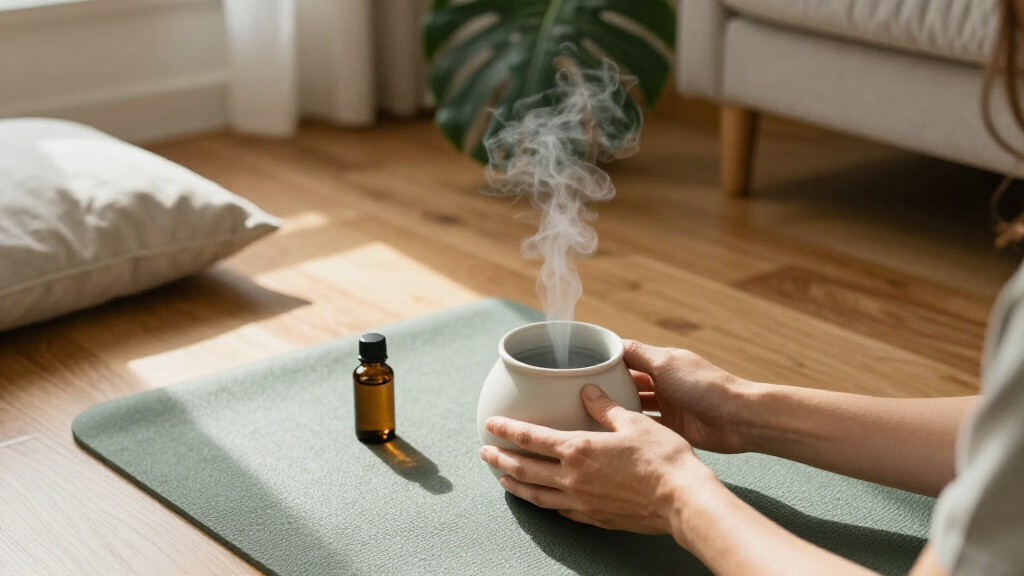
An essential oil diffuser disperses aromatic compounds into a room so you can smell them; it does not guarantee relaxation or change the air into a treatment. Different devices release scent in different ways, which affects both how quickly an aroma builds and how easily you can control it. For example, an ultrasonic diffuser needs water, while a nebulizing diffuser works without it. That difference matters if you want a subtle background scent or prefer a stronger aroma that arrives quickly.
Ultrasonic models use water and high-frequency vibration to create a fine mist. The water can carry scent through the room and may add a little moisture, but the amount is too limited to manage dry air reliably, so they are not a substitute for a humidifier. Nebulizing models disperse concentrated oil directly, often producing a stronger scent and using more oil. Evaporative diffusers release scent from pads or reeds, with airflow affecting how quickly it spreads; heat models warm oil to encourage evaporation, though heat may alter some aromatic compounds.
Imagine setting a small ultrasonic diffuser on a bedroom dresser before reading. The mist catches the lamplight, and a light lavender scent reaches you without filling the whole room. With a nebulizer, that same oil may smell much more intense, so a short session can go a long way. The practical choice is the one whose scent strength and upkeep suit the room: a device that is too powerful can make a calming routine uncomfortable, while a milder option may need to be placed closer to where you sit.
Why a Familiar Scent May Help You Unwind
Essential oil diffusers may support relaxation when you enjoy the scent and pair it with a quiet routine, but responses vary from person to person. Smell can connect with mood and memory: lavender might remind you of a calm evening, while the same aroma may feel too strong or unpleasant to someone else. The setting matters too. A scent that feels pleasant during a quiet evening may be distracting in a busy room, so your own comfort is a better guide than a product’s “calming” label.
Research has examined aromatherapy, including lavender, in relation to relaxation, but study results vary and evidence for particular oils, doses, and lasting effects remains limited [1]. A diffuser should not be described as a treatment for anxiety, insomnia, or another health condition. Think of it as one possible part of a pleasant personal ritual. That distinction helps set expectations: a diffuser may make a moment feel more inviting, but it cannot reliably resolve the causes of ongoing distress or sleep problems.
For instance, you might run a quiet diffuser while you tidy the kitchen and put your phone away. The scent doesn’t solve a difficult day, but that repeated cue can make the shift from chores to downtime feel more deliberate. If the aroma gives you a headache or feels irritating, it isn’t the right ritual for you. Continuing because an oil is marketed as relaxing can turn a mild sensory aid into another source of discomfort.
Choose a Diffuser That Fits Your Room and Routine
Choose a diffuser by matching its scent strength, water needs, and cleaning routine to the room and the way you plan to use it. Ultrasonic models suit people who want a water-based mist; nebulizing models suit those who prefer a more concentrated aroma without water. Evaporative options can be simple and portable, while heat models warm the oil and may alter some aromatic compounds. These tradeoffs affect more than convenience: a strong scent may be useful in a larger space but overwhelming beside a desk, and a water-based unit needs regular emptying and cleaning.
| Type | How it works | What to expect |
|---|---|---|
| Ultrasonic | Water and vibration create a fine mist | Uses water; may add some moisture |
| Nebulizing | Disperses oil without water | Often a stronger aroma; uses more oil |
| Evaporative | Oil evaporates from a pad, reed, or porous material | Airflow can speed scent release |
| Heat | Warms oil to encourage evaporation | Heat may change some aromatic compounds |
Suppose you want a gentle scent beside your desk for a short afternoon break. An ultrasonic model with a timer may fit better than a nebulizer that fills the room quickly. The timer helps limit exposure if you get absorbed in work, while the water tank means you’ll need to clean it as directed. Check which oils the device accepts, how you clean it, and whether its controls work for your space.
Start a Relaxing Diffuser Routine in Five Steps
- Read the device instructions and oil label. Models vary, so don’t rely on a universal drop count.
- Choose a ventilated room. Keep the diffuser away from faces, bedding, and places where it could be knocked over.
- Begin with a small amount. More oil does not necessarily create a better experience.
- Run a short, intermittent session. Use a timer if your device has one, and avoid continuous diffusion.
- Notice how you feel and stop if needed. End the session if anyone develops a headache, cough, irritation, nausea, or breathing discomfort.
One practical example: you add water and a modest amount of oil to your ultrasonic diffuser, run it while stretching for a few minutes, then switch it off before leaving the room. If the aroma is barely noticeable, you can check the instructions before changing the amount. Don’t keep adding drops just to make the room smell stronger.
Some recent models offer quieter operation, portable designs, timers, automatic shutoff, or app controls. Those features can make a routine easier to manage, but a product feature does not establish a health benefit. Blends marketed for sleep or stress relief still need to be judged by their ingredients, instructions, and your own response.
Keep Diffusion Comfortable and Safe at Home
Use essential oils cautiously because they are concentrated substances, and safety depends on the oil, amount, ventilation, and who shares the space. Keep bottles and devices out of reach of children, and ask a veterinarian before diffusing around pets; some oils can harm animals. A closed, poorly ventilated room can make an otherwise pleasant scent overwhelming.
If you have asthma, allergies, migraines, or scent sensitivity, you may want to avoid diffusion or ask a qualified clinician for guidance. Don’t ingest essential oils or apply them undiluted to your skin unless a qualified professional has advised you to do so. Follow the device maker’s directions, empty leftover water, and clean the diffuser regularly so residue and standing water don’t build up.
Stop the session if anyone feels unwell. Open a window, switch off the device, and move away from the scent.
Say your cat starts sneezing after you run a diffuser in the living room. Stop diffusion and ask your veterinarian about household use before trying another oil. Labels that say “natural” don’t guarantee a product is safe or effective, so look for clear ingredient and use information.
Get More From the Routine Without Expecting a Cure
A diffuser is most useful when it fits into a simple, enjoyable routine rather than carrying the job of fixing stress or sleep. Pair a preferred, mild scent with an activity you already find calming, such as reading, stretching, or making tea. Keep the session brief enough that the aroma stays pleasant.
For example, you might diffuse a little lavender while you read two chapters, then turn the device off and let the room air out. If lavender feels too sweet, try a different scent or skip oils altogether; the book and quieter lighting may be what help you settle. No single scent works for everyone.
If sleep trouble, anxiety, or another concern keeps affecting your daily life, speak with a healthcare professional about suitable support. A diffuser can be part of a comforting evening, but it should not replace care for persistent concerns. The best routine is one that feels good, stays safe, and makes no promises it can’t keep.
Frequently Asked Questions
Do essential oil diffusers actually help you relax?
Some people find a particular scent or the routine around it calming, while others feel no benefit or dislike the aroma. Research results vary, and a diffuser is not a treatment for anxiety or another health condition.
Which oils do people commonly use for relaxation?
Lavender is widely used, and chamomile, bergamot, and frankincense also appear in relaxation blends. Individual responses differ, so “calming” is not a promise that an oil will suit you.
How many drops should I put in a diffuser?
Follow the device instructions and oil label, then start with less rather than adding a large amount. There is no reliable universal drop count because diffuser sizes and types differ.
Can I leave a diffuser running overnight?
Follow the manufacturer’s overnight-use guidance and favor a timer or short session in a ventilated room. Avoid prolonged exposure if you or anyone sharing the space is scent-sensitive.
Are essential oil diffusers safe around pets and children?
They are not automatically safe: risk depends on the oil, concentration, ventilation, and the child’s or animal’s age and health. Keep oils out of reach, and ask a veterinarian about using them around pets.
Conclusion
Use a diffuser as a small cue for downtime: choose a scent you enjoy, keep the session brief, and stop if it bothers anyone nearby. Let the aroma drift through the room like soft lamplight—pleasant when it suits you, easy to switch off when it doesn’t.
Fall Picks
fall essentials
As an affiliate, we earn on qualifying purchases.