Global herbal pharmacopoeias draw on Chinese, Ayurvedic, and Western traditions—each rooted in ancient practices that emphasize holistic wellness, respect for nature, and cultural significance. These systems use key medicinal plants like ginseng, turmeric, and echinacea, prepared through methods like decoctions and tinctures. Modern science is now validating these remedies, standardizing quality, and integrating traditional knowledge into contemporary healthcare. Explore further to uncover how these diverse systems continue shaping holistic medicine worldwide.
Key Takeaways
- Chinese, Ayurvedic, and Western herbal pharmacopoeias each have unique historical roots, formulations, and preparation methods reflecting their cultural contexts.
- These traditions emphasize holistic healing, integrating herbal remedies with philosophical principles such as balance, nature respect, and spiritual practices.
- Standardization and quality control are evolving across all systems through phytochemical profiling, scientific validation, and international collaboration.
- Modern digital documentation and research efforts aim to unify traditional knowledge with evidence-based practices for global acceptance.
- Cross-cultural exchanges and policy harmonization facilitate the integration of herbal pharmacopoeias into contemporary healthcare systems worldwide.
Origins and Historical Development of Herbal Healing Systems

Herbal healing systems have ancient roots that date back thousands of years, reflecting humanity’s long-standing desire to understand and harness nature’s medicinal properties. You can trace these origins through historical texts from different cultures, which document early herbal knowledge and practices. Herbal cultivation played a crucial role in developing traditional medicine, as societies learned to grow and harvest specific plants for healing purposes. These texts often describe the properties of herbs and their uses, forming the foundation for herbal pharmacopoeias. Over centuries, this knowledge evolved, blending empirical observation with cultural beliefs. The enduring significance of herbal remedies highlights their historical importance and the deep connection between humans and nature’s medicinal bounty. Additionally, the herbal pharmacopoeias from various traditions reflect unique cultural perspectives and methods of classification that have influenced modern herbal medicine. The transmission of herbal knowledge was often complemented by oral traditions and practical apprenticeship, ensuring the continuity of herbal practices across generations. Understanding the antioxidant properties of herbs further enriched these traditional systems, emphasizing their role in supporting health and preventing disease. Moreover, ongoing research into phytochemicals continues to validate many traditional claims and expand the scientific understanding of herbal medicines. Recent studies also explore how traditional knowledge can inform modern pharmacology and lead to new therapeutic discoveries.
Core Principles and Philosophical Foundations

At the heart of herbal pharmacopoeias lie fundamental principles that guide the selection and use of medicinal plants. These principles are rooted in philosophical ethics that emphasize respect for nature and the interconnectedness of all life. Whether in Chinese, Ayurvedic, or Western traditions, a focus on holistic wellness shapes treatment approaches, aiming to restore balance within the body, mind, and environment. You’re encouraged to contemplate not just symptoms but the whole person, understanding that health results from harmony between internal and external factors. These core principles serve as ethical foundations, ensuring that herbal practices promote well-being sustainably and responsibly. Recognizing the importance of glycolic acid in modern skincare highlights how traditional and contemporary practices can align to support holistic health. Additionally, a mindful approach to sustainable harvesting ensures that herbal practices remain environmentally respectful and enduring. Incorporating payment security measures in herbal supply chains can further protect the integrity of herbal treatments and consumer trust. Moreover, understanding toilet maintenance and proper disposal practices can help prevent environmental issues associated with improper waste management. Implementing environmental preservation strategies is essential to maintaining biodiversity and ensuring the longevity of herbal resources. By embracing these philosophies, you align your healing methods with centuries-old wisdom that values harmony, sustainability, and the intrinsic value of nature’s remedies.
Key Medicinal Plants and Formulations
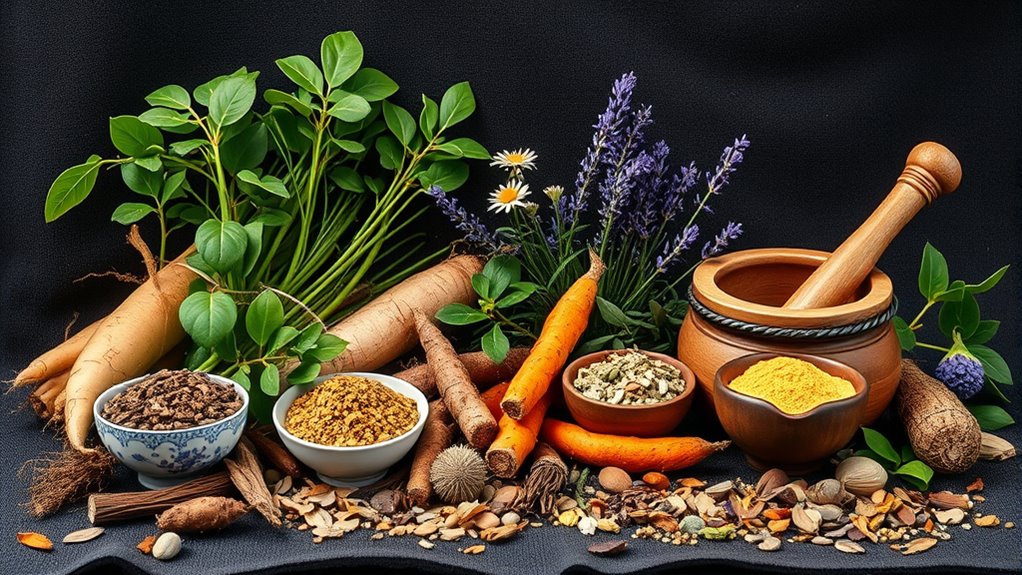
Discovering key medicinal plants and formulations is essential to understanding how herbal pharmacopoeias harness nature’s healing power. Throughout history, herbal formulation innovations have evolved through centuries of experimentation, integrating traditional knowledge with modern science. Cross-cultural plant exchanges have enriched these formulations, introducing plants like ginseng, turmeric, and ginkgo into diverse medicinal systems. In Chinese medicine, ginseng is valued for its adaptogenic properties, while Ayurveda emphasizes turmeric’s anti-inflammatory effects. Western traditions incorporate plants such as echinacea for immune support. The development of high-quality formulations depends on precise preparation techniques and understanding plant chemistry, which influence their efficacy. Additionally, advances in phytochemical analysis enable more accurate identification and standardization of active compounds, improving formulation consistency. These key medicinal plants form the foundation of many formulations that address specific health concerns. Recognizing their roles highlights how herbal pharmacopoeias are dynamic, continually evolving through cross-cultural interactions and innovative preparation techniques to maximize healing benefits. Furthermore, standardization processes are crucial in ensuring the safety and effectiveness of herbal medicines. Additionally, ongoing research into phytochemical constituents helps optimize extraction and formulation methods to enhance therapeutic outcomes. Incorporating modern extraction techniques further improves the purity and potency of herbal formulations, aligning traditional practices with modern pharmaceutical standards.
Methods of Preparation and Administration
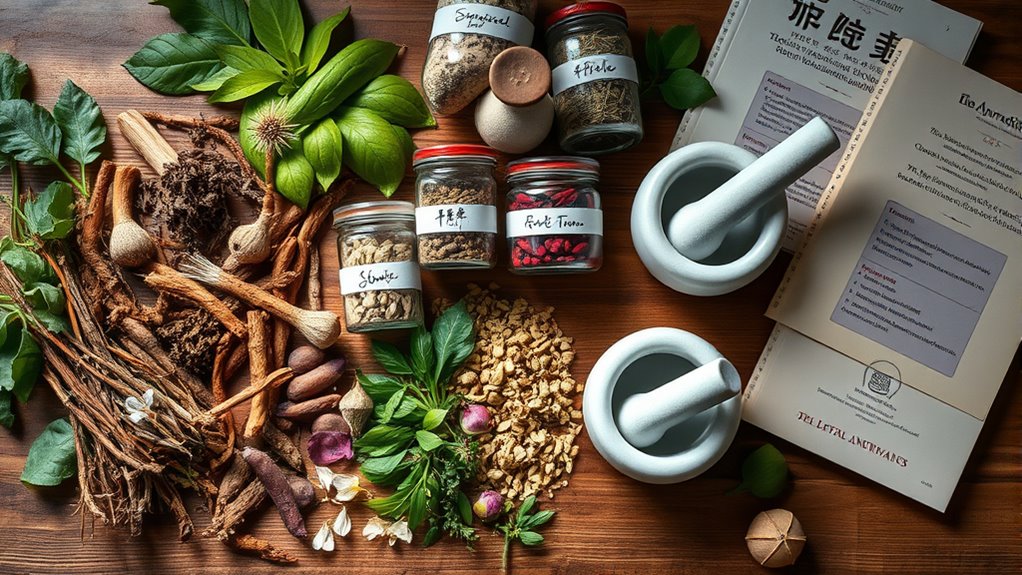
Methods of preparation and administration are crucial in determining the potency and effectiveness of herbal remedies. Proper herbal extraction techniques, such as decoction, infusion, or tincturing, influence the quality of active compounds. Your choice of dosage forms—teas, capsules, extracts, or poultices—affects how well the remedy works and how your body absorbs it. To optimize results, consider these key steps:
- Select appropriate herbal extraction methods for the specific plant parts.
- Choose the right dosage form based on the condition and patient needs.
- Follow precise preparation instructions to preserve active ingredients.
- Administer the remedy consistently and at recommended intervals.
These methods ensure you receive the full therapeutic benefits of herbal medicines.
Integration With Modern Medicine and Scientific Research

You can explore how scientific validation methods guarantee herbal remedies are effective and safe. Standardization and quality control help maintain consistency across herbal products. Integrative clinical practices show how modern medicine incorporates herbal treatments to improve patient care.
Scientific Validation Methods
How can traditional herbal remedies be effectively integrated into modern medicine? You do this by applying rigorous scientific validation methods. First, you utilize advanced analytical techniques to identify active compounds accurately. Second, you develop and follow strict validation protocols to make certain of consistent quality and efficacy. Third, you perform pharmacological studies to understand mechanisms and safety profiles. Fourth, you compare findings with existing clinical data to confirm therapeutic benefits. These steps help bridge traditional knowledge with scientific standards, ensuring herbal remedies meet modern medicine’s safety and effectiveness criteria. Additionally, incorporating scientific validation processes helps ensure herbal products adhere to quality control standards. Understanding sound scientific validation methods is crucial for integrating herbal remedies into mainstream healthcare systems. Moreover, implementing standardized testing procedures ensures reproducibility and reliability of herbal formulations across different settings.
Standardization and Quality Control
Effective standardization and quality control are essential for integrating herbal remedies into modern medicine, ensuring consistency, safety, and efficacy across different batches. You face standardization challenges like variability in plant sources, harvesting conditions, and processing methods, which can affect the final product’s quality. To address this, rigorous quality assurance measures are implemented, including detailed phytochemical profiling, marker compounds, and standardized extraction techniques. These practices help minimize batch-to-batch differences and guarantee that herbal products meet established safety and potency standards. By overcoming standardization challenges, you build trust in herbal medicines and facilitate their acceptance within scientific and medical communities. Ultimately, robust quality control safeguards consumer health and promotes the reliable use of herbal remedies alongside conventional treatments. Additionally, understanding the production quantity variance can assist in optimizing manufacturing processes to maintain consistent quality standards.
Integrative Clinical Practices
Integrative clinical practices aim to bridge traditional herbal medicine with modern healthcare by incorporating scientific research and evidence-based approaches. To do this effectively, you should focus on:
- Prioritizing herbal safety by understanding potential interactions and side effects.
- Ensuring practitioner training includes both traditional knowledge and modern clinical skills.
- Collaborating with medical professionals to develop all-encompassing treatment plans.
- Relying on validated research to support herbal therapies and improve patient outcomes.
Cultural Significance and Traditional Practices

Herbal pharmacopoeias hold deep cultural significance in many societies, shaping traditional practices that have been passed down through generations. You recognize that herbs often symbolize more than their medicinal properties, embodying cultural symbolism that connects communities to their history and beliefs. Ritual significance plays a crucial role, as many communities incorporate herbal remedies into ceremonies, festivals, and spiritual practices. These traditions reinforce social cohesion and affirm cultural identities, making herbal knowledge a cornerstone of cultural heritage. You understand that these practices go beyond health, serving as expressions of faith, respect, and worldview. By preserving these customs, societies maintain a tangible link to their ancestors, ensuring that the cultural importance of herbal remedies endures across generations. Additionally, traditional healing practices often integrate herbs with spiritual or ritual elements, further emphasizing their multifaceted cultural roles and deepening their significance within communities. Such integration highlights the importance of herbal symbolism in maintaining cultural continuity and identity.
Contemporary Trends and Future Directions
You’ll see that emerging integration strategies are transforming how herbal knowledge is shared and applied, making traditional practices more accessible. Digital documentation adoption plays a key role, ensuring accurate records and broader dissemination of information. As these trends develop, they promise to shape the future of herbal pharmacopoeias considerably.
Emerging Integration Strategies
As research advances, new strategies are emerging to seamlessly incorporate herbal pharmacopoeias into mainstream healthcare. You can expect to see efforts like:
- Promoting cross-cultural collaboration to share knowledge and best practices across traditional systems.
- Pursuing policy harmonization to create unified standards for herbal medicines globally.
- Developing integrated training programs that combine diverse herbal traditions.
- Establishing international research initiatives to validate safety and efficacy.
These approaches foster trust and facilitate broader acceptance of herbal medicines. By bridging gaps between Chinese, Ayurvedic, and Western practices, you help advance a more holistic healthcare landscape. The focus remains on creating a cohesive framework that respects cultural differences while ensuring quality and safety.
Digital Documentation Adoption
Digital documentation is transforming how herbal pharmacopoeias are recorded, shared, and validated across different healthcare systems. You now have access to advanced digital record keeping, which streamlines data collection and enhances accuracy. Online repositories serve as centralized platforms, allowing you to securely store and retrieve herbal information from Chinese, Ayurvedic, and Western traditions. This shift facilitates easier collaboration among practitioners, researchers, and regulators worldwide. By adopting digital documentation, you can guarantee consistency, reduce errors, and accelerate the dissemination of validated herbal data. The future points toward more integrated systems that combine traditional knowledge with modern technology, making herbal pharmacopoeias more accessible, transparent, and reliable for global use.
Frequently Asked Questions
How Do Herbal Standards Vary Across Different Regions?
You’ll notice herbal standards differ across regions because of regional cultivation practices and traditional preparation methods. In some areas, herbs are grown in specific climates, influencing potency and quality. Traditional methods like drying, decocting, or fermenting also shape standards, ensuring consistency and efficacy. These regional differences mean that what’s accepted as quality in one place might not meet standards elsewhere, highlighting the importance of local expertise in herbal medicine.
What Are the Safety Concerns With Herbal Medicines?
You should be aware that herbal safety concerns include contamination, adulteration, and incorrect identification, which can pose health risks. To guarantee safety, focus on quality assurance measures like proper sourcing, standardization, and testing of herbal products. Always buy from reputable suppliers, check labels, and consult healthcare professionals to minimize potential adverse effects and ensure you’re using safe, effective herbal medicines.
How Is Herbal Quality Controlled Globally?
Think of herbal quality control as fine-tuning an orchestra. You, as a consumer, rely on standards to ensure harmony. Globally, quality assurance involves strict testing, proper labeling, and sourcing from reputable suppliers. Standardization challenges arise because herbal compounds vary by origin and processing. To protect you, authorities enforce regulations and certifications, guaranteeing the herbs meet safety, potency, and purity standards, so you can trust what you’re using.
Are There Legal Regulations for Herbal Products?
Yes, there are legal regulations for herbal products. You need to guarantee compliance with intellectual property laws to protect traditional knowledge, and regulations often aim to promote cultural preservation. These laws vary by country, requiring you to follow specific standards for safety, quality, and labeling. Staying informed helps you avoid legal issues and respects the cultural significance of herbal remedies, fostering responsible and sustainable use globally.
How Do Herbal Therapies Impact Modern Healthcare Systems?
Herbal therapies are a bridge connecting traditional knowledge with modern healthcare, enriching it rather than replacing it. They impact healthcare by promoting holistic approaches, fostering cultural preservation, and offering alternative options for patient care. As you incorporate herbal remedies, you help sustain centuries-old practices, ensuring their relevance today. This integration encourages a more inclusive, diverse healthcare system where tradition and innovation work hand in hand to improve well-being.
Conclusion
Just as the phoenix rises from its ashes, these herbal traditions continually evolve, blending ancient wisdom with modern science. By honoring their roots—like the sacred lotus or the revered ginseng—you can appreciate their enduring relevance. Embrace this rich tapestry of healing, knowing that, like a timeless story, these pharmacopoeias shape health practices across cultures. Together, they hold the promise of a healthier future, echoing the eternal dance between tradition and innovation.