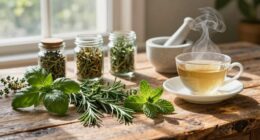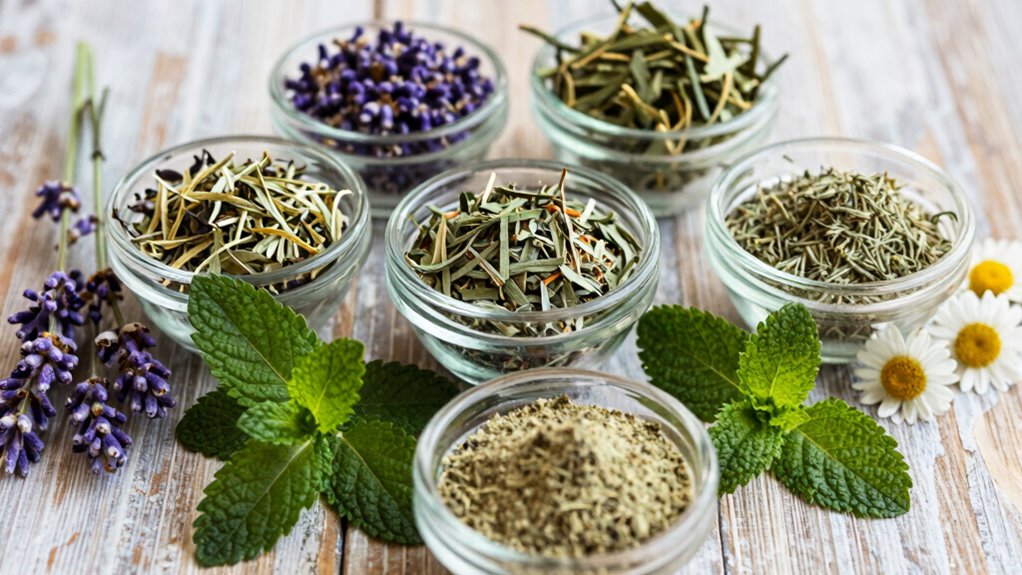

Herbal preparations are simple ways to turn plants into useful medicines. You can make tinctures by soaking herbs in alcohol, which pulls out their healing compounds for easy use and long storage. Infusions involve steeping herbs in water, creating teas for quick relief. These methods help preserve the herbs’ medicinal qualities while allowing for personalized doses. If you keep exploring, you’ll discover more ways to safely harness nature’s remedies and enhance your health naturally.

Get oils, diffusers and self-care delivered free with Prime
- Fast, free delivery on millions of items
- Prime Video, Amazon Music and more included
- Member-only deals all year
Key Takeaways
- Herbal preparations involve extracting active compounds from plants using water, alcohol, or oil.
- Herbal tinctures are concentrated extracts made by soaking herbs in alcohol for several weeks.
- These methods preserve medicinal properties and allow for easy, customizable dosages.
- Straining removes plant solids, resulting in a potent liquid for health support.
- Herbal preparations combine traditional techniques with modern convenience for natural healing.

Herbal preparations have been used for centuries as natural remedies to promote health and well-being. Today, many people turn to herbal extraction methods to access the medicinal properties of plants. Herbal extraction involves soaking herbs in water, alcohol, or oil to draw out their active compounds. This process makes it easier to use herbs in a concentrated form, guaranteeing you get the most benefit from each dose. One popular form of herbal preparation is herbal tinctures, which are made by steeping herbs in alcohol over several weeks. The alcohol acts as a solvent, pulling out the plant’s beneficial compounds and creating a potent extract that’s easy to store and use. When you choose herbal tinctures, you’re opting for a concentrated, fast-acting way to incorporate herbs into your routine. They’re convenient because you can take them directly under your tongue or add a few drops to water or tea. Tinctures offer flexibility, allowing you to customize doses based on your needs, whether for immune support, stress relief, or other health concerns.
Understanding the process behind herbal extraction helps you appreciate the potency of herbal tinctures. During extraction, the goal is to preserve the delicate medicinal qualities of the herbs while removing any unwanted substances. Different herbs require different extraction methods; some are best soaked in alcohol, while others may need water or oil. This precision guarantees you get a pure, effective product. When you make herbal tinctures at home, you control the ingredients and avoid additives or preservatives often found in commercial products. It’s a simple process: you fill a jar with herbs, cover them with alcohol, and let them sit in a cool dark place for several weeks, shaking occasionally. After the steeping period, you strain out the herbs, leaving a rich, golden liquid that’s highly concentrated. Knowing about herbal extraction helps you understand how the active compounds are preserved and concentrated for maximum benefit. Additionally, understanding plant chemistry enhances your knowledge of how different herbs work at a molecular level. Recognizing the importance of traditional herbal practices can further deepen your appreciation of herbal preparations and their historical significance. Developing a basic understanding of herbal preservation techniques ensures you maintain the potency and effectiveness of your homemade remedies over time.
Using herbal tinctures gives you a practical way to incorporate herbal medicine into your daily life. They’re portable, have a long shelf life, and can be easily adjusted to suit your specific health needs. Whether you’re seeking natural relief from common ailments or aiming to boost your overall wellness, understanding herbal extraction and tinctures helps you make informed choices. You can even experiment with different herbs, creating personalized blends that target your unique health concerns. Overall, herbal preparations like tinctures combine tradition with convenience, offering an effective and natural way to support your health in a simple, straightforward manner.
Frequently Asked Questions
How Long Do Herbal Preparations Stay Effective?
Herbal preparations generally stay effective for about 6 months to 2 years, depending on their herbal potency and storage conditions. Properly stored in airtight containers, away from light and heat, they maintain shelf life stability longer. Always check for changes in smell, color, or texture, and follow recommended storage guidelines. If the herbal preparation shows signs of spoilage, it’s best to discard it to guarantee safety and effectiveness.
Are Herbal Preparations Safe for Children?
Think of herbal safety as walking a tightrope—you need balance and caution. Herbal preparations can be safe for children if you choose child-specific herbs and consult a healthcare provider first. Not all herbs are suitable for kids, so avoid general use. Always make certain herbs are prepared correctly and dosed appropriately. When in doubt, err on the side of caution to protect your little one’s health and well-being.
Can Herbal Preparations Interact With Medications?
Herbal preparations can interact with medications, so you should be cautious. You might experience herbal synergy, which can enhance or alter effects, or encounter herbal contraindications that increase risks or cause adverse reactions. Always consult your healthcare provider before combining herbs with medications, as they can identify potential interactions and guarantee safety. Being informed helps prevent unexpected side effects and ensures your treatments work harmoniously.
How Should Herbal Preparations Be Stored?
You should store herbal preparations in airtight herbal storage containers, preferably glass or metal, to preserve their potency. Keep them in a cool, dark place away from sunlight and moisture, which can degrade active compounds. Proper herbal extraction methods involve drying and sealing herbs carefully. By following these steps, you’ll guarantee your herbal preparations stay fresh and effective longer, maximizing their benefits whenever you need them.
What Are Common Side Effects of Herbal Preparations?
You might experience common side effects like allergic reactions, which can cause skin rashes or respiratory issues, and herbal toxicity, leading to nausea or dizziness. It’s crucial to recognize that herbs can interact with medications or underlying health conditions. Always start with small doses, monitor your body’s response, and consult a healthcare professional if you notice any adverse effects. Properly understanding these risks helps guarantee safe herbal use.
Conclusion
Understanding herbal preparations can transform how you incorporate nature’s remedies into your life. Did you know that herbal medicine is one of the fastest-growing sectors in alternative healthcare, with a market value exceeding $10 billion worldwide? By learning how to prepare and use herbs properly, you’ll empower yourself to make informed health choices. So, explore these natural options confidently—your well-being is worth it, and nature might just have the perfect remedy for you.
Fall Picks
fall essentials
As an affiliate, we earn on qualifying purchases.