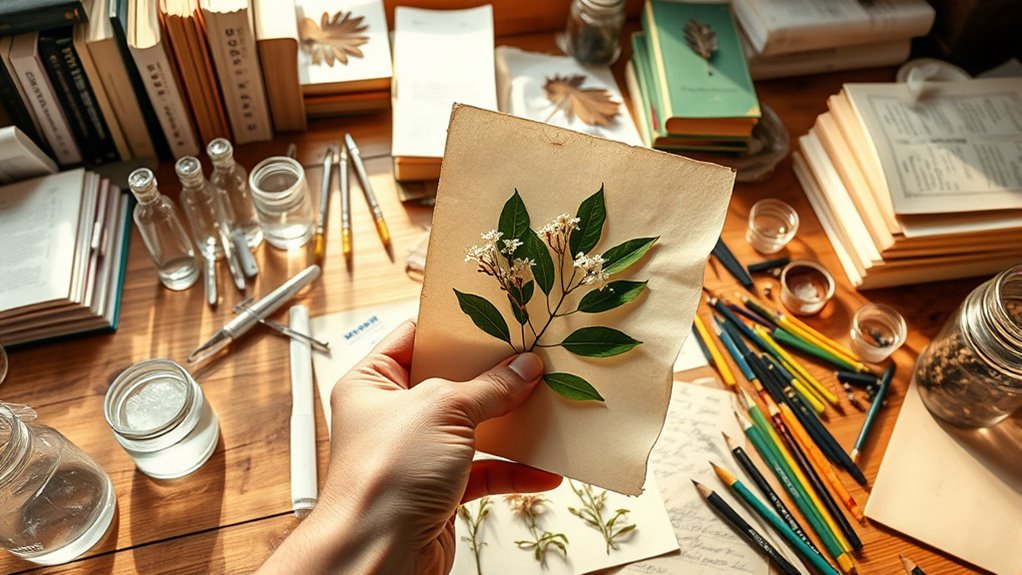

To preserve plants like a pro herbologist, start by carefully selecting healthy, undamaged specimens and handling them gently with gloves or clean hands. Press plants flat between absorbent paper, using a plant press or heavy books, and keep them in a warm, dry spot for 1-2 weeks. Mount specimens on acid-free paper, add detailed labels, and store in a cool, dry environment. Proper techniques help protect your collection for years—learn more to guarantee success.
Key Takeaways
- Select healthy, undamaged specimens and handle them gently with clean tools to prevent deterioration.
- Press plants between absorbent paper using a plant press, changing blotting materials regularly for thorough drying.
- Mount specimens on acid-free paper with proper labeling—including species, date, and location—for accurate documentation.
- Store dried plants in airtight, acid-free containers in a cool, dry environment to prevent mold and pest damage.
- Digitize collections with high-resolution scans and detailed data entry to preserve information and facilitate research.
Gathering and Selecting Plants for Preservation

When gathering plants for preservation, it’s important to choose healthy specimens that are free from damage, disease, or decay. Look for plants with vibrant color, firm stems, and intact leaves. Avoid specimens that are wilting, discolored, or showing signs of pest infestation. Select plants at their peak maturity, as this ensures the best preservation and accurate identification later. Take note of the plant’s overall structure, including flowers, leaves, and stems, to capture key features. If possible, gather multiple specimens of the same species to compare variations. Be mindful of the environment—harvest responsibly without damaging the surrounding habitat. Proper selection at this stage sets a solid foundation for a quality herbarium collection.
Proper Handling and Cleaning of Specimens

Handling your specimens gently safeguards damage and maintains their condition. Use soft brushes or cloths to remove dust and dirt without harming delicate parts. Proper cleaning techniques ensure your specimens stay in great shape for study and display.
Handling With Care
Have you ever wondered how to keep your herbarium specimens in pristine condition? Handling them with care is essential. Always pick up specimens gently by the edges to avoid damaging fragile parts. Use clean, dry hands or wear gloves to prevent transferring oils and dirt. When turning or moving specimens, support them fully to prevent tearing or breaking. Avoid pressing or squeezing the plants, as this can distort their shape. Keep specimens away from direct sunlight, moisture, and extreme temperatures during handling. When cleaning, use soft brushes or cloths to remove dust without applying pressure. Handle each specimen as if it’s delicate glass—because, in essence, it is. Proper care during handling preserves both the specimen’s integrity and its scientific value.
Cleaning Techniques
To keep your herbarium specimens in top condition, proper cleaning techniques are essential. Gently remove dust and dirt using a soft brush or a gentle vacuum with a brush attachment. Avoid applying water or cleaning solutions directly, as moisture can damage delicate plant tissues. If your specimen has stubborn dirt, lightly wipe it with a slightly damp cloth, then pat dry immediately. Handle specimens carefully to prevent breakage or tearing. For fragile parts, use tweezers or soft brushes to dislodge debris. Always work in a clean, dry environment to prevent mold or further contamination. Regular cleaning maintains the specimen’s appearance and prevents deterioration, ensuring it remains a valuable part of your collection. Proper cleaning is a vital step in preserving your herbarium for years to come.
Pressing and Drying Techniques for Best Results
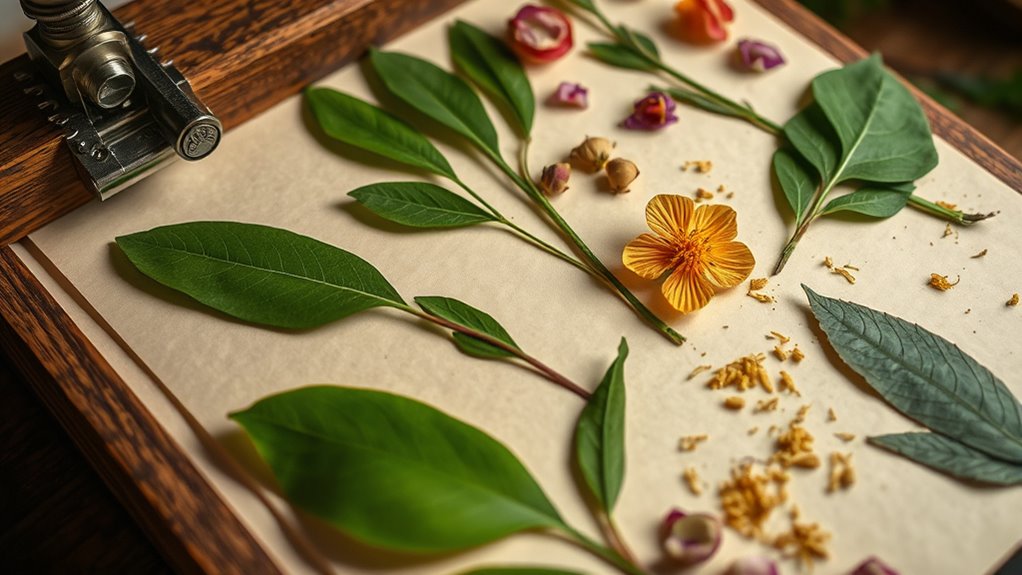
Pressing and drying your plant specimens properly is essential for preserving their color, shape, and overall quality. Begin by selecting healthy, undamaged plants and removing excess dirt or debris. Place the specimen between sheets of absorbent paper, like blotting or newspaper, making certain the plant is flat and spread out. Use a plant press or apply even pressure with heavy books wrapped in cloth to keep the specimen flat. Keep the press in a warm, dry, well-ventilated area to facilitate even drying. Change the blotting paper regularly to prevent mold and guarantee thorough drying. Avoid direct sunlight, which can fade colors. Proper pressing and drying take time—typically a week or two—so patience is key to achieving well-preserved, vibrant specimens.
Mounting and Labeling Your Herbarium Sheets

Once your plant specimens are pressed and dried, it’s time to carefully mount them on sheets. Using proper techniques guarantees your herbarium stays organized and preserves your samples well. Accurate labeling provides essential information that makes your collection valuable and easy to study.
Proper Mounting Techniques
Proper mounting and labeling are essential steps to guarantee your herbarium sheets are both durable and informative. Use acid-free materials and ensure plants are pressed flat before mounting. Secure specimens with glue, strips, or corners, avoiding excess adhesive that can damage the plant. Proper technique prevents mold, tearing, and deterioration. To emphasize the importance of secure mounting, consider this table:
| Mounting Method | Benefits |
|---|---|
| Glue | Quick, adheres well |
| Corner Tabs | Support delicate specimens |
| Strips of Paper | Prevent shifting |
| Mounting Board | Adds rigidity |
| Acid-Free Tape | Long-term preservation |
Choose methods based on plant size and condition. Proper mounting preserves your specimens for years to come.
Accurate Labeling Practices
Accurate labeling is essential to guarantee your herbarium sheets remain informative and valuable over time. When labeling, include key details such as species name, collection date, location, habitat description, and collector’s name. Use a clear, durable ink that won’t fade or smudge. Position labels consistently, usually at the bottom or side of the sheet, to keep the display organized. Double-check spelling and data accuracy before affixing labels. Avoid abbreviations that aren’t universally understood. Proper labeling ensures future reference is straightforward and scientific integrity is maintained. Keep your labels neat and legible, even after years of storage. By practicing precise labeling, you preserve the scientific value of your collection and make it easier to share your specimens with others.
Choosing the Right Materials and Storage Solutions
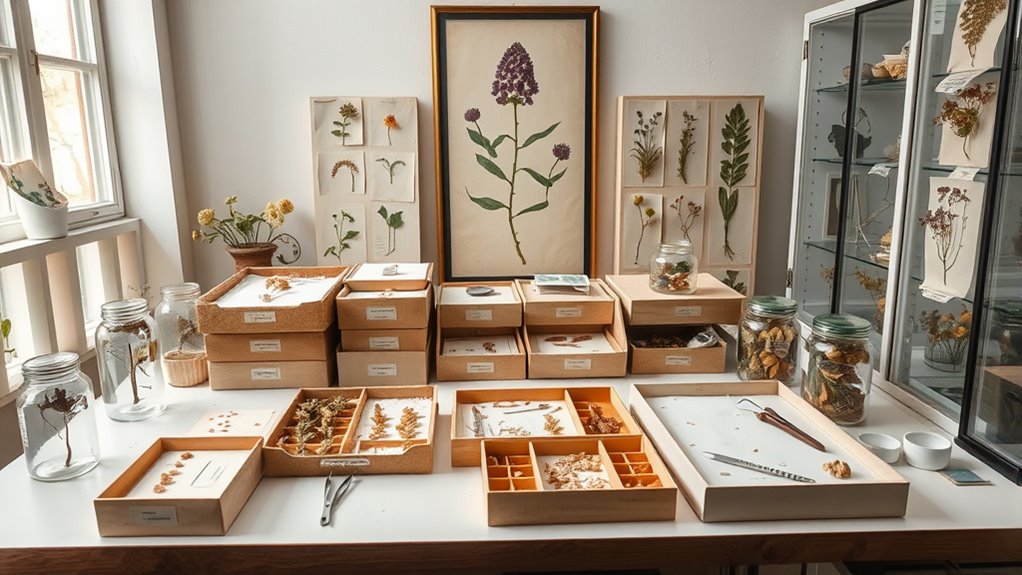
Choosing the right materials and storage solutions is essential for preserving your herbarium specimens effectively. Use acid-free paper and archival-quality folders to prevent deterioration over time. When mounting plants, opt for stable adhesives like wheat paste or archival glue instead of tape, which can damage specimens. Store specimens in airtight, acid-free boxes or cabinets to protect them from humidity, light, and pests. Consider climate control—keep storage areas cool and dry to slow decay. Avoid direct sunlight, which can fade colors. If possible, use silica gel packets or dehumidifiers to manage moisture levels. Properly labeled, well-organized containers make it easier to access and maintain your collection. Investing in quality materials and appropriate storage solutions ensures your herbarium remains pristine for years to come.
Tips for Maintaining and Protecting Your Collection

To keep your herbarium collection in top shape, regular maintenance and vigilant protection are essential. Check your specimens periodically for signs of damage, mold, or pests, and address issues immediately. Keep your collection in a stable environment with consistent temperature and humidity levels to prevent deterioration. Avoid exposing your herbarium to direct sunlight, which can fade colors, and handle specimens with clean hands or gloves to prevent oils and dirt transfer. Store your collection in acid-free folders or storage boxes to prevent chemical damage. Ensure proper airflow to reduce mold risk by not overcrowding shelves. Consider using silica gel or desiccants in storage areas to control moisture. By staying attentive and maintaining a clean, stable environment, you’ll preserve your herbarium’s integrity for years to come.
Digitizing and Sharing Your Herbarium Data
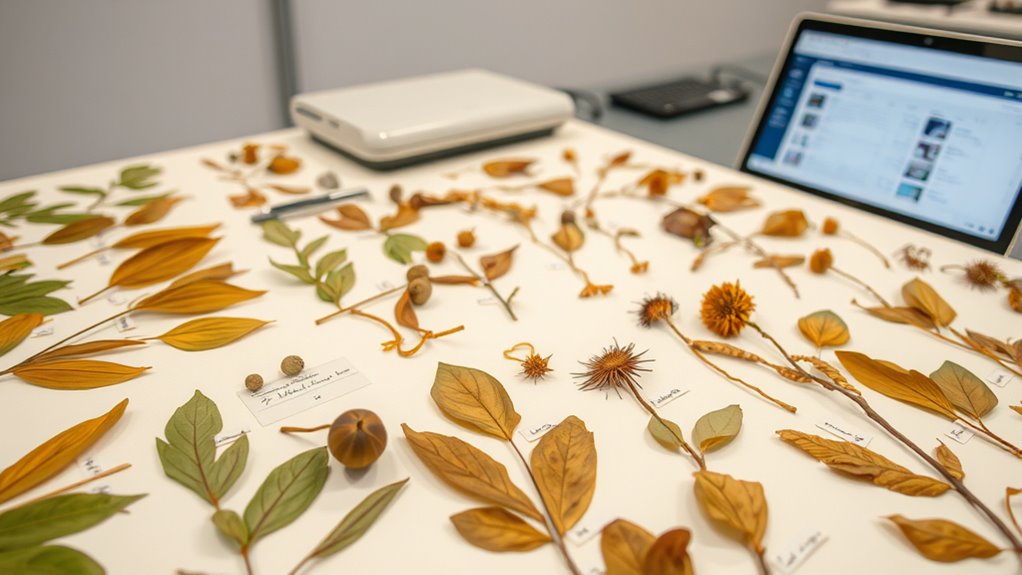
Digitizing your herbarium collection opens new opportunities for research, sharing, and preservation. By creating digital images and entering data into a database, you make your specimens accessible to a broader audience. Use a high-resolution scanner or camera to capture clear images of each herbarium sheet, ensuring labels and details are legible. Enter essential information such as species name, collection date, location, and collector’s name into a digital platform or database. Sharing your data online through platforms like GBIF or iDigBio allows other researchers to access and utilize your collection. Digitization not only helps preserve the physical specimens by reducing handling but also enhances collaboration with fellow botanists. Remember, accurate and detailed digital records make your herbarium a valuable resource for scientific study and conservation efforts.
Common Mistakes to Avoid in Plant Preservation
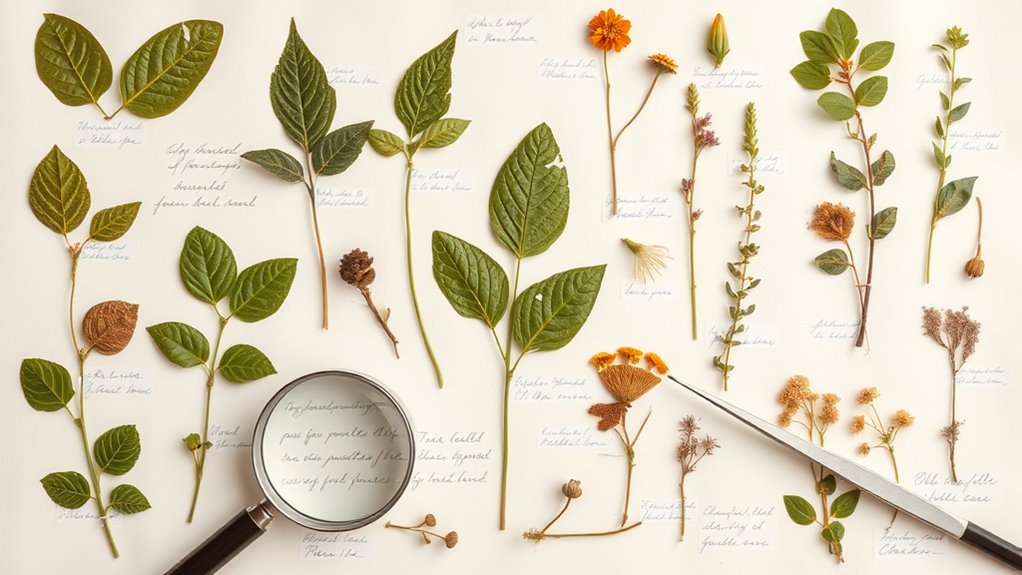
While digitizing your herbarium collection minimizes handling and helps preserve specimens, there are common pitfalls that can undermine your efforts. One mistake is rushing the drying process, which can cause mold or decay. Guarantee plants are properly pressed and dried in a timely manner to prevent deterioration. Another error is using inappropriate storage materials; avoid acidic paper or plastic that can damage specimens over time. Additionally, neglecting proper labeling can lead to confusion or loss of important data—always include detailed, legible labels with collection date, location, and species info. Failing to document and store specimens in a stable environment can cause deterioration from humidity, light, or pests. Staying vigilant and avoiding these common mistakes will help you maintain a high-quality, durable herbarium collection.
Frequently Asked Questions
How Long Can Preserved Plants Remain in Optimal Condition?
Preserved plants can stay in ideal condition for decades if you store them properly. Keep them in a cool, dry, and dark environment to prevent deterioration caused by light, humidity, or pests. make certain they’re well-pressed and mounted, and avoid frequent handling. If you follow these steps, your preserved specimens can retain their color, shape, and details for 50 to 100 years or more, making them valuable for study and display over time.
What Are the Best Ways to Prevent Pest Infestations?
To prevent pest infestations, you should keep your preserved plants in airtight containers or sealed drawers. Regularly inspect your collection for signs of pests, such as holes or webbing. Use natural repellents like cedar chips or lavender sachets nearby. Keep the storage area clean and dry, and avoid exposing your plants to direct sunlight or moisture, which can attract pests. Proper storage and vigilant monitoring are key.
Can I Preserve Fragile or Delicate Plant Specimens Effectively?
Yes, you can preserve fragile or delicate plant specimens effectively. Handle them gently to avoid breakage, and press them carefully between absorbent materials like blotting paper. Use a lightweight, acid-free backing for support, and make certain they dry thoroughly in a well-ventilated area. Consider using silica gel or desiccants for added moisture control. With patience and care, your delicate specimens will be well-preserved for study and display.
How Do I Safely Handle Toxic or Allergenic Plants?
You should always wear gloves and eye protection when handling toxic or allergenic plants, as many can cause skin irritation or allergic reactions. Investigate the plant’s properties beforehand, and handle it with tools like tweezers or tongs to avoid direct contact. Work in a well-ventilated area, and wash your hands thoroughly afterward. Keep dangerous plants labeled and stored separately to prevent accidental exposure or ingestion.
Are There Eco-Friendly Alternatives to Traditional Herbarium Materials?
Yes, you can use eco-friendly alternatives to traditional herbarium materials. Opt for biodegradable or recycled paper for mounting and storage, and choose plant-safe adhesives like natural glues or starch-based pastes. You might also consider using fabric or paper made from sustainable materials to reduce plastic waste. These options help protect the environment while still preserving your plant specimens effectively. Always prioritize natural, non-toxic materials for a greener herbarium.
Conclusion
Remember, a well-preserved herbarium is a reflection of patience and care. By following these steps, you’ll turn simple plants into lasting works of botanical art. Don’t rush the process—think of it as “slow and steady wins the race.” With attention to detail and a bit of passion, you can create a collection that’s both beautiful and educational. Happy herbarium making!