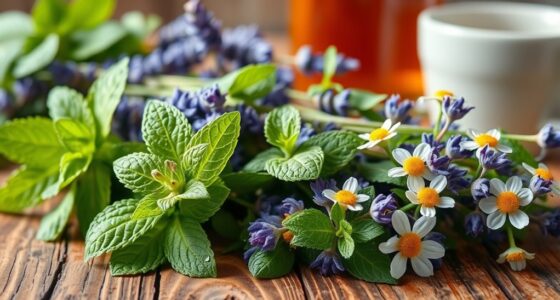
Herbal remedies like lavender, passionflower, valerian root, and lemon balm are often used to promote relaxation and reduce anxiety, which may help with intrusive thoughts and OCD symptoms. However, scientific evidence supporting their effectiveness is limited, and results can vary. These herbs are best used as complementary options alongside traditional treatments, but it’s vital to consult a healthcare professional first. To discover more about how herbs may support your mental health, keep exploring.
Key Takeaways
- Limited scientific evidence supports herbs like lavender, passionflower, valerian, and lemon balm for reducing OCD and intrusive thoughts.
- Passionflower and valerian may help relax anxiety and improve sleep, potentially alleviating OCD symptoms indirectly.
- Herbs such as kava and valerian could reduce compulsive urges by promoting relaxation, but scientific support is scarce.
- Always consult healthcare professionals before using herbal remedies to avoid interactions and ensure safe, complementary treatment.
- Evidence remains anecdotal; herbal remedies should supplement, not replace, professional OCD treatments.
Common Herbal Remedies for Anxiety and OCD Symptoms
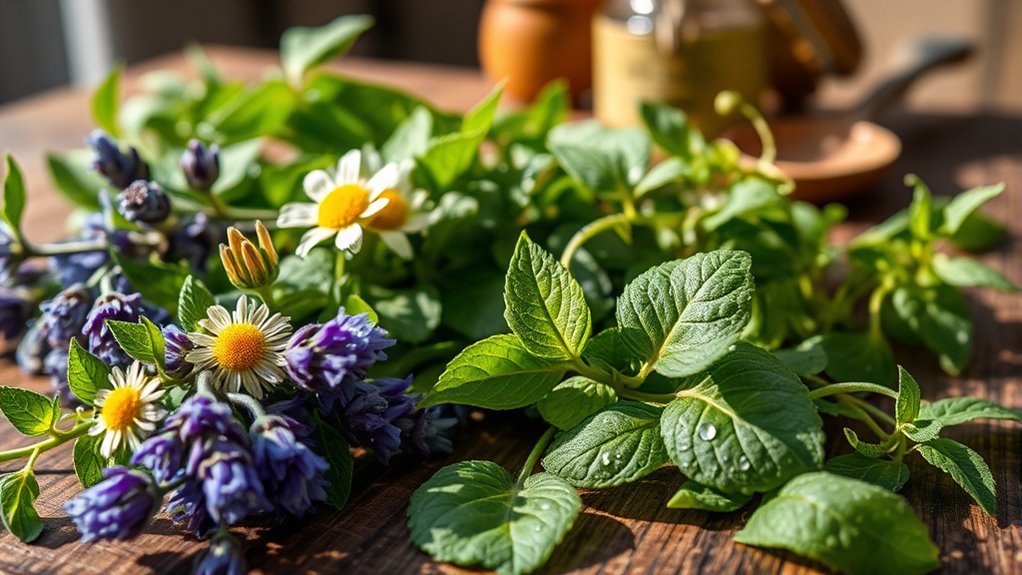
Many people turn to herbal remedies to help manage anxiety and OCD symptoms because they offer a natural alternative to medication. You might consider herbs like lavender, which is known for its calming scent and potential to reduce stress. Passionflower is another option that may promote relaxation and ease anxiety. Valerian root is often used to improve sleep and decrease nervous tension. Another popular herb is lemon balm, which can help calm the mind and reduce agitation. While these herbs have been traditionally used for anxiety, scientific evidence varies, and results can differ from person to person. Always consult a healthcare professional before adding herbal remedies to your routine, especially if you’re taking other medications or have underlying health conditions.
The Role of Herbal Supplements in Managing Intrusive Thoughts

Herbal supplements may offer some relief for managing intrusive thoughts by promoting mental calmness and reducing the frequency and intensity of unwanted mental images. These natural options can help create a sense of balance in your mind, easing the burden of repetitive, distressing thoughts. Visualize your mind as a calm pond, with ripples gradually settling. Imagine this process through the table below:
| Herb | Effect | Sensory Experience |
|---|---|---|
| Lavender | Calms the nervous system | Gentle scent, soothing aroma |
| Valerian Root | Promotes relaxation | Warm, earthy taste |
| Passionflower | Eases anxious thoughts | Mild bitterness, floral aroma |
| Lemon Balm | Reduces agitation | Fresh, citrus scent |
| Ashwagandha | Supports mental resilience | Slightly bitter, herbal flavor |
Evidence for Passionflower and Its Effectiveness in OCD
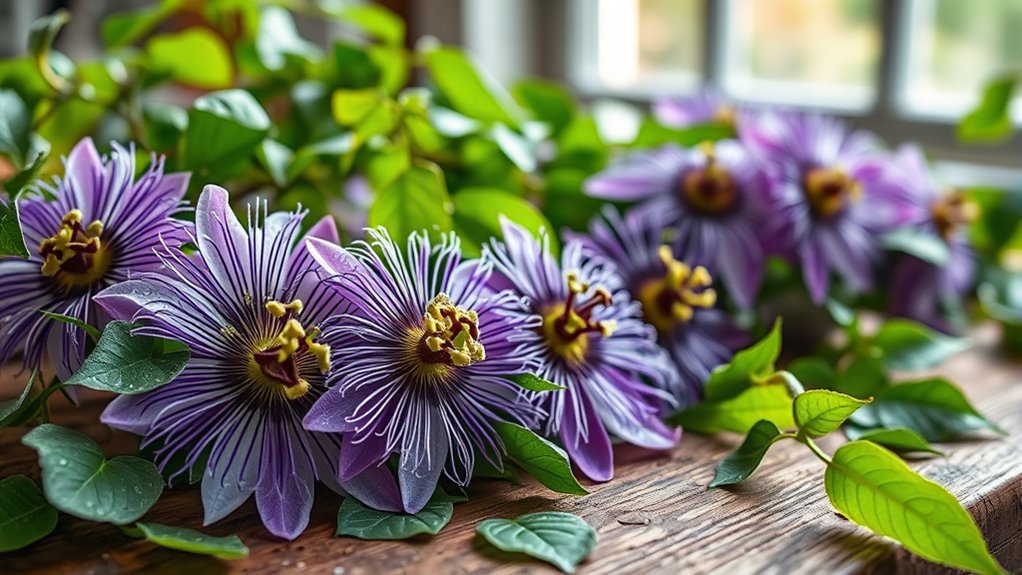
Is passionflower an effective natural remedy for OCD symptoms? Currently, scientific evidence is limited. Some studies suggest passionflower may help reduce anxiety, which could indirectly benefit OCD by calming the nervous system. However, there are no large-scale clinical trials specifically examining passionflower’s impact on OCD symptoms. Most research focuses on its use for general anxiety or sleep issues, not obsessive-compulsive behaviors. While anecdotal reports praise its calming effects, these are not enough to confirm its effectiveness for OCD. If you’re considering passionflower, it’s best to consult with a healthcare provider first. More rigorous research is necessary to establish whether passionflower can reliably reduce intrusive thoughts or compulsions associated with OCD.
Valerian Root: Can It Help Calm a Racing Mind?
While passionflower shows some promise for reducing anxiety, you might wonder if other natural remedies could help calm a racing mind, especially when intrusive thoughts keep you awake. Valerian root is often used as a sleep aid and sedative. Its potential benefits include:
Valerian root may promote relaxation and improve sleep, but consult a healthcare provider before use for intrusive thoughts or anxiety.
- Promoting relaxation by increasing GABA levels in the brain.
- Reducing the time it takes to fall asleep.
- Easing mild anxiety and agitation.
- Supporting overall sleep quality during stressful times.
However, evidence specific to OCD or intrusive thoughts remains limited. While some people find valerian helpful for sleep disturbances, it may not directly target obsessive or intrusive symptoms. Always consult your healthcare provider before adding it to your routine.
The Potential of Valerian and Kava in Reducing Compulsions
Although research on valerian and kava’s effects on compulsions is limited, some individuals turn to these herbs seeking relief from obsessive behaviors. Valerian is known for its calming properties, which may help reduce the anxiety that often triggers compulsive actions. Kava, on the other hand, has a reputation for promoting relaxation and easing stress, potentially decreasing the urge to perform compulsions. While scientific evidence directly linking these herbs to a reduction in compulsive behaviors is scarce, their traditional use suggests they might help manage some underlying anxiety that fuels OCD symptoms. However, it’s essential to consult a healthcare professional before trying valerian or kava, especially since both can interact with medications or cause side effects. Their effectiveness for compulsions remains an area needing more research.
Herbal Alternatives: St. John’s Wort and Its Impact on Mood
St. John’s Wort is often considered an herbal option for mood enhancement. It’s believed to influence neurotransmitters like serotonin, which can help improve feelings of well-being. Here’s what you should know:
- It may reduce mild to moderate depression, potentially easing intrusive thoughts.
- Its mood-boosting effects could lessen the severity of obsessive urges.
- However, it interacts with many medications, including antidepressants, risking side effects.
- Not all research supports its effectiveness, and individual responses vary.
If you’re considering it, weigh these points carefully. Remember, herbal remedies aren’t a substitute for professional treatment, but they might complement your approach to managing mood-related symptoms.
Scientific Studies Examining Herbs for OCD Treatment
Recent scientific studies have begun to explore the potential of herbs as alternative treatments for OCD, aiming to identify natural options that may reduce symptoms. Researchers are investigating herbs like N-acetylcysteine, inositol, and passionflower for their possible benefits. While some trials show promise, evidence remains limited and inconclusive. You should note that most studies are small or preliminary, and more rigorous research is needed before recommending herbs as primary treatments.
| Herb | Key Findings |
|---|---|
| N-acetylcysteine | Some evidence suggests reduced compulsions |
| Inositol | Mixed results, potential mood benefits |
| Passionflower | Limited studies, traditional calming use |
Risks and Precautions When Using Herbs for Mental Health
Using herbs for mental health can offer benefits, but it also carries risks that you need to contemplate carefully. First, herbal supplements can interact with medications, potentially causing adverse effects or reducing effectiveness. Second, dosage variability and lack of standardization mean you might take too much or too little, risking harm. Third, some herbs can trigger allergic reactions or side effects, especially if you have underlying health issues. Fourth, herbal remedies are not strictly regulated, so quality and purity may vary. Always consult a healthcare professional before starting any herbal treatment. Remember, even natural remedies can pose significant risks if used improperly, so caution and proper guidance are essential. Your safety should always come first.
Integrating Herbal Approaches With Conventional OCD Therapies
Integrating herbal approaches with conventional OCD therapies can enhance treatment outcomes when done carefully and under professional guidance. Combining herbal remedies with cognitive-behavioral therapy (CBT) or medication may provide a more holistic approach to managing symptoms. For example, some herbs might reduce anxiety or improve mood, supporting your overall treatment plan. However, it’s crucial to communicate openly with your healthcare provider before adding any herbal supplements. They can help you assess potential interactions, dosages, and safety concerns. Proper integration ensures you don’t inadvertently undermine your existing therapies. Remember, herbal approaches should complement, not replace, proven treatments. When coordinated correctly, this combined strategy can empower you to take a more active role in your recovery process.
The Importance of Consulting Healthcare Providers Before Herbal Use
Before adding herbal remedies to your OCD treatment plan, it’s essential to consult a healthcare provider. They can help you understand potential risks and interactions. Here are four reasons why professional guidance matters:
- Ensure safety—some herbs may cause side effects or worsen symptoms.
- Avoid interactions—herbs can interfere with prescribed medications.
- Get personalized advice—a provider tailors recommendations to your specific condition.
- Monitor progress—they can track effectiveness and adjust treatment as needed.
Frequently Asked Questions
Are There Any Herbs Proven to Cure OCD Completely?
No, there are no herbs proven to cure OCD completely. While some herbs like St. John’s Wort or Valerian may help manage symptoms, they don’t eliminate the disorder. You should consult a healthcare professional before trying herbal remedies, especially since OCD often requires a combination of therapy and medication. Remember, herbs can support treatment but aren’t a substitute for evidence-based therapies that effectively reduce OCD symptoms.
How Long Does It Take for Herbal Remedies to Show Effects?
Patience is a virtue, and with herbal remedies, it’s no different. Usually, you’ll start noticing effects within 4 to 8 weeks, but some may take longer depending on your body and the herbs used. Consistency is key; take them as directed, and give your body time to adapt. Remember, herbal remedies often work gradually, so don’t expect instant results—trust the process and stay committed.
Can Herbs Interact Negatively With Prescribed OCD Medications?
Yes, herbs can interact negatively with your prescribed OCD medications. You should always check with your healthcare provider before adding any herbal remedies, as some herbs may influence how your medications work or cause side effects. For example, St. John’s Wort can reduce the effectiveness of certain antidepressants. Staying informed and consulting your doctor helps ensure your treatments work safely together without unwanted interactions.
Are Herbal Supplements Safe for Long-Term Use in OCD Treatment?
Herbal supplements can be safe for long-term use in OCD treatment if you choose carefully and consult your healthcare provider. While they offer natural alternatives, they may also interact with medications or cause side effects if misused. You need to stay vigilant, monitor your response, and get regular check-ups. Combining herbs with conventional therapies can be effective, but only under professional guidance to guarantee safety and maximize benefits.
What Are the Signs of Adverse Reactions to Herbal Treatments?
You should watch for signs like skin rashes, itching, stomach upset, dizziness, or headaches, which indicate adverse reactions. If you notice any new or worsening symptoms after starting herbal treatments, stop use immediately and consult your healthcare provider. Keep track of any changes in your mood, sleep, or anxiety levels, as these could also signal a negative response to the herbs. Always follow dosage instructions carefully.
Conclusion
If you’re considering herbs for OCD or intrusive thoughts, remember they’re not a magic fix. For example, imagine trying passionflower and noticing your racing mind slow down during a stressful moment. Always talk to your healthcare provider before trying herbs, especially if you’re on medication. Combining herbal remedies with therapy might offer some relief, but safety comes first. Stay informed, and don’t hesitate to seek professional guidance to find what truly works for you.