
In January, India celebrates harvest festivals like Lohri, Pongal, and Makar Sankranti, each with unique customs and foods. You’ll see bonfires and folk dances during Lohri in Punjab, while Pongal in Tamil Nadu honors the Sun God with traditional rice dishes and colorful decorations. Makar Sankranti features kite flying and sweets made from sesame and jaggery, celebrating seasonal change. If you want to explore how these festivals reflect India’s diverse culture, keep going.
Key Takeaways
- Lohri, Pongal, and Makar Sankranti are major January harvest festivals celebrated across different regions of India.
- These festivals mark seasonal transitions, such as the end of winter, harvest, and the sun’s movement into Capricorn.
- Traditional foods like sesame sweets, rice dishes, and jaggery are central to celebrations and symbolize prosperity.
- Cultural activities include folk songs, dance, kite flying, cattle blessings, and community gatherings.
- Each festival reflects regional customs, emphasizing gratitude for harvests and fostering community bonding.
Have you ever wondered how India celebrates the bountiful harvest season in January? It’s a vibrant time marked by lively festivals like Lohri, Pongal, and Makar Sankranti, each rooted in regional customs and rich traditions. As the harvest concludes, people come together to express gratitude for the crops and the abundance they bring. You’ll notice that each festival has its unique way of celebrating, especially through traditional foods that reflect local flavors and cultural practices.
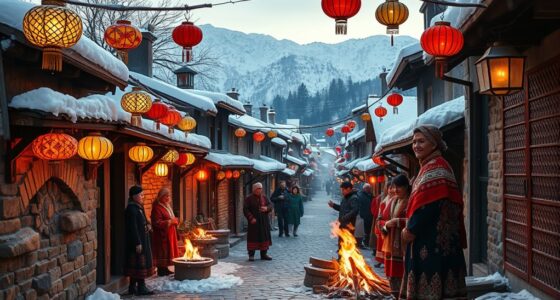
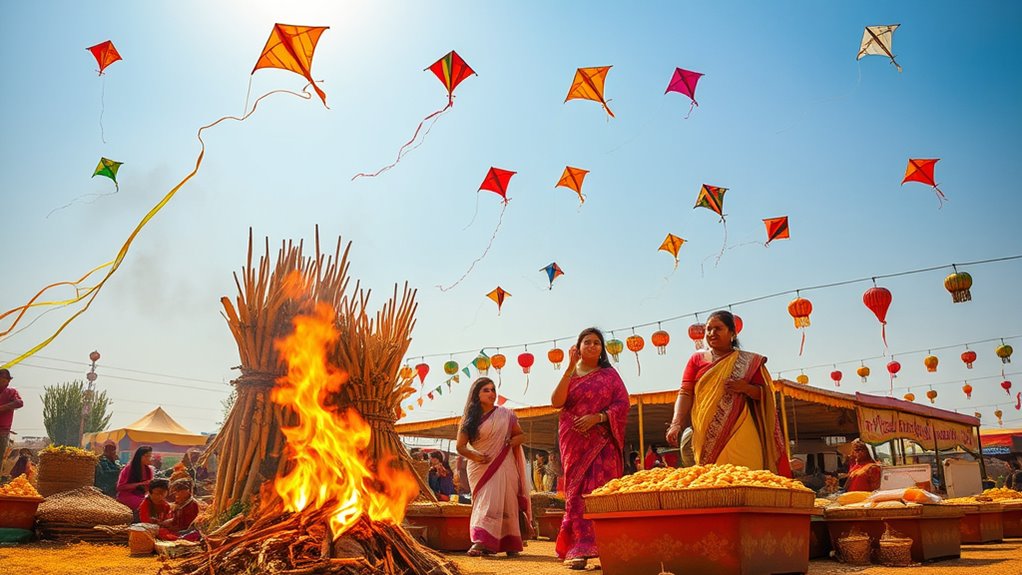
Lohri, chiefly celebrated in North India, especially Punjab, is a warm, joyous occasion that marks the end of winter and the arrival of longer days. During Lohri, you’re likely to see bonfires blazing brightly as communities gather around, singing folk songs and performing traditional dances. The foods served are simple yet meaningful—peanuts, sesame seeds, jaggery, and popcorn are common, symbolizing prosperity and fertility. These traditional foods are prepared with regional customs in mind, often cooked in homes or shared during community gatherings, fostering a sense of unity and gratitude. The festival also includes exchanging sweets and gifts, emphasizing the spirit of community and generosity.
Lohri celebrates winter’s end with bonfires, folk songs, and simple foods like peanuts and jaggery, fostering community and gratitude.
Moving south, Pongal in Tamil Nadu is a vivid celebration of the harvest moon, dedicated to the Sun God. It spans several days, with each day holding its significance. During Pongal, you’ll witness the preparation of a special dish called “Pongal,” a sweet or spicy rice dish cooked with fresh milk, jaggery, and spices. The dish’s preparation is steeped in regional customs, and its sweet version is a symbol of abundance and happiness. People decorate their homes with sugarcane stalks, mango leaves, and kolam (rangoli) patterns, reflecting local artistic traditions. The festival also involves processions, cattle blessings, and cultural performances that highlight the region’s vibrant heritage. The traditional foods prepared during Pongal showcase the agricultural bounty of the region and serve as a reminder of the close connection between people and their land. Additionally, the use of traditional foods like rice and jaggery highlights the importance of local ingredients in regional celebrations.
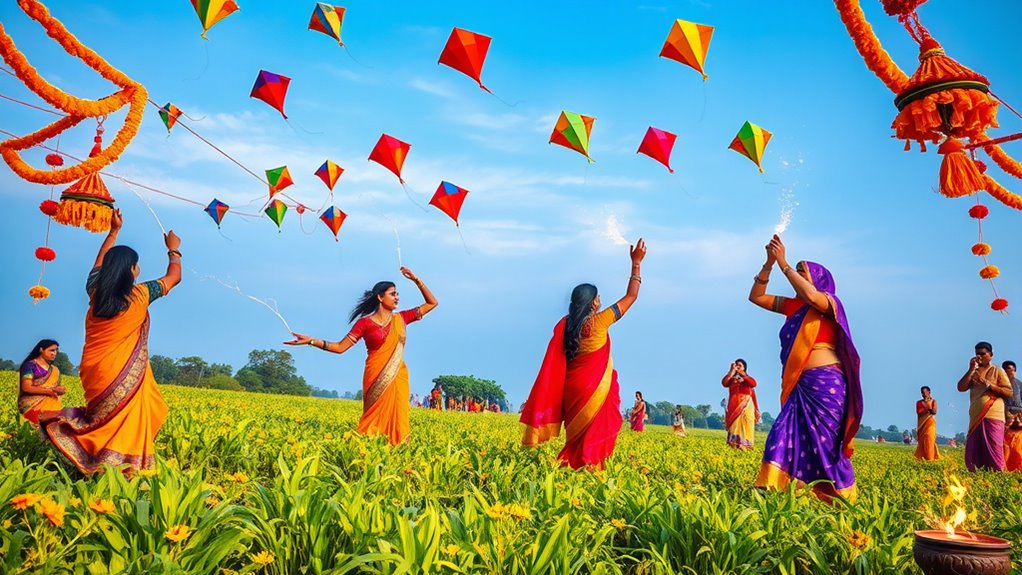
In the east, Makar Sankranti is celebrated with great enthusiasm across many states, notably in Gujarat and West Bengal. It marks the transition of the sun into the zodiac sign Capricorn, symbolizing the end of winter and the start of longer days. The festival is famous for its kite flying, which fills the sky with colors. The traditional foods here include sesame and jaggery sweets like tilgul and various rice dishes, which are integral to regional customs. These foods symbolize prosperity and are often exchanged as tokens of good luck. People take holy dips in rivers, perform prayers, and participate in fairs, reinforcing the festival’s spiritual significance rooted in regional traditions.
Across these festivals, it’s clear that food and customs are more than just celebrations—they’re expressions of gratitude for the harvest and a reflection of India’s diverse cultural landscape. You’ll find that each festival beautifully combines traditional foods and regional customs, making January a truly festive, culturally rich time in India.
Frequently Asked Questions
How Do These Festivals Vary Across Different Indian States?
You’ll find that these harvest festivals vary across Indian states through their regional variations and cultural significance. In some areas, they focus on specific crops, rituals, or traditional dances, reflecting local customs. For example, Pongal in Tamil Nadu emphasizes cooking a special dish, while Lohri in Punjab celebrates winter’s end with bonfires. These variations showcase the rich diversity and cultural importance each region places on marking the harvest season.
What Are the Traditional Foods Prepared During These Festivals?
You’ll be amazed at the explosion of flavors during these festivals! You’ll indulge in sweet delicacies like jaggery-sweetened sesame treats, jaggery-coated peanuts, and sugar-dusted sweets that make your taste buds dance. Traditional beverages like hot, spiced millet drinks or tender coconut water add to the celebration. These foods aren’t just meals—they’re a delicious way to honor the harvest and sweeten the festival’s joyful spirit!
How Are These Festivals Celebrated by Rural Communities?
You participate in vibrant celebrations, where rural communities engage in traditional dance forms like Bhangra, Kolattam, or Pongal dances. You join in rituals such as offering prayers and harvesting ceremonies, which foster a sense of unity. These festivals often include community feasts, singing, and storytelling, helping preserve cultural heritage. By actively taking part, you help keep rural community rituals alive, celebrating the harvest and welcoming the new season with joy and tradition.
What Is the Historical Origin of Each Festival?
You’re about to uncover centuries-old secrets behind these festivals’ mythological origins and ancient rituals. Lohri celebrates the winter solstice and the myth of Dulla Bhatti, while Pongal honors the Sun god Surya, rooted in ancient harvest rites. Makar Sankranti marks the sun’s shift into Capricorn, originating from mythological stories of solar deities. These festivals blend myth and ritual, connecting you to India’s rich, timeless tradition of honoring nature’s cycle.
Are There Any Environmental or Seasonal Significance to the Dates?
You’ll notice that these festivals align with seasonal agricultural cycles and environmental symbolism. They mark the end of winter and the start of longer, sunnier days, encouraging farmers to celebrate harvests and new beginnings. The dates are chosen based on the solar calendar, reflecting the importance of environmental changes like the sun’s movement. This seasonal timing helps communities honor nature’s cycles and express gratitude for a bountiful harvest.
Conclusion
As you celebrate Lohri, Pongal, and Makar Sankranti, you witness the harmony of tradition and the promise of new beginnings. These festivals, rooted in harvest and gratitude, contrast the crisp winter air with vibrant, sunlit festivities. They remind you that amidst the quiet of winter, life bursts forth anew—an enduring dance of nature’s cycles and human joy, where each celebration enriches the soul just as the harvest sustains the body.